The Short Version:
-
- The expenses that derail most people’s finances aren’t the big, obvious ones. They’re the small recurring charges that slip through unnoticed month after month.
- Subscriptions you forgot about, food delivery fees, snack runs, daily coffees, and credit card interest all add up faster than you think.
- $300 per month in recovered invisible expenses, invested at 8% over 20 years, becomes over $175,000.
- The goal isn’t to live like a monk. It’s to spend intentionally on things that matter and cut ruthlessly on things that don’t.

A $2,500 car repair bill hurts. You feel it, curse at it but eventually you begrudgingly pay it and move on.
But the expenses that actually derail most people’s finances aren’t the big, obvious ones. They’re the small, recurring charges that slip through unnoticed month after month. Death by a thousand cuts.
These “invisible” expenses don’t feel like much individually. A few bucks here, ten dollars there. But they compound in the wrong direction, quietly draining money that could be building wealth instead.
Here are five of the worst offenders (and how to cut them out.)
1. Subscriptions and Memberships
Auto-billing is a beautiful thing for companies and a dangerous thing for consumers. Once you sign up, the charges keep coming until you actively cancel. And most people never cancel.
Streaming services, gym memberships, software subscriptions, recurring deliveries, premium app tiers — these stack up faster than you realize. The average American spends over $200 per month on subscriptions and most underestimate their actual number by 50%.
The fix is simple but tedious. Pull up your bank and credit card statements and list every recurring charge, both Monthly and annual. You’ll probably find services you forgot you signed up for, trials you never canceled and memberships you haven’t used in months.
About that gym membership… be honest with yourself. If you haven’t gone at least three times a month for the last three months, cancel it. You’re not paying for fitness. You’re paying for the illusion that one day you’ll start going. Earn the right to a new membership by building the habit first, using free YouTube workouts or outdoor runs.
For every subscription, ask… “is there a free alternative?” Borrow e-books and audiobooks from digital libraries instead of paying for Audible. Watch ad-supported shows on Tubi or Pluto instead of another streaming service. The money you save is potentially thousands per year.
2. Food Delivery
Delivery apps have made it dangerously easy to avoid cooking. A few taps and food shows up at your door. But you’re paying a steep premium for that convenience.
When you order meals through an app, you’re paying the restaurant’s markup, the delivery fee, the service fee, the tip and often surge pricing during busy hours. A $12 meal becomes a $25 expense. Do that twice a week and you’ve spent $200 a month on what could have been $50 worth of groceries.
Grocery delivery isn’t much better. Fees stack up, items get substituted or forgotten and you lose the ability to make smart decisions in the moment (like grabbing what’s on sale or skipping what’s overpriced).
Now, I’m not saying never order food delivery. The solution is simply being intentional about it. Treat it as an occasional luxury and don’t default to it because you might be feeling a little lazy. Batch cook on weekends and keep easy backup meals in the freezer. Make cooking the path of least resistance.
3. Snack Food
Chips, cookies, candy, popcorn… these aren’t really “food” in the nutritional sense. They’re cheap everyday luxuries that add up faster than you’d think.
A $4 bag of chips here, a $6 box of cookies there. Multiply that across a month and you might be spending $50-100 on food that provides zero sustenance and actively harms your health.
Don’t believe me? Track what you actually spend on them for one month. The number will probably surprise you. Then decide if that money could be better deployed elsewhere… like into investments that actually grow.
4. Coffees and Drinks Out
Yes, the “latte factor” has become a cliché in personal finance. But clichés exist because they’re true.
The average Starbucks latte runs around $5.50 before tax and tip. If that’s a daily habit, you’re spending over $165 per month, nearly $2,000 per year on coffee you could make at home for a fraction of the cost.
Bar drinks are worse. A $12 cocktail twice a week is another $100 per month walking out the door.
Again, I’m not saying never buy a coffee or a drink. Make your daily coffee at home or at the office. Save the Starbucks run for when it’s actually a treat, not a reflex.
(article continues below)
Real estate investments? Awesome.
Being a landlord? Less fun.
Learn how to earn 15%+ on passive real estate investments in our free video course.

5. Credit Card Interest
This one’s the most expensive invisible expense of all.
You know those people who post photos from their “free” vacations paid for with credit card points? If you carry a balance from month to month, you’re subsidizing their trips.
Credit card interest rates average over 20%. If you’re carrying a $5,000 balance, you’re paying $1,000+ per year just in interest. Money that goes straight to the credit card company while your balance barely budges.
The only way to win at credit cards is to pay your balance in full every month. If you can’t do that, you can’t afford what you’re buying. Revisit the expenses above and find places to cut until you can get to zero.
(article continues below)
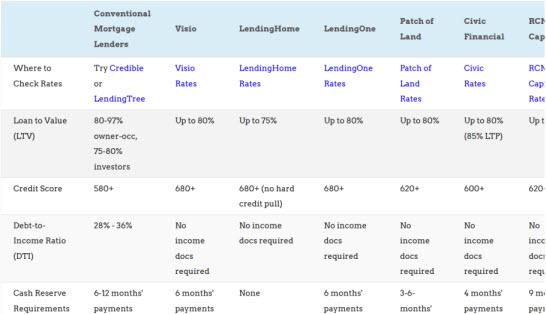 What short-term fix-and-flip loan options are available nowadays?
How about long-term rental property loans?
We compare several buy-and-rehab lenders and several long-term landlord loans on LTV, interest rates, closing costs, income requirements and more.
Where Your Money Should Go Instead
Here’s the thing about invisible expenses…
The money doesn’t feel real because you never see it leave. It just quietly disappears into subscriptions, fees, and impulse purchases.
But that money is real. And redirected intentionally, it can change your financial trajectory.
$300 per month in recovered invisible expenses is $3,600 per year. Invested at 8% over 20 years, that’s over $175,000.
Just to be clear, I’m not saying you need to live like a monk. Just focus on spending intentionally on things that actually matter to you and cut ruthlessly on things that don’t. Most invisible expenses fall into the “don’t actually matter” category. You won’t miss them when they’re gone.
Plug the leaks, redirect the money and let it compound somewhere useful.
That’s how small changes turn into serious wealth over time.
About the Author

G. Brian Davis is a real estate investor and cofounder of SparkRental who spends 10 months of the year in South America. His mission: to help 5,000 people reach financial independence with passive income from real estate. If you want to be one of them, join Brian and Deni for a free class on How to Earn 15-25% on Fractional Real Estate Investments.
Connect with us on social!