The Short Version:
-
- The most profitable real estate opportunities often exist in corners of the market that rarely get attention.
- Property tax abatements, mobile home parks, raw land, niche industrial, and bedroom boost flips are all strategies that consistently outperform the obvious plays.
- Mobile home parks are the only shrinking asset class in the U.S., which creates a supply constraint most investors don’t understand.
- The investors who consistently outperform aren’t chasing the same deals everyone else is chasing.

When most people think about real estate investing, they picture rental properties or house flips. Maybe apartment buildings if they’re thinking bigger. But the real estate universe is far more diverse than that and some of the most profitable opportunities exist in corners of the market that rarely get attention.
Over the past few years, we’ve invested in dozens of different niches through the Co-Investing Club. Some have delivered exceptional returns. Here are a few that I’m particularly excited about and plan to put more money into over the next year.
1. Property Tax Abatements
Multifamily properties are valued based on their net operating income. The higher the NOI, the higher the property value. Most operators try to boost NOI by renovating units and raising rents. That works, but it’s also what everyone else is doing.
A more creative approach involves partnering with local municipalities to secure property tax abatements in exchange for setting aside some units as affordable housing.
Property taxes are one of the largest operating expenses for multifamily buildings. Reduce or eliminate that expense, and the NOI jumps significantly which means the property value jumps too. The operator gets a more valuable asset, residents get affordable housing, and the city gets to check a box on their housing goals.
It’s a win across the board, and it’s an angle that most investors never consider.
2. Mobile Home Parks With Tenant-Owned Homes
Mobile home parks are one of the most misunderstood asset classes in real estate. Local housing boards often resist them, even while complaining about the shortage of affordable housing which has resulted in mobile home parks being the only shrinking asset class in the U.S. New parks rarely get approved, and existing ones get rezoned out of existence.
That supply constraint creates opportunity.
The investment model is different from traditional rentals. In many parks, residents own their homes but rent the lot underneath. The park owner collects lot rent without being responsible for maintaining the structures. Fewer maintenance costs, more predictable income.
And here’s what makes it recession-resistant: it costs more than 10 times as much to move a mobile home as the typical monthly lot rent. Residents almost never default, even in economic downturns. They’re essentially locked in which creates remarkably stable cash flow for investors.
3. Raw Land
Land investing doesn’t get the attention it deserves. There’s no rental income, no tenants, no management headaches. Just dirt. But that simplicity is part of the appeal.
Investors can flip raw land for cash, similar to house flipping but with far less complexity. No renovations, no contractors, no permits. Buy low, sell at market value, move on.
Others sell land on installment contracts, creating streams of monthly income from buyers who can’t qualify for traditional financing. Some hold and lease land for agricultural or recreational use. Others develop it themselves or install manufactured homes and sell to first-time buyers at a fraction of the local median home price.
Over the past year, we’ve vetted and invested with three different land operators through the Co-Investing Club. All three have delivered strong returns with relatively low risk. It’s become one of my favorite niches.
4. Niche Industrial Real Estate
“Industrial” is a broad category that includes warehouses, storage facilities, manufacturing plants, and even breweries. The rise of e-commerce has made industrial real estate one of the hottest sectors, but there are still overlooked niches within it.
Smaller flex warehouses in secondary cities offer long-term leases, minimal management, and strong tenant retention. These aren’t the massive distribution centers that make headlines. They’re the unglamorous spaces that small businesses actually need.
Another niche worth watching: small industrial properties near airports. These consistently outperform the broader industrial sector because of their strategic location. Businesses that need quick access to air freight will pay a premium for proximity, and the supply of well-located properties is limited.
(article continues below)
Real estate investments? Awesome.
Being a landlord? Less fun.
Learn how to earn 15%+ on passive real estate investments in our free video course.

5. Bedroom Boost Flips
Everyone understands the basic house flipping model: buy distressed, renovate, sell for a profit. But some of the most profitable flips don’t involve major renovations at all.
The “bedroom boost” strategy focuses on reconfiguring homes to add bedrooms. Move a wall, convert a porch or reconfigure closet space. Sometimes small changes can add an entire bedroom to a home’s layout.
Why does this matter? Because homes are priced heavily based on bedroom count. A three-bedroom sells for significantly more than a two-bedroom in the same neighborhood. When you have clear comps showing that price difference, you can add enormous value through relatively simple changes.
It’s a niche strategy that requires a sharp eye for floor plans and local market knowledge, but the returns can be outsized for investors who master it.
(article continues below)
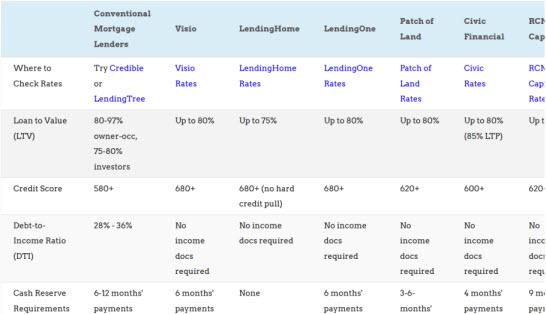 What short-term fix-and-flip loan options are available nowadays?
How about long-term rental property loans?
We compare several buy-and-rehab lenders and several long-term landlord loans on LTV, interest rates, closing costs, income requirements and more.
The Riches Are in the Niches
The phrase is cliché because it’s true. The investors who consistently outperform aren’t chasing the same deals everyone else is chasing. They’re finding overlooked corners of the market where competition is lower and returns are higher.
That’s one of the reasons I love vetting deals as a group. No single investor has visibility into every niche. But when you bring together a community of people with different backgrounds and expertise, you start seeing opportunities you’d never find on your own.
If you’re curious about these kinds of investments but don’t know where to start, that’s exactly what we do in the Co-Investing Club. Every month we vet a new deal together, and members can invest alongside the group for as little as $5,000. It’s a good way to get exposure to niches like these without needing to source deals yourself.
The best opportunities are often the ones nobody’s talking about.
About the Author

G. Brian Davis is a real estate investor and cofounder of SparkRental who spends 10 months of the year in South America. His mission: to help 5,000 people reach financial independence with passive income from real estate. If you want to be one of them, join Brian and Deni for a free class on How to Earn 15-25% on Fractional Real Estate Investments.
Connect with us on social!