At a Glance:
-
-
-
The Co-Investing Club is making its first oil investment this month.
-
It comes with completely different risks, returns, and tax benefits.
-
…and it offers yet another way to diversify your portfolio
-
-
This month, the Co-Investing Club is making its first investment in oil wells.
And it’s really, really different than what I’m used to.
The investment is a portfolio of six wells to be drilled in King County, Texas. We will become fractional owners in them, entitled to our share of the cash flow generated over the entire lifespan of those wells.
Disclaimer
The information provided on this website is for general informational purposes only and should not be construed as legal, financial, or investment advice.
Always consult a licensed real estate consultant and/or financial advisor about your investment decisions.
Real estate investing involves risks; past performance does not indicate future results. We make no representations or warranties about the accuracy or reliability of the information provided.
Our articles may have affiliate links. If you click on an affiliate link, the affiliate may compensate our website at no cost to you. You can view our Privacy Policy here for more information.

How Returns Work
The returns work completely differently.
The wells produce cash flow, and that cash flow is the source of both our return of capital and our return on investment. This particular project forecasts that the cash flow repays our initial investment in four years.
After that, it’s all return on our investment.
Tax Deduction Offsets Active Income
The operator explained to the Co-Investing Club yesterday that we’ll be able to deduct 70-90% of our investment from our 2025 income.
But not just against passive income – against active income (like W2 salary) too.
In contrast, real estate syndications offer up plenty of depreciation, but you can only use it to offset passive income.
(article continues below)
Real estate investments? Awesome.
Being a landlord? Less fun.
Learn how to earn 15%+ on passive real estate investments in our free video course.

How Long Do Wells Cash Flow?
The operator forecasts that these wells will produce income for at least 25 years.
That’s longer than we want to hold this investment, so we’re simply going to auction it off internally after eight years. Whoever wants to buy out the other members can do so, and the rest of us can walk away with a lump sum.
In between now and then, we’ll all enjoy the cash flow.
What Are the Risks?
The two main risks are the price of oil and the production of these specific wells.
-
Price Risk: This is market risk, similar to the risk of stock prices going down. The higher the price of oil, the more cash the wells produce each month.
-
Production Risk: If this portfolio of six wells doesn’t produce as much oil as forecast, that presents a risk as well.
The long-term nature of this investment helps mitigate the price risk. Sure, the price of oil will fluctuate. In some years it will be higher or lower. But as an eight-year investment, that smooths out some of the price volatility over time.
As for production risk, this is why the operator will drill six wells instead of one. A single well might underperform or overperform, but six should average out similar to the other wells already flowing in this oil field.
What About Ethical Concerns?
If you’ve ever heard me talk about how there are many more dimensions to investments than just risk and returns, one of the many that I talk about is Personal Values. I’ve always used oil and gas as an example of that.
Oil drilling has high historical returns with moderate risk, but it doesn’t fit many people’s personal values, so they don’t invest in it despite the asymmetric returns.
While only you know how you feel about owning an interest in oil wells, here are two questions I asked myself:
- Does the US need oil in its current economy?
- Is the US better off producing that oil domestically or buying it from petrol states like Russia, Venezuela, and Saudi Arabia?
Again, I’m not trying to persuade anyone of anything, just sharing how I personally explored the ethics question.
(article continues below)
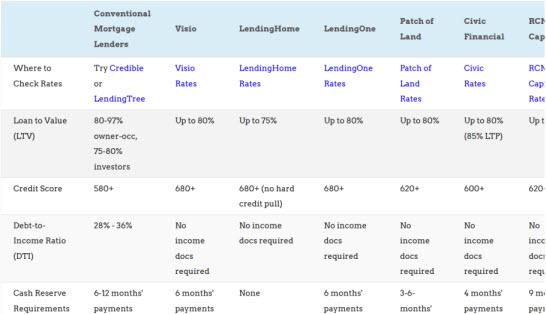 What short-term fix-and-flip loan options are available nowadays?
How about long-term rental property loans?
We compare several buy-and-rehab lenders and several long-term landlord loans on LTV, interest rates, closing costs, income requirements and more.
Diversification
In last week’s email, I talked about financial risks. Geopolitical risk is one of those – and oil can serve as a hedge against it.
It also provides another source of passive income, which is always welcome.
Curious about this and other investments we’re making in the Co-Investing Club? Join 
And if you want to chat about the Club or passive real estate investments in general, hop on the open Zoom call with Deni and me today at 3:30 EST.
Hope to chat with you later on!
Brian, Deni and Tara
P.S. Here are two recent videos from our Bucks Outside the Box channel:
Connect with us on social!