The Short Version:
- Most people default to stocks, crypto, or savings accounts without considering the trade-offs of each.
- The “safe” option might actually be costing you money every year.
- There’s a way to invest in real estate without becoming a landlord or needing $100K to start.
- Where you park your money in 2026 matters more than how much you have to invest.

If you’ve got some cash sitting around and you’re wondering what to do with it this year, you’re not alone. It’s a question I think about constantly. Not just for myself, but for the community I invest alongside every month.
The truth is, there’s no single “right” answer. But there are better answers and worse answers depending on what you’re optimizing for. Do you want growth? Stability? Cash flow? The ability to sleep at night without checking your phone every three hours?
I’ve spent years testing different approaches, watching what works, and being honest about what doesn’t. Here’s my take on the most common places people park their money in 2026 (and what I actually do with mine.)
1/ The Stock Market
For most people, investing means stocks. And that makes sense. The stock market has a long track record of growth, it’s easy to access through any brokerage app, and you can start with almost any amount of money.
But here’s the thing about stocks: you’re a passenger, not a driver. When the market goes up, your portfolio goes up. When the market tanks, you watch your net worth shrink and there’s not much you can do about it except wait and hope it recovers.
For some people, that’s fine. They’ve got decades ahead of them and the stomach and patience to play the long game. For others, especially those who’ve worked hard to accumulate some savings and don’t love the idea of watching it evaporate during a correction.
Stocks are a solid piece of most portfolios. I invest in index funds myself, every week on autopilot.
But if you put all your eggs in that basket, you leave yourself exposed to market crashes when you can’t — or at least shouldn’t — sell.
Sure, stock indexes have always rebounded over the long term. But “long term” can feel pretty cold when you’re staring at a 30% drawdown and wondering how many years the market will take to recover.
2/ Crypto
Some people have made life-changing money in crypto. That’s a fact. It’s also a fact that most people have lost everything. High volatility, higher blood pressure.
The challenge with crypto is that it’s almost impossible to value fundamentally. With a stock, you can look at earnings, revenue, assets, and make some informed estimate of what it’s worth. With most cryptocurrencies, you’re essentially betting on adoption, sentiment, and momentum which can turn after a tweet from a public figure.
If you’re the type of person who can buy something, watch it drop 50%, and genuinely not care because you’re “HODLing” for the long game, crypto might have a (small) place in your portfolio. But if you’re the type who checks prices at 2am and feels a knot in your stomach when things go red, you can expect plenty of sleepless nights.
I’m not anti-crypto. I’m just honest about what it is. It’s a speculative asset that could go to the moon or to zero, and nobody really knows which (or when). For money you can afford to lose, maybe. For money you’re counting on to build your future, I’d think twice.
3/ Savings Accounts
This one hurts to write because savings accounts feel safe. Your money is insured. It’s sitting right there in your bank. Nothing bad can happen to it.
Except something bad is happening to it every single day. It’s called inflation.
If your savings account is paying you 2% interest and inflation is running at 3%, you’re not making money. You’re losing it. Just slowly enough that it doesn’t feel like a loss. It’s like a leak in your roof that you don’t notice until the ceiling caves in.
Savings accounts are great for emergency funds and short-term needs. But as a place to park money you’re hoping will grow? The math simply doesn’t work. You’re treading water at best, and more likely you’re slowly sinking.
4/ Real Estate
When most people think about investing in real estate, they picture buying a rental property. Maybe a duplex, or a single-family home they can rent out. It sounds appealing. You own a real asset, someone else pays your mortgage, and eventually you’ve got equity and cash flow.
The reality is often messier.
First, there’s the upfront cost. In most markets, you’re looking at a down payment of $50,000 to $100,000 or more, plus closing costs, plus reserves for repairs and vacancies. That’s a significant chunk of capital before you’ve collected a single rent check.
Then there’s the ongoing work. Being a landlord isn’t passive. Tenants call at inconvenient times. Things break. People pay late, or don’t pay at all. You’re dealing with property managers, contractors, accountants, and the occasional nightmare scenario that makes you question why you ever thought this was a good idea.
But for busy professionals with demanding careers and limited bandwidth, landlording feels less like investing and more like taking on a side hustle. You’re not really putting your money to work. You’re putting yourself to work, and your money comes along for the ride.
(article continues below)
Real estate investments? Awesome.
Being a landlord? Less fun.
Learn how to earn 15%+ on passive real estate investments in our free video course.

But here’s what I do differently…
This is the approach I’ve built my entire investment strategy around.
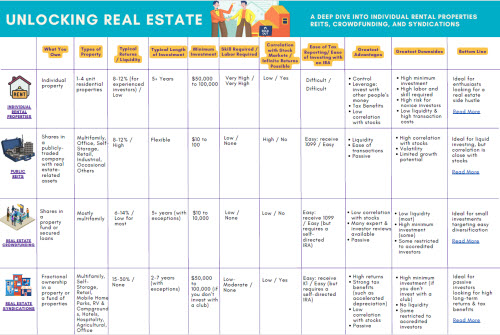
Instead of buying properties directly and dealing with all the headaches that come with them, I invest in real estate deals where experienced operators handle everything. I’m talking about apartment complexes, mobile home parks, land developments, secured debt funds — real assets managed by people who do this full-time and have track records I can verify.
My role is simple: I provide capital, and I collect returns. Monthly or quarterly distributions show up in my account. I don’t field calls about broken water heaters or chase down late rent payments. I’m not managing contractors or worrying about vacancy rates. That’s all handled by professionals who eat, sleep, and breathe this stuff.
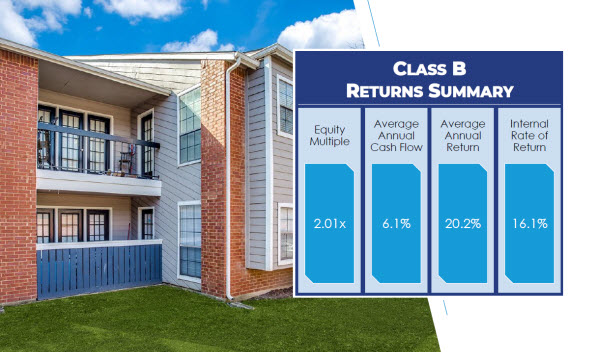
The returns can be compelling. Often significantly higher than what you’d get from stocks or savings accounts, with the added benefit of being backed by physical real estate rather than abstract market movements. And because these are private investments rather than publicly traded securities, they’re not subject to the same daily volatility that makes stock investing feel like an emotional rollercoaster.
There’s also something psychologically satisfying about owning real, tangible assets. When you own a piece of an apartment complex, there’s an actual building full of actual people paying actual rent. It’s not a line on a screen that goes up or down based on what some analyst said on TV that morning.
Now, passive real estate investing isn’t perfect. There are a couple of legitimate barriers that keep most people out.
The first is minimum investments. Most deals require $50,000 to $100,000 to participate. That’s a big check to write, especially if you’re just getting started or you want to diversify across multiple investments rather than putting all your capital into one deal.
The second is the learning curve. How do you vet an operator? What should you look for in a deal? How do you know if the projections are realistic or if someone’s blowing smoke? If you’re doing this alone, you’re essentially teaching yourself a new skill while simultaneously risking your capital. That’s a steep hill to climb.
These are the problems I set out to solve when I started bringing investors together to review and invest as a club. When you invest alongside others, suddenly that $50,000 minimum becomes $5,000 per person. You get access to the same deals typically reserved for the wealthy, but without needing to be rich yourself (yet).
And when you vet deals alongside other experienced investors — people asking hard questions, poking holes in assumptions, sharing knowledge from their own experiences — you’re not guessing alone anymore. You’ve got a community of people who are just as invested (literally) in making sure each opportunity is solid.
(article continues below)
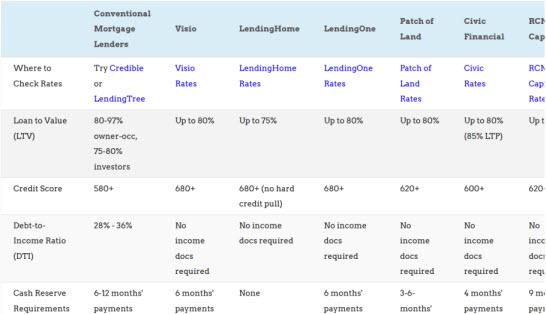 What short-term fix-and-flip loan options are available nowadays?
How about long-term rental property loans?
We compare several buy-and-rehab lenders and several long-term landlord loans on LTV, interest rates, closing costs, income requirements and more.
What I’m Looking at in 2026
The Co-Investing Club meets every month to vet new investments together. We’ve had great experiences with workforce housing, land investments, private notes and income-focused funds that offer recession resilience.
While we do invest for growth sometimes, we especially love cash flow. In an environment where interest rates remain elevated and economic uncertainty lingers, I’m drawn to investments that generate predictable income rather than praying for appreciation. Each passive income stream gets you closer to financial freedom.
I’m also paying attention to operators with conservative underwriting… people who assume things might go wrong and build that into their projections. After years of doing this, I’ve learned that the best operators are often the ones who seem almost pessimistic about their own deals. If the numbers work even under stress-tested assumptions, that’s a deal worth looking at.
The Real Question
At the end of the day, the question isn’t just “Where should I park my money?” It’s “What do I actually want from my money?”
If you want maximum growth potential and you don’t mind volatility, stocks and crypto have their place. If you want absolute safety and don’t mind losing purchasing power to inflation, savings accounts are always there.
But if you want your money to generate real income, backed by real assets, without demanding your constant attention, that’s where passive real estate shines. It’s the approach I’ve built my own portfolio around, and it’s what I spend most of my time researching, vetting, and investing in alongside our community.
I’m excited about the deals I’ll be vetting together with our Co-Investing Club members in the coming months, and I’m always looking for people who want to take this approach to building wealth seriously. If that sounds like something you’d want to be part of, join as a free member. We’ll email you the next time we meet as an investment club to vet a deal together.
Here’s to making 2026 the year your money actually starts working as hard as you do.
About the Author

G. Brian Davis is a real estate investor and cofounder of SparkRental who spends 10 months of the year in South America. His mission: to help 5,000 people reach financial independence with passive income from real estate. If you want to be one of them, join Brian and Deni for a free class on How to Earn 15-25% on Fractional Real Estate Investments.
Connect with us on social!