The Short Version:
-
- AI is already cutting entry-level and mid-level knowledge jobs. A Harvard study found a 22% reduction in entry-level postings at companies using AI.
- Some careers are more exposed than others. The jobs that survive require human judgment, relationships, or physical presence.
- Real estate offers two paths to protect yourself: building an active business AI can’t replace, or investing passively for income that doesn’t depend on your employer.
- The more income streams you have outside your job, the less any single disruption can hurt you.

A Harvard study from late last year found a 22% reduction in entry-level job postings at companies that have adopted AI. But senior-level roles? Almost no change.
This probably doesn’t surprise you. We’ve all watched it happen in real time. Law firms don’t need as many paralegals when AI can do legal research in seconds. Marketing departments don’t need as many junior copywriters when ChatGPT can crank out first drafts. Customer service teams are shrinking as chatbots get better at handling routine inquiries.
The pattern is clear: AI is eating entry-level and mid-level knowledge work. The jobs that require human judgment, relationship-building, and physical presence are (for now) safer. But “for now” isn’t a retirement plan.
Ray Dalio made a point recently that stuck with me. He argued that the bottom 60% of Americans are becoming dangerously dependent on the top 1% who produce most of the wealth. And in a knowledge economy where productivity increasingly depends on your ability to leverage AI, those who can’t adapt risk getting left behind entirely.
I’m not here to fear-monger. But I do think it’s worth asking: What happens to your income if your job gets automated? Or downsized? Or restructured into something unrecognizable?
The answer, for a lot of people, is real estate.
Why Real Estate Is AI-Proof (Or At Least AI-Resistant)
There are two ways real estate can protect you from economic disruption. The first is active: starting a real estate business. The second is passive: building income streams that don’t depend on you showing up.
Let’s start with the active side.
Active Real Estate Businesses AI Can’t Replace
If you’re worried about job security and you’ve got some hustle in you, real estate offers several paths to entrepreneurship that AI simply can’t take over. Not because AI isn’t useful in these businesses… it absolutely is. But because these businesses require things AI can’t do: physical presence, human relationships, judgment calls, and the ability to manage chaos.
House flipping is the classic example. Think about what’s actually involved. You have to find distressed sellers, often through direct mail or driving for dollars. You meet with them in person, sometimes in difficult emotional situations… foreclosure, divorce, death in the family. These are human conversations that require empathy and trust-building.
Then you’re physically walking properties, assessing repairs, estimating costs. You’re pulling permits, hiring contractors, managing timelines. Anyone who’s worked with contractors knows this is a full-contact sport. AI isn’t showing up at 7am to make sure the tile guy doesn’t cut corners.
After the renovation, you’re staging, listing, negotiating with buyers. Every step involves either physical presence or human judgment that can’t be automated.
Wholesaling is similar but with fewer steps. You find motivated sellers, get properties under contract, and assign those contracts to other investors. The core skill is sales and relationship building… meeting people, understanding their situations, creating solutions. AI can help you find leads. It can’t close deals.
The BRRRR strategy (buy, renovate, rent, refinance, repeat) combines flipping with long-term holding. Same hands-on requirements during acquisition and renovation, plus ongoing property management decisions.
Land flipping is more of a paper-shuffling business but still requires human decision-making at every turn. Which parcels to target, how to negotiate with sellers, how to market to buyers.
The point isn’t that these businesses are easy. They’re not. The point is that AI is pure upside for entrepreneurs. It reduces your labor costs, helps with marketing, streamlines research. But it can’t replace you. You’re the one making decisions, taking risks, building relationships.
For people worried about their careers getting automated, starting a real estate business is one way to take control.
But Most People Don’t Want to Start a Business
The reality is most people realistically aren’t going to quit their jobs to flip houses. They’ve got careers, families and limited bandwidth. The idea of managing contractors and chasing permits sounds exhausting, not liberating.
That’s fair. I feel the same way.
But you don’t have to become a real estate entrepreneur to benefit from real estate. You can invest passively and build income streams that exist completely independent of your day job.
This is what I spend most of my time on. And it’s the real hedge against career disruption.
(article continues below)
Real estate investments? Awesome.
Being a landlord? Less fun.
Learn how to earn 15%+ on passive real estate investments in our free video course.

Passive Real Estate as Your Safety Net
Warren Buffett said it best: “If you don’t find a way to make money while you sleep, you will work until you die.”
The more passive income streams you stack up, the less dependent you are on any single source. If your job gets automated, restructured, or eliminated, you’re not starting from zero. You’ve got cash flow coming in every month from assets that don’t care what’s happening in the job market.
Passive real estate investing is one of the best ways to build that safety net. You’re not buying properties and dealing with tenants. You’re investing in deals run by experienced operators who handle everything. Your role is to provide capital, vet opportunities, and collect returns.
Here’s what that looks like in practice:
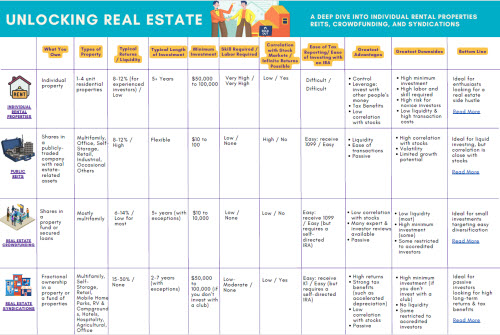
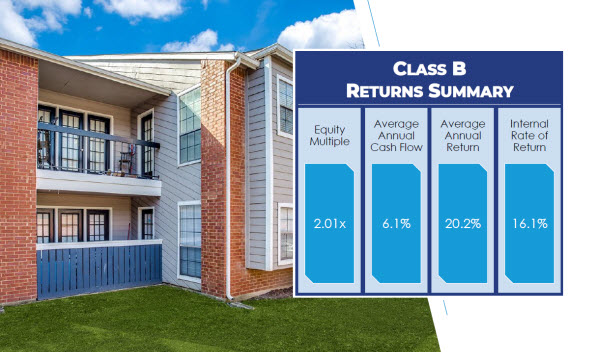
1. Real estate syndications let you become a silent partner in larger projects… apartment complexes, mobile home parks, industrial properties. The operator finds the deal, secures financing, manages the asset, and eventually sells. You invest alongside other passive investors and receive distributions along the way.
2. Private notes are essentially loans to real estate operators, secured by property. You lend money at a fixed interest rate and collect payments until the loan matures. Lower risk than equity investments, more predictable returns.
3. Debt and equity funds aggregate capital from multiple investors and deploy it across many deals. One fund we’ve invested in through the Co-Investing Club pays a 16% annual distribution yield from a land-flipping operation. The operator has never missed a payment since inception.
The common thread here: none of these require your active involvement. You’re not managing properties. You’re not taking midnight calls about broken furnaces. You’re earning returns on capital while focusing on your career, your family, your life.
(article continues below)
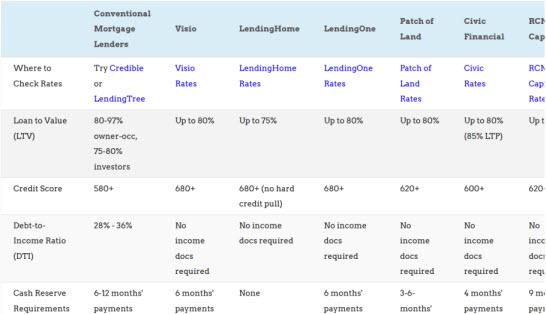 What short-term fix-and-flip loan options are available nowadays?
How about long-term rental property loans?
We compare several buy-and-rehab lenders and several long-term landlord loans on LTV, interest rates, closing costs, income requirements and more.
Building Your AI-Proof Income
Here’s how I think about this.
AI is a curveball. A big one. Nobody knows exactly how it’s going to reshape the economy over the next decade. We’re somewhere between cars in the 1920s and the internet in the mid-90s… everyone knows it’s transformative, nobody knows exactly where it’s going.
What we do know is that job security isn’t what it used to be. Industries get disrupted. Entire career paths disappear. The skills that made you valuable five years ago might be commoditized by software next year.
The hedge against that uncertainty is diversification. Not just in your investment portfolio, but in your income streams. If all your income depends on showing up to one job, you’re exposed. If you’ve got passive income covering part (or all) of your living expenses, you’ve got options.
Real estate is one of the best vehicles for building that kind of income. It’s tangible. It’s backed by physical assets. It throws off cash flow month after month. And it doesn’t care whether AI is coming for your industry.
I’ve been building passive income streams alongside 200+ other members inside the Co-Investing Club for years now. Every month, we get together to vet a new investment. Any member who likes the deal can invest alongside the group for as little as $5,000. I put my own money into most of these deals too.
By the time a curveball comes your way (and it will, AI or otherwise) you want to be in a position where you’re not scrambling. You’ve got income coming in that doesn’t depend on your employer. You’ve got breathing room to figure out your next move.
That’s what financial resilience looks like. And real estate is one of the best ways to build it.
About the Author

G. Brian Davis is a real estate investor and cofounder of SparkRental who spends 10 months of the year in South America. His mission: to help 5,000 people reach financial independence with passive income from real estate. If you want to be one of them, join Brian and Deni for a free class on How to Earn 15-25% on Fractional Real Estate Investments.
Connect with us on social!