The Short Version:
-
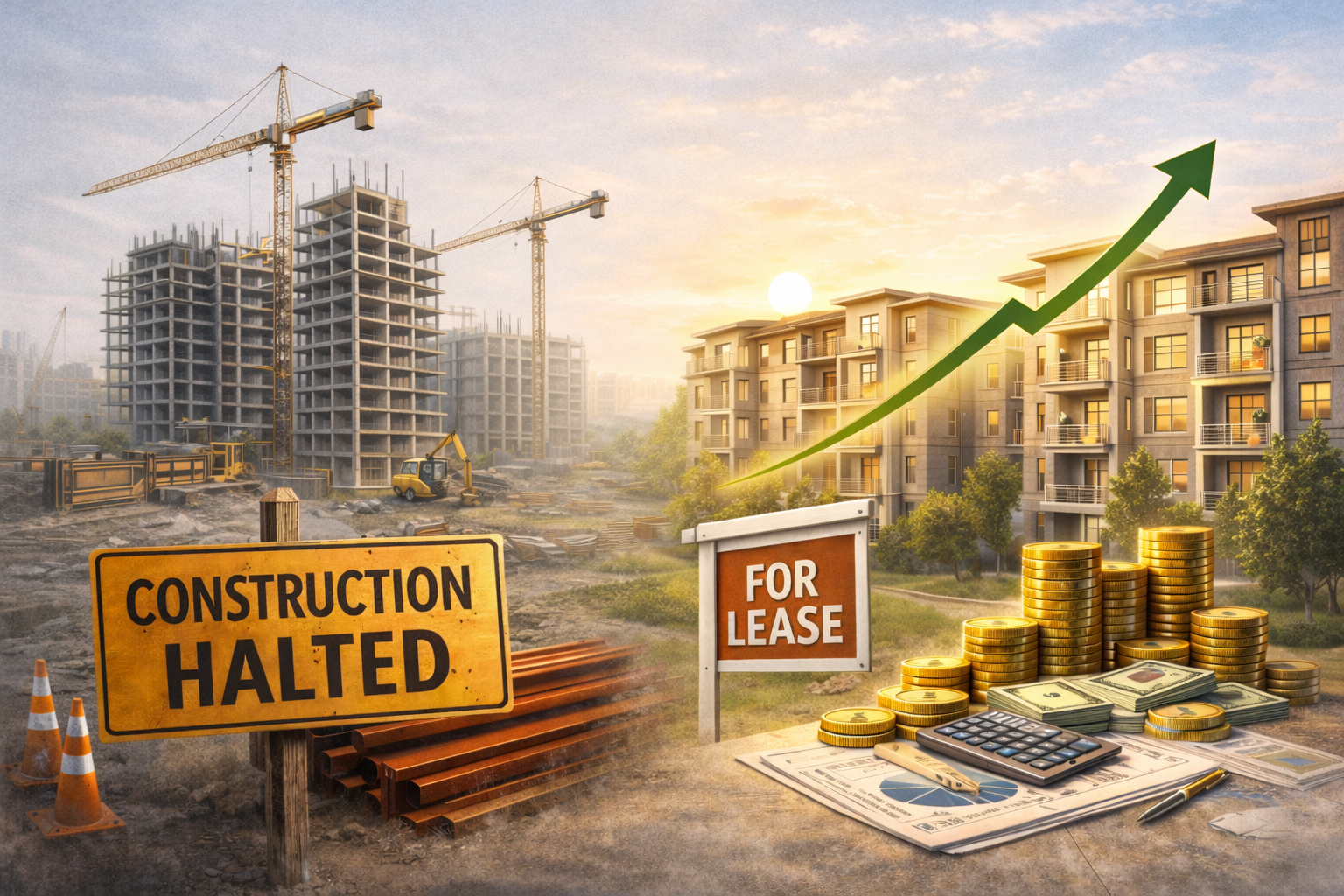
- Multifamily construction starts just hit their lowest level in over a decade. Only 234,900 units broke ground in the 12 months ending Q3 2025… the weakest pipeline since 2013.
- Developers have pulled back because the math doesn’t work. Construction costs stayed high while financing costs doubled. So they stopped building.
- Less supply coming means tighter rental markets ahead. When demand stays steady and supply shrinks, occupancy tightens and rents rise. That’s good news for investors already in workforce housing deals.
- The risk of a market “turning” is highest when supply is flooding in and everyone is bullish. Today’s environment is the opposite. The best time to invest is often when everyone else stops building.
I was vetting a multifamily deal in Cleveland a while back and while running through the operator’s projections, stress-testing their assumptions and the usual process… the numbers looked solid. Good basis, reasonable rent growth and an experienced operator.
But then I pulled up the supply data, and the deal started looking even better than the deck suggested.
Multifamily construction starts just hit their lowest level in over a decade. According to Census Bureau data, only 234,900 units broke ground in the 12 months ending Q3 2025. That’s the weakest pipeline since 2013.
Less supply coming means tighter rental markets ahead. And tighter rental markets mean better returns for investors who are already in workforce housing deals.
This is the kind of macro backdrop that doesn’t show up in a deal’s projections but absolutely affects how things play out over a 5 year hold.
Why Construction Has Stalled
Developers aren’t building because the math doesn’t work right now.
Construction costs have stayed elevated. Labor, materials, insurance… none of it has gotten cheaper. Meanwhile, financing costs have roughly doubled. A developer who could borrow at 3.5% in 2021 is now looking at 7% or higher for construction loans.
When your cost of capital doubles and your construction costs stay high, the rents you’d need to charge to make a project pencil become unrealistic. So developers do the rational thing: they stop building.
This isn’t happening in one market. It’s happening EVERYWHERE. Permit activity is down across the country while projects that were in the planning stages have been shelved. The pipeline that was supposed to deliver new units in 2026 and 2027 is dramatically thinner than anyone expected two years ago.
The supply that was “coming” isn’t coming anymore.
What This Means for Rental Markets
Real estate is ultimately a supply and demand game. When supply grows faster than demand, rents flatten or fall. When demand grows faster than supply, rents rise.
For the past few years, a lot of markets have been absorbing a wave of new construction that started during the low-rate era. That’s put pressure on rents in some areas, particularly in Sunbelt markets that saw massive building booms.
But that wave is ending. The units currently under construction will deliver over the next 12-18 months, and then… not much behind them so the pipeline is thin.
Meanwhile, demand for rental housing isn’t going anywhere. Household formation continues and homeownership remains out of reach for many people, especially younger buyers facing high prices and 7% mortgage rates. The structural demand for rental units is intact.
When you have steady demand and shrinking supply, the math tips in favor of landlords and property owners. Occupancy tightens. Rent growth accelerates. Existing properties become more valuable.
The Cleveland Example
Back to that Cleveland deal I was vetting.
Cleveland isn’t a glamorous market. It doesn’t make headlines like Austin or Miami. But that’s part of why I like it.
It’s a workforce housing market. Affordable rents, stable tenant base, diversified local economy. Not the kind of place that saw a massive construction boom, which means not the kind of place that’s now dealing with oversupply.
When I layered in the national construction slowdown on top of the local market fundamentals, the picture got more compelling. This wasn’t a market that was about to get flooded with new units competing for tenants. The supply pipeline was already thin, and it’s getting thinner.
The operator’s projections assumed modest rent growth… 2-3% annually. But with the supply picture tightening, there’s a reasonable case that rent growth could exceed those assumptions. The deal had upside that wasn’t even baked into the numbers.
That’s the kind of margin of safety I look for. Conservative underwriting in an environment where the macro tailwinds might make things go better than projected.
(article continues below)
Real estate investments? Awesome.
Being a landlord? Less fun.
Learn how to earn 15%+ on passive real estate investments in our free video course.

“What If the Market Turns?”
This is one of the most common concerns I hear from people considering real estate investing. What if I get in and the market turns against me?
It’s a fair question. Nobody wants to buy at the top.
But the risk of a market “turning” is highest when supply is flooding in, prices are stretched and everyone is bullish. That’s when you’re most likely to see corrections.
Today’s environment is different. Developers have pulled back and construction starts are at decade lows. The supply that would normally create downward pressure on rents and values… isn’t coming.
That doesn’t mean real estate is “safe” because economic downturns affect occupancy and job losses affect tenants’ ability to pay rent. Interest rates affect valuations. So real estate definitely has its own risks.
But the supply side of the equation is working in your favor right now. You’re not buying into a market that’s about to get flooded with competition but where the competitive pressure is easing.
The best time to invest in a market is often when everyone else has stopped building. That’s when supply constraints set up the next leg of rent growth. That’s when patient investors get rewarded.
Why This Doesn’t Show Up in the Headlines
The construction slowdown isn’t getting much mainstream attention. It’s not as dramatic as a market crash or a foreclosure wave. It’s a slow-moving story that plays out over years, not days.
But it’s exactly the kind of structural shift that drives long-term returns.
Five years from now, we’ll look back and see that 2025-2026 was a window when supply dropped out of the market, rental demand stayed steady and investors who got in during that period benefited from the tightening that followed.
Or maybe not! Maybe construction picks back up faster than expected and demand softens. There are no guarantees in investing.
But when I look at the data… construction starts at a 10-year low, financing costs keeping developers on the sidelines, structural demand for rentals intact… the setup looks favorable. Mucg more favorable than it’s been in a while.
(article continues below)
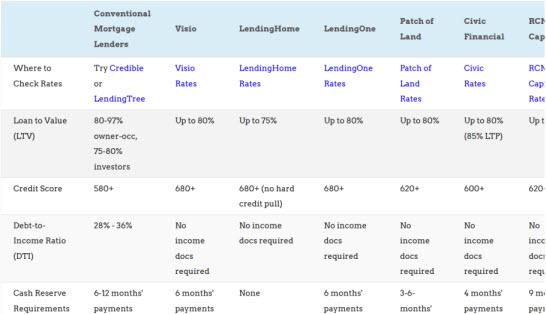 What short-term fix-and-flip loan options are available nowadays?
How about long-term rental property loans?
We compare several buy-and-rehab lenders and several long-term landlord loans on LTV, interest rates, closing costs, income requirements and more.
How I’m navigating this situation
I’m continuing to invest in workforce housing deals through the Co-Investing Club, particularly in markets that weren’t overbuilt in the first place. The supply constraints make good deals even better and we’re vetting opportunities with this backdrop in mind.
But this window won’t last forever. Eventually, rates will come down, construction will pick back up and the supply picture will normalize. But for now, the math favors investors who are already in the game.
About the Author

G. Brian Davis is a real estate investor and cofounder of SparkRental who spends 10 months of the year in South America. His mission: to help 5,000 people reach financial independence with passive income from real estate. If you want to be one of them, join Brian and Deni for a free class on How to Earn 15-25% on Fractional Real Estate Investments.
Connect with us on social!