The Short Version:
-
- Current Qualified Opportunity Zone designations expire at the end of 2026, meaning investors who deferred capital gains face a taxable event regardless of whether they’ve exited their fund position
- Congress made the QOZ program permanent but with entirely new zone designations starting in 2027, which creates a specific window where displaced capital needs somewhere to go
- I walk through the exact decision tree a real investor faces right now: accept the tax bill and hold, exit and redeploy, or evaluate the new program and why none of those paths are straightforward
- The new permanent program introduces meaningful rule changes for rural zones that didn’t exist before, and they create an opening that most retail investors haven’t noticed yet
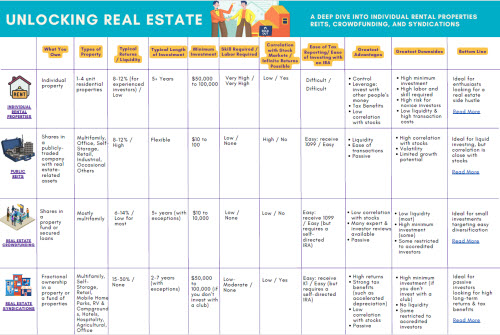
- Former QOZ investors tend to land in passive syndications and investment clubs after their fund exits and I explain exactly why the two structures appeal to the same investor psychology

Most tax strategies operate in the background. You set them up, they work quietly and you don’t think about them until tax season.
The Qualified Opportunity Zone program doesn’t work like that. It has a hard deadline. And for a specific group of investors sitting on deferred capital gains right now, that deadline arrives at the end of 2026.
Here’s why this matters even if you have no Opportunity Zone position yourself… and what the capital displaced by that deadline is likely to do next.
What Opportunity Zones Were Designed to Do
The QOZ program launched as part of the 2017 Tax Cuts and Jobs Act. The basic idea: if you sell an asset and realize a capital gain, you can defer paying tax on that gain by rolling the proceeds into a Qualified Opportunity Fund within 180 days. The fund invests in designated distressed communities, the “Opportunity Zones” and if you hold long enough, a portion of that original gain gets reduced and any appreciation on the new investment becomes tax-free.
It was a genuinely attractive structure for the right investor. Someone who sold a business, a property or a large stock position and faced a significant capital gains bill suddenly had a way to keep that money working rather than writing a check to the IRS.
Billions of dollars flowed in. Funds launched in markets across the country. Sponsors built ground-up projects in designated zones specifically to attract QOZ capital.
And then Congress added a wrinkle that’s now coming due.
The Deadline That’s Creating Quiet Urgency
Current QOZ designations expire at the end of 2026. The gains that investors deferred become taxable at that point regardless of whether they’ve exited their fund position.
The One Big Beautiful Bill Act made the Opportunity Zone program permanent going forward which sounds like good news. But it comes with a catch: entirely new zone designations take effect starting in 2027. The zones investors poured capital into since 2017 don’t automatically carry over. There’s a rolling redesignation process beginning in mid-2026 and the new rules introduce different thresholds and enhanced benefits for rural areas that didn’t exist under the original program.
What this means in practice: investors who rolled gains into QOZ funds between 2017 and roughly 2022 face a taxable event at end of 2026 on their original deferred gain. The tax bill they postponed for years is arriving whether they’re ready or not.
For some of those investors, that creates a decision they need to make right now.
The Decision Tree Most Investors Are Staring At
Let me walk through the situation a real investor faces today.
Say someone sold their small business in 2021 and realized a $2 million capital gain. They rolled those proceeds into a Qualified Opportunity Fund within the 180-day window. They deferred the tax, the fund invested in a mixed-use development in a designated zone and they’ve been holding while the project was built out and stabilized.
End of 2026 arrives. That original $2 million gain becomes taxable. They owe capital gains tax on it regardless of what they do next. The appreciation they’ve accumulated inside the QOZ fund since 2021 still has potential for tax-free treatment if they hold their fund position for 10 years … but that 10-year clock started when they invested, not when the original gain was deferred.
So they have a few options and none of them are simple.
They can accept the tax bill, pay it from other liquidity and continue holding the fund position toward the 10-year mark for tax-free appreciation on the gain inside the fund.
They can exit the fund position, trigger whatever gain or loss they’ve accumulated and move that capital somewhere else.
Or they can look at the new program rules taking effect in 2027 and evaluate whether reinvesting into a newly designated zone makes sense for their situation.
Each of those paths has different tax consequences, different liquidity implications and different assumptions about what the fund’s underlying assets will do over the next several years. It’s not a decision to make without a CPA and probably a tax attorney.
Here’s what I find interesting about this from an investing perspective, though. The decision thousands of investors are quietly working through right now has a second-order effect that most people aren’t tracking.
(article continues below)
Real estate investments? Awesome.
Being a landlord? Less fun.
Learn how to earn 15%+ on passive real estate investments in our free video course.

Where the Displaced Capital Lands
Investors who exit QOZ fund positions at or before the 2026 deadline will have capital looking for a new home. After paying their deferred tax bill, a meaningful portion of those proceeds needs to be redeployed somewhere.
For investors who experienced positive returns inside their QOZ funds, that capital tends to stay in real estate. The QOZ experience … investing in a real asset, watching it develop and produce income, participating in a structured vehicle alongside other investors … tends to build comfort with real estate as an asset class rather than eroding it.
Passive syndications and investment clubs become natural landing zones. The experience mirrors what a QOZ investor just went through: a structured vehicle, a defined investment period, a sponsor managing the asset and regular reporting on performance. The main difference is the tax wrapper and the underlying asset type.
For investors who had mixed experiences with QOZ … development delays, underperforming projects, the normal headaches of ground-up construction in distressed markets … the appeal shifts toward more stabilized passive vehicles. Workforce housing in operating markets. Debt funds with predictable income. Secured notes with fixed returns and collateral backing them up.
The co-investing club has seen more inquiries from former QOZ investors in the past six months than in any comparable period before. That’s not a scientific sample but it’s a directional signal.
What the New Program Means for 2027 and Beyond
The permanent version of the Opportunity Zone program introduces a few meaningful changes worth understanding.
Rural zones now carry enhanced benefits. The substantial improvement threshold drops from 100% to 50% for rural Opportunity Fund investments. That means an investor can buy a $1 million property in a rural zone, put $500,000 in improvements and qualify … rather than needing to match the full acquisition cost in improvements. For rural real estate operators, this opens a lane that wasn’t accessible under the original rules.
Rolling deferral periods and basis step-ups every five years are part of the new structure, with the standard 10% step-up remaining and rural zones getting 30%. That’s more generous than what the original program offered for investors who hold long-term.
The new zone designations will take time to finalize. Sponsors who want to build QOZ funds around the new program need to wait for the map to be redrawn before they can structure offerings. That lag creates a window … probably through most of 2027 … where QOZ-adjacent capital is looking for a temporary home while the new program comes online.
(article continues below)
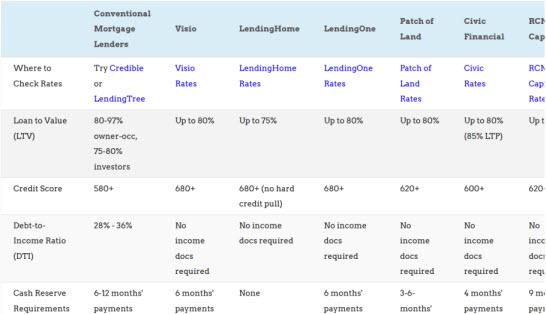 What short-term fix-and-flip loan options are available nowadays?
How about long-term rental property loans?
We compare several buy-and-rehab lenders and several long-term landlord loans on LTV, interest rates, closing costs, income requirements and more.
The Practical Takeaway
If you’re sitting on a QOZ position right now, the first call you should make is to your CPA. The mechanics of the 2026 deadline, how it interacts with your specific fund structure and what your 10-year appreciation treatment looks like require someone who knows your numbers. This post gives you context, not advice.
If you don’t have a QOZ position but you’re watching this deadline approach, the relevant question is simpler: what does the capital that flows out of expiring QOZ funds do next?
It looks for yield, structure and a tax-efficient story. Passive real estate syndications, debt funds and investment clubs check all three of those boxes.
I’ve been investing in these structures personally for years and running the co-investing club with Deni for long enough to have watched multiple market cycles and tax policy shifts move capital around in predictable patterns. QOZ capital isn’t different. It behaves like all displaced capital: it finds the next available lane that fits its profile.
Understanding where that lane is before the capital arrives tends to produce better entry points than discovering it afterward.
If you want to see what the deals we’re currently vetting look like, you can join the co-investing club as a free member and watch the process before you commit anything. That’s exactly how I’d approach it if I were starting fresh.
About the Author

G. Brian Davis is a real estate investor and cofounder of SparkRental who spends 10 months of the year in South America. His mission: to help 5,000 people reach financial independence with passive income from real estate. If you want to be one of them, join Brian and Deni for a free class on How to Earn 15-25% on Fractional Real Estate Investments.
Connect with us on social!