The Short Version:
-
- Real estate spreads vs. corporate credit are back to 20-year historical norms after 20-25% repricing from 2021 peak
- 2021 pricing was the anomaly (free money, 3% rates, ZIRP), not 2026 pricing meaning current valuations are normal
- Institutional investors (Morgan Stanley, Apollo) are actively deploying into multifamily, senior living, and industrial
- “Waiting for rates to drop” misses the point… entry pricing matters more than interest rates, and today’s pricing is the opportunity
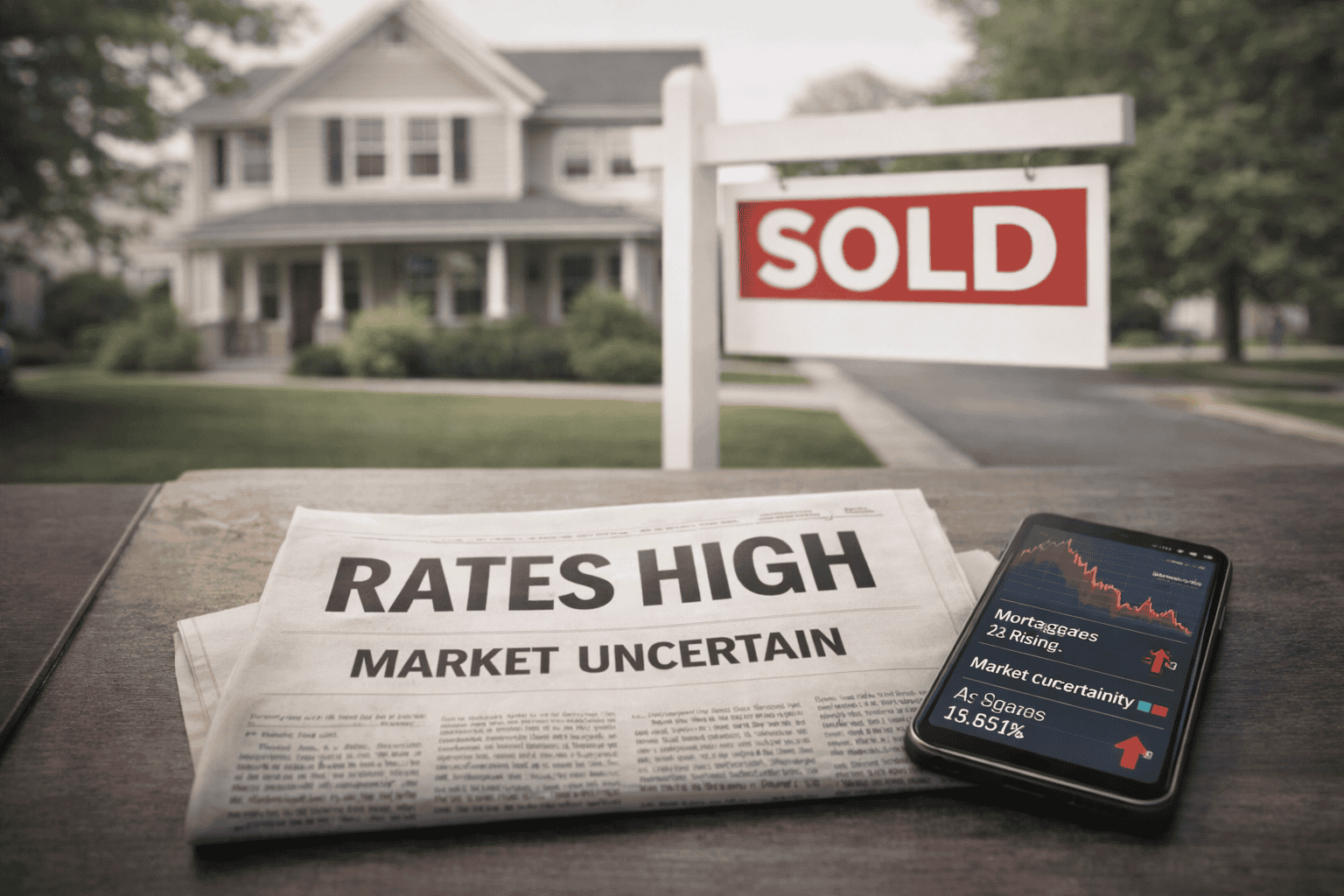
CNBC dropped an interesting piece this week. Family offices… the private investment firms that manage money for ultra-wealthy families… are “snapping up domestic real estate” while other investors sit on the sidelines.
This caught my attention because family offices don’t chase trends. They don’t panic buy. They have teams of analysts, decades of experience, and time horizons that stretch 20 or 30 years. When they move aggressively into an asset class, it’s worth asking why.
And right now, they’re moving into real estate while most retail investors are frozen, waiting for rates to drop or the economy to stabilize or some signal that it’s “safe” to invest again.
What Family Offices Are Actually Doing
Declaration Partners just closed their second real estate fund at $303 million. They signed a $50.1 million master lease for three storefronts in SoHo, New York… properties where the current tenants are paying below-market rents. The lease spans 25 years with an option to extend to 2091.
That’s not a flip. That’s a generational hold.
Elle Family Office is buying distressed office buildings in Atlanta. Chaz Lazarian, who runs it, acquired the former Home Depot headquarters building and its debt for about $21 million… roughly 18 cents on the dollar compared to what the previous private equity owner paid in 2019. (Eighteen cents. Let that sink in for a second.)
These aren’t lottery tickets. These are calculated bets by people who’ve seen multiple cycles and know what distress looks like from the inside.
Why They Can Move When Others Can’t
Here’s the part that matters for the rest of us.
One of the investors CNBC quoted explained the gap between family offices and institutional funds: “A lot of institutional funds look at opportunities like that and say, ‘If I can’t execute a business plan in a year and a half or two years or three years, that’s not quick enough.’ It required somebody who had the longer-term perspective to say, ‘I’m willing to hold longer term to wait out the expirations of those leases.'”
That’s the whole game right there.
Institutional funds have mandates, quarterly reports and impatient LPs who want returns on a schedule. When the math doesn’t work in an 18-month window, they pass. Family offices don’t have that constraint. They can buy an asset that looks ugly today because they’re underwriting it over a 10 or 15-year horizon… and over that timeframe, the math looks very different.
Most individual investors also don’t have 18-month mandates. We don’t have quarterly reports to file or institutional LPs breathing down our necks. We have the same structural advantage family offices have: patience. But most people don’t use it, because waiting feels harder than doing something.
The Distressed Seller Isn’t the Distressed Property
One thing I’ve learned from vetting deals over the years is that a distressed seller doesn’t mean a distressed property.
The operator who bought a multifamily building in 2021 with a bridge loan at 3.5% might be in trouble today. Their loan is coming due, rates have doubled, and they can’t refinance without putting in more equity than the deal is worth to them. So they sell at a discount… not because the building is bad, but because their capital structure broke.
The building itself might be 95% occupied with stable tenants paying market rents. The fundamentals are fine. The operator’s balance sheet isn’t.
This is exactly what family offices are hunting right now. They’re buying good assets from motivated sellers who got caught on the wrong side of the rate cycle. The discount isn’t a red flag… it’s the whole point.
What Individual Investors Usually Get Wrong
Most people wait for certainty before they invest. They want rates to come down, headlines to calm down, and some expert to give them permission to move.
But here’s what actually happens when certainty returns: everyone else moves too. Competition floods back in, prices rise, and the deals that were available during the uncertainty window disappear. The same asset that sold at 18 cents on the dollar trades at 60 or 70 cents once confidence returns. You didn’t lose money… but you missed the window entirely.
Family offices understand this instinctively. They’ve seen enough cycles to know that the best buying opportunities show up precisely when things feel most uncertain. That’s when sellers get desperate, when competition evaporates, and when patient capital gets rewarded.
The worst time to buy is when everyone agrees it’s a good time to buy.
(article continues below)
Real estate investments? Awesome.
Being a landlord? Less fun.
Learn how to earn 15%+ on passive real estate investments in our free video course.

The “Waiting for Rates to Drop” Trap
I talk to people all the time who say they’re waiting for interest rates to fall before they invest in real estate. On the surface, this makes sense… lower rates mean cheaper financing and higher valuations.
But think through what happens when rates actually drop.
Every sidelined investor who’s been “waiting for the right moment” piles back in at the same time. Institutional capital that’s been sitting in money markets redeploys. Competition for deals spikes overnight. Prices adjust upward to reflect the new demand.
The people who bought during the high-rate environment… when nobody else wanted to… suddenly look like geniuses. Not because they predicted anything perfectly, but because they were willing to move when others weren’t.
This is exactly what family offices are doing right now. They’re not waiting for rates to drop. They’re buying good assets at discounts created by the rate environment, knowing that those discounts won’t last forever.
What This Means for the Rest of Us
I’m not a family office. I don’t have $303 million to deploy into a single real estate fund. But the principles still apply.
The structural advantage family offices have… patience, long time horizons, willingness to buy during uncertainty… isn’t exclusive to billionaires. Anyone can develop that mindset. The difference is that most people don’t, because fear is louder than logic when headlines are screaming.
In the Co-Investing Club, we’re seeing better deal flow right now than we’ve seen in years. Operators who overleveraged during 2021 and 2022 are bringing deals to market at discounts. The fundamentals on workforce housing remain strong… occupancy is high, rent growth is steady, supply is constrained. The setup is favorable for patient capital.
I invest my own money in every deal we do together. Same terms as every other member, no special treatment. I’m not asking anyone to do something I’m not doing myself.
(article continues below)
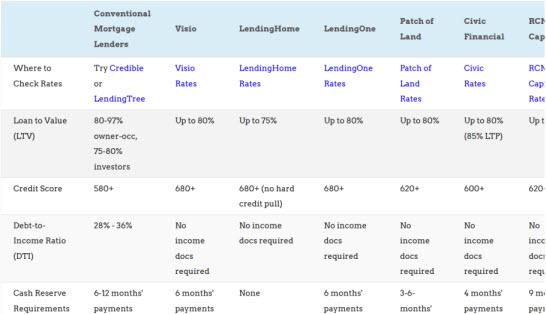 What short-term fix-and-flip loan options are available nowadays?
How about long-term rental property loans?
We compare several buy-and-rehab lenders and several long-term landlord loans on LTV, interest rates, closing costs, income requirements and more.
The Window Won’t Last Forever
At some point, rates will come down. Confidence will return. Capital will flood back into real estate, and the discounts we’re seeing today will compress or disappear entirely.
I don’t know exactly when that happens. Could be six months, could be two years. But the pattern is predictable even if the timing isn’t. Uncertainty creates opportunity, and that opportunity gets priced away once certainty returns.
Family offices aren’t waiting for permission. They’re buying now, while the rest of the market hesitates.
The question is whether you’ll do the same… or whether you’ll look back in a few years and wish you had.
About the Author

G. Brian Davis is a real estate investor and cofounder of SparkRental who spends 10 months of the year in South America. His mission: to help 5,000 people reach financial independence with passive income from real estate. If you want to be one of them, join Brian and Deni for a free class on How to Earn 15-25% on Fractional Real Estate Investments.
Connect with us on social!