The Short Version:
- Most people don’t avoid passive real estate because of risk. They avoid it because they don’t want to feel uninformed.
- Confidence doesn’t come from knowing everything. It comes from understanding the key moving parts and following a clear process.
- Learning alone makes every decision heavier. Reviewing opportunities alongside experienced investors makes them clearer.
- Start small. Gain exposure. Let experience replace theory. That’s how people stop feeling like amateurs and start building real passive income.

Most people who are curious about passive real estate investing aren’t worried about returns, market cycles, or whether the asset class “works.” They’ve already accepted that real estate has created wealth for a long time. What stops them is something quieter and harder to admit.
They’re worried about making a decision they don’t fully understand.
They imagine committing capital to a deal, feeling good at the beginning, and then months or years later realizing they missed something important. Not because they were careless, but because they didn’t yet know what questions mattered. That discomfort alone keeps a lot of smart, capable people stuck doing nothing.
Passive real estate feels different from other investments because it doesn’t fit neatly into most people’s lived experience. You don’t see it happening around you. Your coworkers don’t casually talk about syndications or private partnerships. Your friends don’t compare notes on operators and underwriting assumptions. So when you first encounter it, everything feels unfamiliar at once. The language, the timelines and the size of the decisions.
Even people who are confident in every other area of life suddenly feel cautious here. That reaction is what happens any time you step into a new environment without context.
Why confidence takes longer than people expect
Confidence in investing doesn’t arrive all at once. It builds gradually, and usually only after people have seen how the process works in practice. The challenge with passive real estate is that most people expect to feel confident before they participate, rather than as a result of participating.
So they read more, listen to more podcasts and they tell themselves they’ll act once they “have enough information.”
Learning is important, but learning without context can actually slow people down. The more information you consume in isolation, the more complicated everything starts to feel. You learn new terms. You hear different opinions. You realize there are multiple ways to structure deals and multiple ways things can go wrong. Instead of clarity, you get hesitation.
At some point, additional information stops being helpful. What people actually need is a way to organize that information into something usable.
What experienced investors actually rely on
People who invest passively over long periods aren’t relying on brilliance or intuition. They rely on structure. They follow a repeatable process that helps them evaluate opportunities consistently.
They focus on a handful of core questions.
Who is running the deal?
What their track record looks like?
How the deal is financed?
What assumptions need to hold for the projections to work?
Where the pressure points are if conditions change?
They don’t need certainty. They just need to be able to explain to themselves how the deal works and what could realistically go wrong so the decision becomes manageable.
This is usually the moment when the “amateur” feeling starts to fade. Not because everything suddenly feels simple, but because the uncertainty feels bounded. You’re no longer guessing blindly. You’re making a decision with known risks.
Why doing this alone makes everything heavier
When people try to learn and invest entirely on their own, every decision carries extra emotional weight. You feel responsible for catching every issue. You worry about asking questions that might sound obvious. Any uncertainty feels personal.
That pressure makes people either hesitate indefinitely or rush into a deal just to get the first one over with. Neither approach builds confidence.
Learning alongside other investors changes the experience. You hear questions you hadn’t thought to ask yet. You see how experienced people reason through uncertainty. You realize that careful investing is usually slow and deliberate instead of fast and decisive.
Most importantly, you stop feeling like you’re supposed to know everything already. You’re participating in a shared process where the goal is to surface risks before money goes in. That shared structure removes a lot of unnecessary stress and replaces it with perspective.
(article continues below)
Real estate investments? Awesome.
Being a landlord? Less fun.
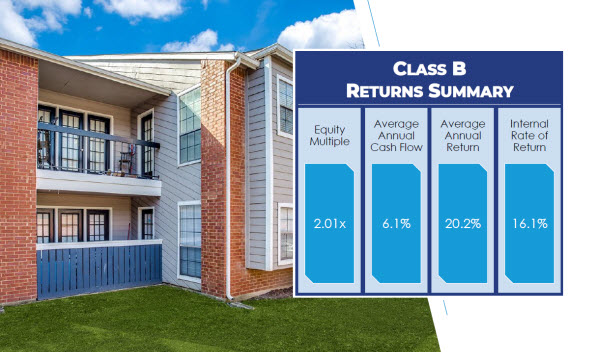
Learn how to earn 15%+ on passive real estate investments in our free video course.

Why starting small is part of the process
Early investments are about understanding how things work once real capital is involved, how distributions arrive, how updates are communicated, how timelines change and how delays feel when you’re no longer looking at a spreadsheet… but at your own money.
Starting with a smaller amount gives you room to learn without feeling exposed. It lets experience replace theory. Over time, familiarity builds naturally and the mechanics stop feeling foreign. The language starts to make sense and you begin to recognize patterns across deals.
(article continues below)
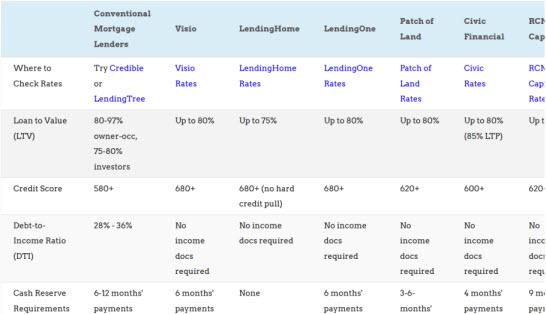 What short-term fix-and-flip loan options are available nowadays?
How about long-term rental property loans?
We compare several buy-and-rehab lenders and several long-term landlord loans on LTV, interest rates, closing costs, income requirements and more.
Where confidence actually comes from
People stop feeling like amateurs when they invest in environments designed for learning. Places where questions are normal. Where decisions follow a clear process. Where nobody pretends to have perfect foresight. Over time, passive real estate stops feeling mysterious and becomes another system you understand well enough to navigate.
And even if you take nothing else, just understand that the hardest part (in any endeavour) is simply getting started. The path illuminates as you walk it.
About the Author

G. Brian Davis is a real estate investor and cofounder of SparkRental who spends 10 months of the year in South America. His mission: to help 5,000 people reach financial independence with passive income from real estate. If you want to be one of them, join Brian and Deni for a free class on How to Earn 15-25% on Fractional Real Estate Investments.
Connect with us on social!