The Short Version:
-
- Oil at $120/barrel is pushing inflation back up and keeping the Fed locked at 3.50-3.75%… rate cuts are off the table for now
- S&P dropped 4.55% in a week while mortgage rates climbed to 6.53%… volatility is spiking across the board
- Family offices aren’t panicking… they’re buying distressed real estate at 18 cents on the dollar while everyone else freezes
- Assets that generate income regardless of headlines… like workforce housing paying 8% distributions… don’t care what’s happening in the Strait of Hormuz

Oil hit $120 a barrel this month. The S&P dropped 4.5% in three weeks and mortgage rates spiked to 6.53%… the highest since September.
If your entire portfolio moves with the stock market, March has been brutal.
The thing nobody wants to admit is this kind of volatility isn’t going away. The Strait of Hormuz is effectively closed, which means one-fifth of the world’s oil supply is stuck. Qatar declared force majeure on its gas exports. The IEA has called it the “greatest global energy security challenge in history.”
That’s not hyperbole. That’s the head of the International Energy Agency describing what’s happening right now.
The Fed Is Stuck
Before the war started, analysts expected rate cuts this year. Maybe two, maybe more. But the math has completely changed.
Higher oil prices push inflation higher, and the Fed can’t cut rates when inflation is rising. But they also can’t raise rates aggressively without crushing an already shaky economy. Mark Zandi at Moody’s put it bluntly: the Fed is in a “no-win situation.”
So they’re holding steady at 3.50-3.75%, watching and waiting while mortgage rates keep climbing. The 30-year fixed jumped to 6.53% on Friday, and home loan applications dropped 10.5% last week. The spring housing market (traditionally the busiest season) is stalling before it even starts.
For anyone with a portfolio concentrated in stocks or rate-sensitive assets, this is the worst kind of environment. Volatility on one side, inflation pressure on the other, and no clear path forward.
Geopolitical Risk Is the New Normal
I’m not going to pretend I know how this war ends, nobody does.
Trump says it’s “very complete, pretty much.” Analysts say high prices could persist for months even if a deal gets signed tomorrow, because infrastructure has been damaged and shipping routes remain dangerous. The supply chain doesn’t snap back overnight… especially when drone attacks can come from hidden launch sites for months after the main conflict ends.
But here’s what I do know: this won’t be the last crisis.
The last five years gave us a pandemic, a war in Ukraine, inflation spikes, the fastest rate hiking cycle in decades and now a war in the Middle East threatening global energy supplies. Each one came with predictions that things would “return to normal.” They didn’t. The new normal is volatility, and Morgan Stanley’s research team said it plainly in their latest outlook: “Geopolitical risk is becoming a persistent part of the backdrop, not merely episodic.”
If your investment strategy assumes calm seas, you’re betting against the evidence.
The Problem With Stock-Heavy Portfolios
Most people think they’re diversified. They own a total stock market index fund, an international fund, maybe some bonds. But that’s just different flavors of the same thing.
When markets crash, correlations spike and everything falls together. We saw it in 2008 when stocks and bonds both dropped. We saw it in 2022 when the traditional 60/40 portfolio had its worst year in decades. We’re seeing it now as energy prices push inflation higher while simultaneously dragging down growth expectations.
The S&P dropped from 6,816 to 6,506 in three weeks (a 4.55% decline.) That might not sound catastrophic, but if you’re retired or close to it, watching your portfolio drop while prices at the pump climb feels very different than watching numbers move on a screen. (I talked to a club member last week who described it as “getting squeezed from both ends.”)
The thing about volatility is, it only hurts if all your wealth is tied to the thing that’s moving. If you own assets that generate income regardless of what the stock market does, a correction becomes noise rather than a crisis. The headlines still exist, but they don’t dictate whether you can pay your bills or fund your lifestyle.
What Real Diversification Looks Like
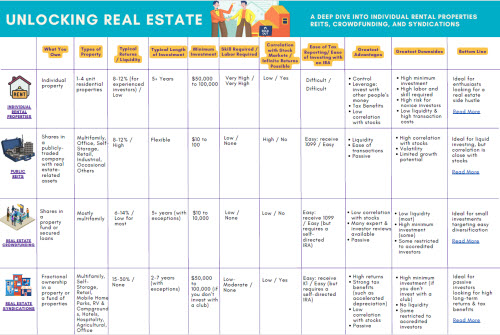
Real estate, particularly private real estate that isn’t traded on public exchanges, has historically shown low correlation with stocks.
When the S&P drops 5%, apartment buildings don’t suddenly lose tenants. The rent keeps coming in, distributions keep flowing, and the income doesn’t depend on selling shares at favorable prices or hoping the market recovers before you need the money. Tenants need a place to live whether oil is at $80 or $120. That basic human need creates a floor under the income that stock dividends simply don’t have.
This isn’t theoretical. In the Co-Investing Club, we’ve invested in workforce housing deals in Cleveland that kept paying their 8% distribution yields straight through the volatility of 2022 and 2023. Those distributions showed up quarterly, regardless of what headlines said. The operators sent their reports, the tenants paid their rent, and the checks cleared. Meanwhile, I watched friends stress over their brokerage statements every time Jerome Powell opened his mouth.
That’s a fundamentally different experience than watching your 401(k) balance swing with every news cycle.
(article continues below)
Real estate investments? Awesome.
Being a landlord? Less fun.
Learn how to earn 15%+ on passive real estate investments in our free video course.

Family Offices Are Moving
CNBC reported this week that family offices… the private investment firms of the ultra-wealthy… are “snapping up domestic real estate” while other investors sit on the sidelines. This caught my attention because family offices don’t move on impulse. They have long time horizons and they’re not trying to flip anything in 18 months.
Declaration Partners just closed a $303 million real estate fund. Elle Family Office is buying distressed office buildings in Atlanta at 18 cents on the dollar. These aren’t speculators chasing quick flips. They’re patient investors who recognize that uncertainty creates opportunity, and they’re positioning now while everyone else waits for “clarity.”
One quote from the CNBC piece stuck with me: “A lot of institutional funds look at opportunities like that and say, ‘If I can’t execute a business plan in a year and a half or two years or three years, that’s not quick enough.’ It required somebody who had the longer-term perspective.”
That’s exactly right. The smart money isn’t waiting for rates to drop or volatility to calm down. They’re buying now, while competition is low and sellers are motivated. By the time everything feels “safe” again, the best deals will be gone and prices will reflect the renewed confidence.
The Uncertainty Premium
There’s a concept in investing called the uncertainty premium and it’s the extra return you can earn by being willing to invest when others are scared.
Right now, there’s plenty to be scared about. War in the Middle East, oil prices spiking, inflation ticking up, the Fed stuck in neutral, headlines that change by the hour. But fear creates opportunity. When most investors hesitate, competition for deals decreases and motivated sellers accept lower prices. Buyers with capital and conviction negotiate better terms.
I’ve been investing in passive real estate for years, through good markets and bad. But I’m particularly active right now. The deals we’re seeing in the Co-Investing Club are better than they’ve been in a long time… operators who overleveraged during the low-rate era are selling at discounts, supply constraints are setting up favorable rent growth, and the fundamentals support the thesis.
When institutional money starts flowing into an asset class (and it is) I want to be there first. Not because I’m trying to time anything perfectly but because I’ve learned that waiting for the “all clear” signal means paying more for the same assets later.
(article continues below)
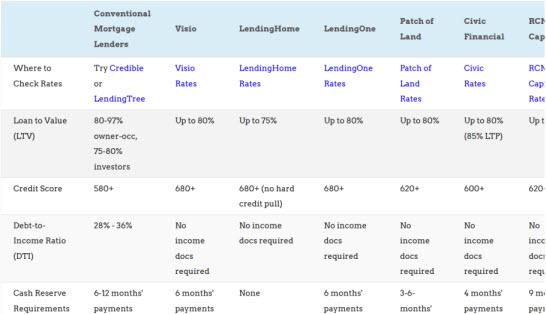 What short-term fix-and-flip loan options are available nowadays?
How about long-term rental property loans?
We compare several buy-and-rehab lenders and several long-term landlord loans on LTV, interest rates, closing costs, income requirements and more.
What I’m Not Saying
I’m not saying sell all your stocks, and I’m not saying real estate is risk-free. It’s not. Economic downturns affect occupancy, job losses affect tenants’ ability to pay rent, and interest rates affect valuations. Real estate has its own risks, and anyone who tells you otherwise is selling something.
What I am saying is this: if everything you own moves with the stock market, you’re fully exposed to whatever comes next. And “what comes next” has been getting less predictable, not more.
The question worth asking isn’t “when will things calm down?” It’s “is my portfolio built to absorb the next shock?”
Because there will be one. There always is.
About the Author

G. Brian Davis is a real estate investor and cofounder of SparkRental who spends 10 months of the year in South America. His mission: to help 5,000 people reach financial independence with passive income from real estate. If you want to be one of them, join Brian and Deni for a free class on How to Earn 15-25% on Fractional Real Estate Investments.
Connect with us on social!