The Short Version:
- Why your 30s and 40s are the highest-leverage years to build wealth.
- The most popular passive income strategies (with the trade-offs that rarely get mentioned.)
- The reason serious investors keep coming back to one asset class for building long-term passive income.

There’s a moment that hits most people somewhere between 30 and 45. You’ve done everything right: Got the degree, landed the good job, climbed a few rungs. Your income is solid, maybe even impressive. But you look around and realize something uncomfortable: you’re still completely dependent on showing up.
If you stopped working tomorrow, the income stops too. Maybe you’ve got some savings, a 401(k) that’s growing on paper, but nothing that actually pays you while you sleep.
And the clock is ticking. You’re not 25 anymore, and the runway to build real wealth feels like it’s getting shorter every year.
That’s usually when people start Googling “passive income.” The problem is, most of what you’ll find online ranges from misleading to outright fantasy. So before I get into what actually works, let’s clear up what passive income really is and what most people get dangerously wrong about it.
What Passive Income Actually Is (And Isn’t)
Passive income is money that comes in without you actively trading hours for it. That’s the simple definition. But here’s where people get tripped up: passive doesn’t mean effortless to set up, and it definitely doesn’t mean instant.
Every legitimate passive income stream requires one of two things upfront — either a significant investment of time or money. Usually both. The “passive” part comes later, after you’ve built or bought the asset that generates the income.
When someone tells you they’re making passive income from a rental property, what they’re not mentioning is the months they spent finding the deal, the capital they tied up in the down payment, and the ongoing management that happens behind the scenes. When someone brags about passive income from an online course, they’re glossing over the hundreds of hours it took to build, launch, and market that course before a single dollar came in.
I don’t mean to discourage you. We all just need realistic expectations.
Passive income is absolutely achievable. But it’s not a get-rich-quick scheme. It’s a get-rich-eventually strategy that rewards people who are willing to put in the work or capital upfront and then stay patient.
Why Your 30s and 40s Are the Critical Window
Your 30s and 40s are the highest-leverage years of your financial life. You’re likely earning more than you ever have. You’ve got enough experience to avoid the dumb mistakes you made in your 20s. And crucially, you still have time. Enough runway for compound growth to do its thing, but not so much time that you can afford to keep putting this off.
The trap I see people fall into is thinking they’ll “figure it out later.” They’re busy with careers, families, life. Passive income sounds nice in theory, but there’s always something more urgent demanding their attention. And then one day they’re 55, wondering where the years went and why they’re still dependent on a paycheck.
You don’t need to panic or stress out. I raise this point because the decisions you make in the next few years matter more than you might realize. The money you put to work now has decades to compound. The money you put to work at 55 has maybe ten years. That difference is enormous.
The Passive Income Options Everyone Talks About
Let’s run through the usual suspects. The passive income ideas you’ve probably seen plastered all over YouTube and financial blogs.
1. Dividend Stocks
You buy shares in companies that pay regular dividends, and you collect income every quarter. It’s truly passive once you own the shares, and it’s easy to get started.
The downside? The yields are typically modest. We’re talking 2-4% annually for most quality dividend stocks.
To generate meaningful income, you need a substantial portfolio. If you want $3,000 a month from dividends, you’re looking at needing somewhere around $1 million invested at a 3.5% yield. For most people, that’s a long way off.
2. Online Businesses
Courses, digital products, affiliate sites; all can generate impressive passive income once they’re built.
I know people making six figures from products they created years ago. This is something I did myself in case you’re new here. So trust me when I say: the “passive” part only kicks in after a massive upfront time investment, and even then, most online businesses require ongoing maintenance, updates, and marketing. It’s passive-ish – maybe, eventually – not truly hands-off.
3. Bonds
These are about as boring as it gets, which is actually a compliment in investing. You lend money, you get interest payments.
The trade-off is that yields often barely keep pace with inflation, especially for safer government bonds. You’re preserving capital more than building wealth.
(article continues below)
Real estate investments? Awesome.
Being a landlord? Less fun.
Learn how to earn 15%+ on passive real estate investments in our free video course.

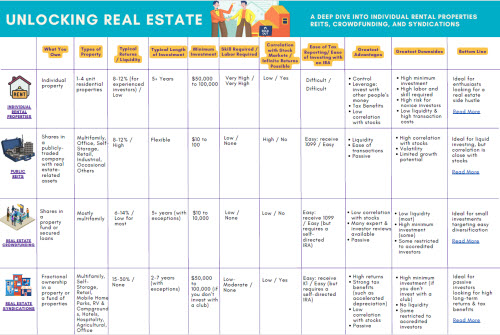
4. Real Estate Investment Trusts (REITs)
They let you (indirectly) invest in real estate through stock exchanges. They’re liquid, accessible, and pay dividends.
But because they trade on public markets, they’re subject to the same volatility as stocks. When the market panics, your REITs drop too, regardless of how the underlying properties are actually performing. They share an uncomfortable correlation with the stock market at large.
In other words, you get some real estate exposure without the uncorrelated stability that makes real estate attractive in the first place.
Each of these has a place in a diversified portfolio. But if you’re looking for something that combines meaningful yields, tangible assets, and genuine passivity, there’s a reason serious investors keep coming back to real estate.
Why Real Estate Remains the Gold Standard
Real estate has been building generational wealth longer than any other asset class. There’s a reason the wealthiest families in the world hold significant real estate portfolios. It simply works, and it keeps working across economic cycles.
Here’s what makes it compelling as a passive income vehicle:
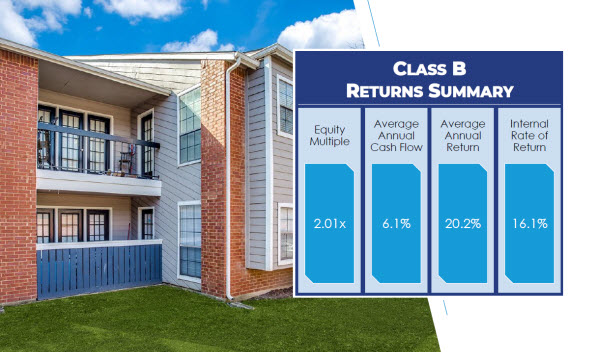
The income is tangible and predictable. When you own a piece of an apartment complex, or industrial property, or mobile home park, there are real tenants paying real rent every month. That rent covers expenses, services debt, and the remainder flows to investors as distributions. It’s not abstract like a stock price moving up or down based on market sentiment. It’s cash flow backed by a physical asset that people need — shelter.
You also enjoy tax advantages that don’t exist in other asset classes. Depreciation allows real estate investors to offset income on paper, even while collecting actual cash distributions. It’s one of the few legal tax shelters available to everyday investors, and it can meaningfully boost your after-tax returns.
And critically, it’s inflation-resistant. When inflation rises, rents tend to rise too. Your income adjusts upward over time, rather than getting eroded the way fixed-income investments do.
The Problem With Traditional Real Estate Investing
If real estate is so great, why isn’t everyone doing it? Because the traditional path (buying rental properties yourself) is neither passive nor accessible for most busy professionals.
Buying a rental property typically requires $50,000 to $100,000 or more for a down payment, plus closing costs, plus reserves for repairs and vacancies. That’s a huge capital outlay before you’ve collected a dollar of rent.
Then there’s the ongoing reality of being a landlord. Tenant calls at midnight. Plumbing emergencies. Evictions. Property managers who may or may not be competent. Vacancies that eat into your returns. For people with demanding careers and limited bandwidth, being a landlord isn’t a passive income strategy. It’s basically a second job.
This is the contradiction that keeps most high-earning professionals on the sidelines. They want real estate returns, but they don’t want the real estate lifestyle. They want passive income, but everything about traditional real estate investing seems decidedly active.
(article continues below)
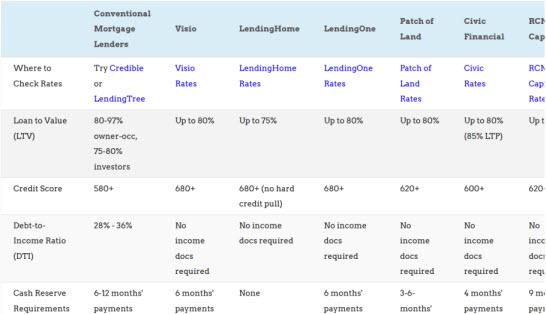 What short-term fix-and-flip loan options are available nowadays?
How about long-term rental property loans?
We compare several buy-and-rehab lenders and several long-term landlord loans on LTV, interest rates, closing costs, income requirements and more.
The Approach That Actually Works
The solution I landed on and the one I’ve been using for years now is passive real estate investing. Instead of buying properties myself and dealing with all the headaches, I invest in deals where experienced operators handle everything.
These are syndications, funds, private notes, and private placements involving apartment complexes, mobile home parks, land developments, and other commercial real estate. I put in capital alongside other investors, and the operator handles acquisition, management, and eventually the sale. My role is to vet the deal upfront, wire funds, and then collect quarterly distributions. The rest I leave to be managed by professionals who do this full-time.
The minimums on these deals are typically $50,000 to $100,000, which is where most individual investors get stuck. But that’s exactly why I started vetting investments with other like-minded investors through our Co-Investing Club, and going in on them together. When you invest as a group, suddenly that $50,000 minimum becomes $5,000 per person. You get access to institutional-quality deals without needing institutional-level capital.
Even more importantly, you’re not figuring it out alone. Vetting these deals takes skill and experience. When you’re doing it alongside a community of investors asking hard questions and sharing knowledge, you dramatically reduce the risk of making a mistake with your money.
Getting Started in Your 30s or 40s
If you’re reading this and thinking “Okay, but where do I actually start,” here’s the honest answer: start by learning.
Don’t rush into any investment (real estate or otherwise) until you understand what you’re getting into. Read about how syndications work. Learn what questions to ask operators. Understand the difference between preferred returns, equity splits, and capital stacks. This isn’t rocket science, but it does require some baseline education.
Then start small. You don’t need to go all-in on your first deal. Put a smaller amount into something that aligns with your risk tolerance and learning goals. See how it feels. Get comfortable with the process.
Over time, as your confidence and capital grow, you can scale up. Maybe you invest in two or three deals a year. Maybe you diversify across different property types and markets. The goal isn’t to get rich overnight. It’s to build a portfolio of passive income streams that compound over time.
By the time you’re 50 or 55, you want to look back at the decisions you made in your 30s and 40s and feel grateful. Not regretful. The money you put to work now is what buys you options later — the ability to retire early, work because you want to rather than because you have to, or simply live without the low-grade anxiety of financial dependence.
That future is available. But it requires action in the present.
About the Author

G. Brian Davis is a real estate investor and cofounder of SparkRental who spends 10 months of the year in South America. His mission: to help 5,000 people reach financial independence with passive income from real estate. If you want to be one of them, join Brian and Deni for a free class on How to Earn 15-25% on Fractional Real Estate Investments.
Connect with us on social!