The Short Version:
- You don’t need $100K (or even $50K) to start investing in real estate. There are legitimate paths in with $10K or less.
- The traditional “buy a rental property” model isn’t your only option and for most busy professionals, it’s not the best one either.
- Some low-cost entry points are more hands-on than others. Knowing the trade-offs helps you pick the right path.
- Access to quality deals used to be reserved for the wealthy. That’s changing.

There’s a persistent myth in real estate that you need serious capital to get started. Six figures in the bank. A hefty down payment. The kind of money most people don’t have sitting around, especially in their 20s and 30s when they’re still building their careers.
The truth is, you don’t need $100,000 to start investing in real estate. Or $10,000. You don’t even need $25,000. There are legitimate paths into real estate with as little as $5,000 – $10,000 (some requiring even less than that.) The options look different than buying a rental property outright, but they’re real, and they work.
Let me walk you through what’s actually possible when you’re starting with limited capital, what the trade-offs are, and how I’d approach it if I were starting from scratch today.
The Misconception That Keeps People on the Sidelines
Most people picture real estate investing as buying a property. A single-family home, maybe a duplex. You scrape together a down payment, get a mortgage, find tenants, and become a landlord. That’s the mental model, and it’s not wrong. It’s just incomplete.
The problem is that this traditional path does require significant capital. Even with a low down payment loan, you’re typically looking at $30,000 to $50,000 minimum when you factor in the down payment, closing costs, and reserves for repairs and vacancies. In expensive markets, double or triple that.
So people assume they’re locked out. They figure they’ll wait until they’ve saved more, and in the meantime, they park their money in a savings account earning 3% while inflation quietly eats away at it. Or they throw it into the stock market and hope for the best, watching their portfolio rise and fall with every news cycle.
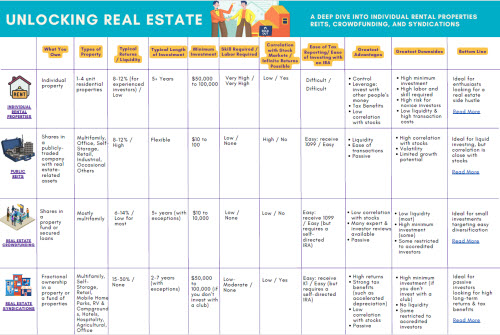
Here’s what I wish someone had told me earlier: you don’t have to buy a property to invest in real estate. There are ways to get real estate exposure, real estate returns, and real estate diversification with a fraction of the capital. Some of these options are more hands-on, others are completely passive. But all of them are accessible to someone with $10,000 or less.
Option 1: House Hacking (If You’re Willing to Get Hands-On)
House hacking is the classic low-money-down strategy, and it works. The basic idea is that you buy a small multifamily property (a duplex, triplex, or fourplex) live in one unit, and rent out the others. Because you’re occupying the property, you can use owner-occupied financing with down payments as low as 3.5% through FHA loans.
On a $300,000 duplex, that’s a down payment of around $10,500. The rental income from the other unit covers most or all of your mortgage, and you’re essentially living for free while building equity.
The trade-off is that this isn’t passive. You’re a landlord. You’re living next door to your tenants. You’re handling maintenance, dealing with vacancies, and learning property management on the fly. For some people, especially younger investors with time and energy to spare, this is a great way to break into real estate. You learn the business from the inside while building equity with minimal capital.
But for busy professionals with demanding careers… the kind of people who value their weekends and don’t want a 10pm call about a leaky faucet… house hacking might not be the right fit. It’s a solid wealth-building strategy, but it’s definitely a hands-on one.
(article continues below)
Real estate investments? Awesome.
Being a landlord? Less fun.
Learn how to earn 15%+ on passive real estate investments in our free video course.

Option 2: Real Estate Crowdfunding Platforms
Over the past decade, a handful of platforms have emerged that let everyday investors participate in real estate deals online. Companies like Fundrise, RealtyMogul, and CrowdStreet pool money from investors and deploy it into real estate projects like residential developments, commercial properties and debt funds.
Minimums vary by platform, but some let you start with as little as $500 or $1,000. You’re essentially buying a piece of a larger real estate investment that would normally be inaccessible to individual investors.
The appeal is obvious: low minimums, passive involvement, and diversification across multiple properties. The limitations are worth understanding too. Many of these platforms invest your money across a general fund rather than letting you choose specific deals. You’re trusting the platform’s judgment on where to allocate capital. Fees can eat into returns. And some platforms have lock-up periods where you can’t easily access your money.
For someone with limited capital who wants real estate exposure without being a landlord, crowdfunding platforms can be a decent starting point. Just read the fine print, understand the fee structure, and know what you’re actually investing in.
Option 3: Real Estate Syndications — Split with Other Investors (The Approach I Use)
This is where I spend most of my investing energy these days. A real estate syndication is essentially a group investment where multiple investors pool their capital to buy a property that none of them could afford individually. There’s an operator, usually an experienced real estate company who handles everything: finding the deal, securing financing, managing the property, and eventually selling it. Investors are passive. They put in capital and collect returns.
Syndications typically target larger commercial properties (apartment complexes, mobile home parks, self-storage facilities, industrial buildings.) These are the kinds of assets that generate stable cash flow and have historically performed well across economic cycles.
The traditional problem with syndications is the minimum investment. Most deals require $50,000 to $100,000 to participate. That’s great if you have the capital, but it puts them out of reach for most people just getting started.
This is exactly why I started bringing investors together through our Co-Investing Club. When you pool capital as a group, that $50,000 minimum becomes as little as $5,000 per person. Suddenly, the same deals that institutional investors and wealthy individuals have accessed for decades become available to regular people with regular amounts of money.
And it’s not just about access. It’s about vetting. These deals require due diligence, analyzing the operator’s track record, stress-testing the projections, understanding the risks. When you’re doing that alongside a community of experienced investors, you’re not guessing alone. You’ve got people asking hard questions, sharing insights, and helping each other make smarter decisions.
I invest my own money in most deals we do together. I put my money where my mouth is. I’m not recommending something I’m not personally willing to put capital into.
(article continues below)
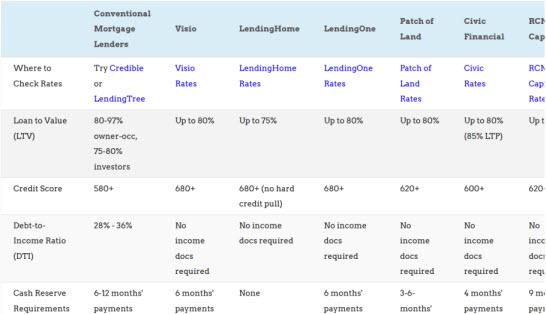 What short-term fix-and-flip loan options are available nowadays?
How about long-term rental property loans?
We compare several buy-and-rehab lenders and several long-term landlord loans on LTV, interest rates, closing costs, income requirements and more.
What I’d Do Starting With $10,000 or Less
If I were starting from zero today, with less than $10,000 to invest, here’s how I’d think about it.
First, I’d set realistic expectations. With limited capital, I’m not going to become a real estate mogul overnight. The goal is to get started, learn how these investments work, and begin building a portfolio that can compound over time.
Second, I’d prioritize passive options. Unless I had significant time and energy to dedicate to being a landlord, I’d skip the hands-on strategies like house hacking and wholesaling. They can work, but they’re essentially second jobs. For busy professionals, passive investing makes more sense.
Third, I’d look for ways to access quality deals with lower minimums. Crowdfunding platforms are one option. Investing alongside a group (like what we do in the Co-Investing Club) is another. The key is getting into real deals with real assets and experienced operators, not just buying a paper claim on a diversified fund you don’t understand.
And finally, I’d commit to learning. The more you understand about how real estate investing works (cap rates, cash-on-cash returns, debt structures, operator track records) the better decisions you’ll make. Education compounds just like capital does.
You Don’t Need to Wait
The biggest mistake I see people make is assuming they need to wait until they have more money. They tell themselves they’ll start investing once they’ve saved $50,000, or once the market settles down, or once they feel more confident.
But waiting has a cost. Every year you’re not invested is a year your money isn’t working for you. The returns you could be earning are quietly passing you by while you wait for the “right” moment that never quite arrives.
You don’t need $100,000 to start investing in real estate. You don’t even need $50,000. With $5,000 or $10,000, there are real options available, not watered-down substitutes but actual real estate investments with tangible assets and meaningful returns.
The path is there. It’s just a matter of taking the first step.
About the Author

G. Brian Davis is a real estate investor and cofounder of SparkRental who spends 10 months of the year in South America. His mission: to help 5,000 people reach financial independence with passive income from real estate. If you want to be one of them, join Brian and Deni for a free class on How to Earn 15-25% on Fractional Real Estate Investments.
Connect with us on social!