The Short Version:
-
- The difference of approach between a seasoned investor vs a novice
- Why we’re psychologically wired to focus on upside and ignore risk. It’s why so many investors get burned by deals that looked great on paper.
- The 2008 crash and the 2022 syndication blowups had the same root cause: people optimizing for returns without stress-testing the downside.
- Avoiding catastrophic losses matters more than chasing big wins. The math is unforgiving — a 50% loss requires a 100% gain just to break even.
There’s a line from Keith Cunningham’s “The Road Less Stupid” that changed how I think about investing:
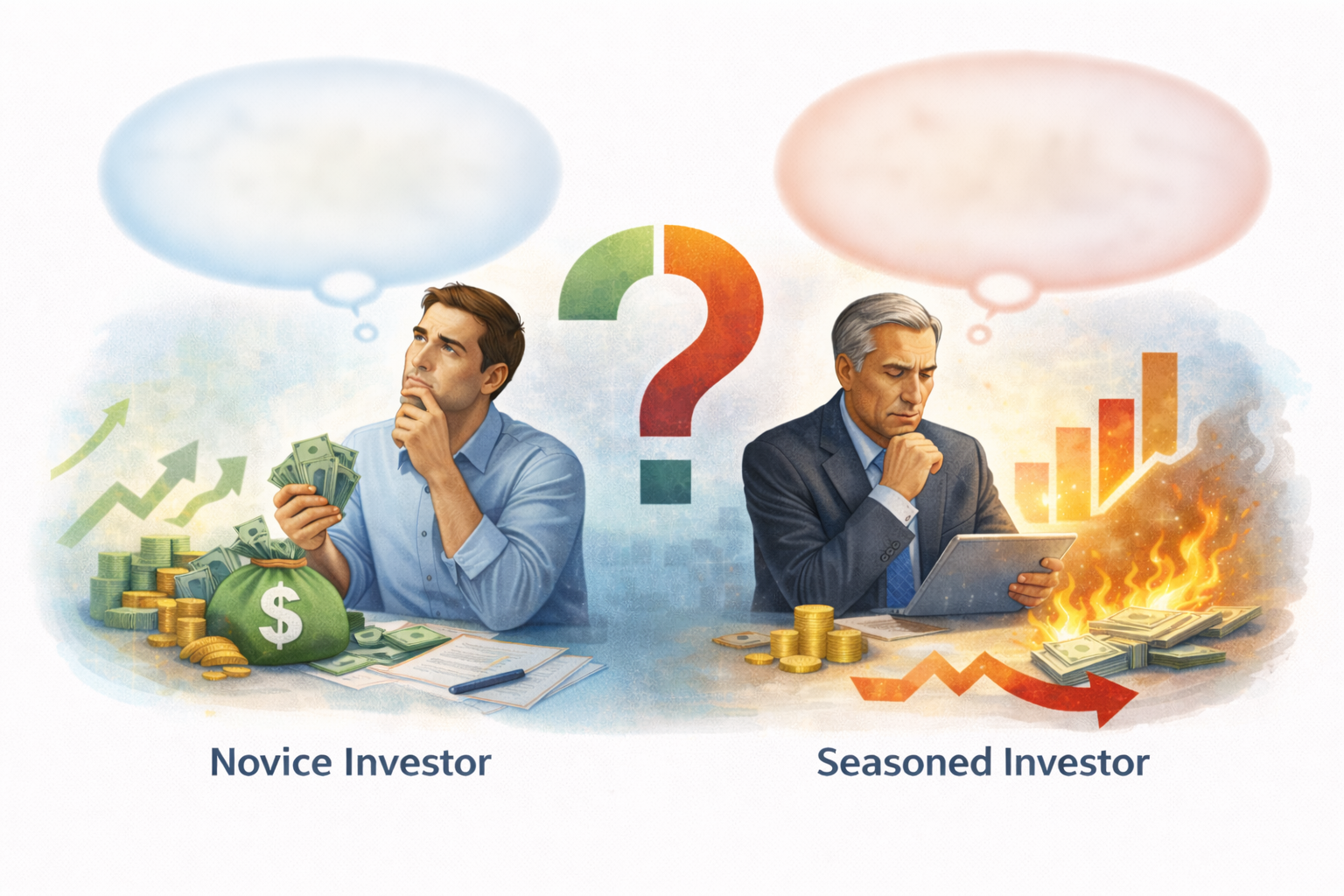
“Novice investors ask how much can I make on a given deal. Seasoned investors ask how much could I lose.”
It sounds simple and almost obvious. But the more I’ve invested, the more I’ve realized how rare it is for people to actually internalize this.
Most investors lead with upside. They see a projected 18% return and start calculating how much they’ll make. They get excited by imagining the best case scenario.
Seasoned investors do the opposite. They assume things will go wrong. How much of my capital is at risk? What’s the worst realistic outcome? Can I survive it?
This single shift in thinking is the difference between building long-term wealth and blowing yourself up.
Why We’re Wired to Ask the Wrong Question
It’s not entirely your fault if you focus on returns first. Our brains are wired for it.
Daniel Kahneman, the Nobel Prize-winning psychologist, spent decades studying how humans make decisions under uncertainty. One of his core findings: we consistently overweight potential gains and underweight potential losses. It’s called optimism bias, and it’s baked into our psychology.
When someone shows you an investment with a 15% projected return, your brain lights up. You start imagining what that money could do for you. The risk section of the pitch deck? You skim it. You assume it won’t happen to you.
This is why casinos stay in business. It’s why people buy lottery tickets. And it’s why so many investors get burned by deals that looked great on paper.
The antidote is discipline. Training yourself to ask the hard question first, before the excitement takes over.
What Happens When You Don’t Ask
I learned this lesson the hard way.
Back in the mid-2000s, I was buying rental properties like everyone else. The market was ripping. Prices kept going up. I was overleveraged and convinced I was a genius.
I never seriously asked what would happen if the market turned. I didn’t stress-test my portfolio against a downturn. I assumed the good times would keep rolling.
Then 2008 happened.
I had negative cash flow, properties underwater, and no cushion. I wasn’t alone. Millions of investors got wiped out because they’d asked “how much can I make?” without ever asking “how much could I lose?”
It took years to recover. And the tuition was expensive. But the lesson stuck.
The 2022 Version of the Same Mistake
Fast forward to 2022. Interest rates spiked after years of near-zero rates. A lot of real estate operators who’d loaded up on short-term floating-rate debt suddenly couldn’t make their numbers work.
These weren’t small-time players. Major syndications went sideways. Investors who’d been promised 15-20% returns found themselves in capital calls or facing total losses.
What happened? The operators asked the wrong question. They optimized for upside (cheap debt, aggressive projections, fast growth) without adequately stress-testing the downside (what if rates double? what if we can’t refinance?).
The investors who got into those deals asked the wrong question too. They looked at the projected returns and assumed the operators knew what they were doing. They didn’t dig into the debt structure, the assumptions behind the projections, or what would happen if conditions changed.
The investors who avoided those blowups? They asked different questions. How much debt is on this deal? What’s the interest rate? Is it fixed or floating? What happens if occupancy drops 10%? What’s the break-even point?
Same market. Same opportunities. Completely different outcomes based on which question you led with.
(article continues below)
Real estate investments? Awesome.
Being a landlord? Less fun.
Learn how to earn 15%+ on passive real estate investments in our free video course.

How Seasoned Investors Think About Risk
Asking “how much could I lose?” isn’t about being negative. It’s about being realistic.
Howard Marks, co-founder of Oaktree Capital and one of the most respected investors alive, puts it this way: “You can’t predict. You can prepare.”
You can’t know which deals will underperform. You can’t time markets perfectly. But you can structure your investments so that when things go wrong (and they will), you’re not wiped out.
Warren Buffett famously has two rules of investing. Rule #1: Don’t lose money. Rule #2: Don’t forget Rule #1.
It sounds like a joke, but it’s not. Buffett’s entire strategy is built around avoiding catastrophic losses. He’d rather miss a hot deal than risk permanent capital impairment. That discipline has made him one of the wealthiest people in history.
The math backs this up. If you lose 50% of your investment, you need a 100% return just to get back to even. Losses are asymmetric. They hurt more than gains help. Avoiding big losses matters more than chasing big wins.
The Questions That Actually Matter
So what does this look like in practice? When I evaluate an investment now, I lead with risk-first questions:
- What’s the downside scenario? Not the nightmare scenario where a meteor hits the property. The realistic downside. What if occupancy drops? What if expenses run higher than projected? What if the exit takes longer than planned?
- How is the deal structured? How much debt is involved? What are the terms? Is there a cushion if cash flow dips? Are the operators putting in their own money?
- What’s the operator’s track record? Not just their wins, but how they’ve handled adversity. Have they been through a down cycle? How did their investors fare?
- What happens if I’m wrong? If this deal underperforms, what’s the impact on my overall portfolio? Can I absorb the loss without it derailing my financial goals?
- What would make me lose most or all of my capital? This is the real question. Not “what could go slightly wrong” but “what would have to happen for this to go to zero?” If that scenario isn’t that far-fetched, it’s probably not worth the risk.
These questions aren’t fun to ask. They don’t get you excited about a deal. But they’re the questions that keep you in the game long enough to build real wealth.
(article continues below)
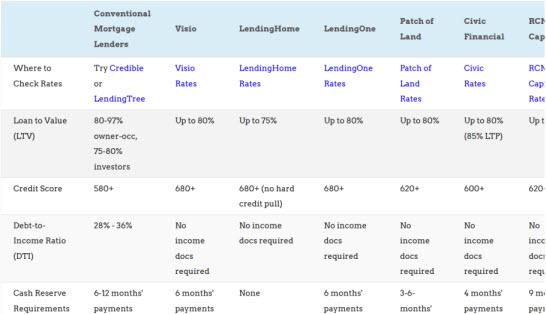 What short-term fix-and-flip loan options are available nowadays?
How about long-term rental property loans?
We compare several buy-and-rehab lenders and several long-term landlord loans on LTV, interest rates, closing costs, income requirements and more.
Why Community Helps
One of the hardest parts of risk-first thinking is doing it alone. When you’re excited about a deal, it’s hard to be your own skeptic. You want it to work. You look for reasons to say yes.
This is where having other investors around you makes a difference. People who will ask the uncomfortable questions. People who’ve seen deals go sideways and know what warning signs to look for. People who aren’t emotionally attached to your decision.
This is a big part of why we built the Co-Investing Club the way we did. Every month, we vet deals together as a group. Members ask hard questions, poke holes in assumptions, and stress-test projections. I put my own money into most of these deals, so I’m not just evaluating them academically. But having dozens of other investors looking at the same opportunity, from different angles, with different experiences. It’s a built-in check against optimism bias.
The Question That Changes Everything
If there’s one thing I’d tell my younger self, it’s this: slow down and ask better questions.
The returns will take care of themselves if you avoid the catastrophic mistakes. The investors who build real, lasting wealth aren’t the ones who chase the highest returns. They’re the ones who stay in the game long enough to let compounding work.
And that starts with one question: how much could I lose?
Let the answer guide your decision. Everything else is secondary.
About the Author

G. Brian Davis is a real estate investor and cofounder of SparkRental who spends 10 months of the year in South America. His mission: to help 5,000 people reach financial independence with passive income from real estate. If you want to be one of them, join Brian and Deni for a free class on How to Earn 15-25% on Fractional Real Estate Investments.
Connect with us on social!