The Short Version:
-
- The AI “fever dream” in investing is about to hit reality. Docupace’s CMO predicts overpromising and under-delivering will cause some wealthtechs to shutter in 2026.
- AI is genuinely useful for data processing, automation, and accessibility. It’s much less good at judgment… the part of investing that actually matters when real money is on the line.
- Regulators are starting to ask uncomfortable questions. If an AI recommends a “next best action” and you follow it, who’s responsible when things go wrong?
- Technology can enhance investing. It can’t replace the judgment that comes from experience, skin in the game, and actually understanding what you’re investing in.

For the past two years, AI has been the magic word in finance. Robo-advisors, AI-powered portfolio optimization, chatbots that promise to manage your money while you sleep… you name it. Every fintech pitch deck has “AI” somewhere in the first three slides.
But the tone is starting to shift.
Ryan George, CMO of Docupace, recently predicted that the AI “fever dream” is set to hit a harsh reality in 2026. His words: “Overpromising and under-delivering at scale tends to make a market go ‘meh.'” He expects investor money to dry up and some wealthtechs to shutter as a consequence.
Meanwhile, regulators are starting to pay attention. If an AI recommends a “next best action” and you follow it, how do you document that you made the decision responsibly? That’s the question advisors are going to have to answer. And it’s a question most haven’t thought through yet.
I’m not anti-technology. I use AI tools every day. But when it comes to investing… especially the kind of investing where real money is at stake and the decisions are irreversible for years… I think the hype has outpaced the reality and that gap is about to close.
Where AI Excels
Let’s go over where AI is actually extremely useful, because it is.
- Data processing: AI can scan thousands of documents, extract relevant information, and surface patterns faster than any human. If you’re trying to analyze market trends or compare deal structures across hundreds of syndications, AI can help.
- Automation: Repetitive tasks like rebalancing portfolios, flagging unusual transactions, or generating reports… these are perfect use cases. AI handles them faster and with fewer errors than manual processes.
- Accessibility: Robo-advisors have made basic investment management available to people who couldn’t afford a human advisor. That’s a real benefit. Someone with $5,000 to invest can now get a diversified portfolio without paying a 1% annual fee to a human.
For these use cases, AI is a genuine improvement.
The problem is when the marketing promises go beyond what the technology can actually deliver.
Where the AI Argument Falls Flat
AI is very good at pattern recognition but much less good at judgment.
Investing… real investing, not just buying index funds and forgetting about them… requires judgment. It requires understanding context, evaluating risk, reading people, and making decisions in situations where the data is incomplete or ambiguous.
Can an AI tell you whether a real estate operator is trustworthy? Can it sense that something feels off about a deal structure even if the numbers look fine? Can it weigh the tradeoffs between liquidity and returns in the context of your specific life situation?
Not yet (maybe never.)
The best AI tools today are assistants, not replacements. They can help you gather information faster and can flag things you might have missed. But the actual decision… the part where you commit capital and accept the consequences… that still requires a human brain.
The problem is that a lot of the marketing around AI investing tools implies otherwise.
“Let AI manage your portfolio.” “AI-powered recommendations tailored to you.” “Set it and forget it.”
That’s the fever dream Ryan George is talking about and it’s about to collide with reality.
The Regulatory Problem
Something most retail investors haven’t thought about is if AI-driven recommendations become widespread, regulators are going to want to know who’s responsible when things go wrong.
If a robo-advisor recommends a particular allocation and the market tanks, who’s liable? If an AI flags a “next best action” and the advisor follows it without independent analysis, is that a fiduciary violation?
These questions don’t have clear answers yet. But they’re certainly coming and the uncertainty is going to make both advisors and platforms more cautious about how they use and market AI tools.
This isn’t necessarily bad for investors. More scrutiny means fewer wild claims and more realistic expectations. But it does mean the “AI will handle everything” narrative is going to get a lot more complicated.
What This Means for Individual Investors
If you’ve been relying on AI tools to make investment decisions for you, I’d encourage you to think carefully about what those tools are actually doing.
Most robo-advisors are essentially doing basic asset allocation. They’re putting you in a mix of low-cost index funds based on your age, risk tolerance, and goals. That’s fine. It’s a reasonable approach for someone who wants to invest passively in public markets without thinking about it.
But if you’re trying to do something more sophisticated… if you’re investing in private real estate, evaluating syndication deals, or building income streams outside the stock market… AI tools aren’t going to get you there. At least not yet.
The decisions that matter most in these areas require judgment that comes from experience. Understanding what questions to ask an operator. Knowing what red flags look like in a deal structure. Evaluating whether the debt terms make sense in the current rate environment.
These aren’t things you can outsource to an algorithm. They require you to either develop the knowledge yourself or partner with people who have it.
(article continues below)
Real estate investments? Awesome.
Being a landlord? Less fun.
Learn how to earn 15%+ on passive real estate investments in our free video course.

Technology vs. Judgment
I use technology constantly in my own investing. I use spreadsheets to model cash flows and use software to track distributions and returns. I also use AI tools to research markets and summarize documents.
I use technology as a tool but I reserve the ultimate judgment and decision making for myself.
That distinction matters more than ever right now. Because as the AI hype fades and the limitations become clearer, the investors who will do best are the ones who understood this all along.
Technology can enhance investing. It can make you faster, more efficient, and better informed. But it can’t replace the judgment that comes from experience, skin in the game, and actually understanding what you’re investing in.
The Case for Human-Centered Investing
There’s a reason the wealthiest investors in the world still rely on human judgment. Not because they’re technophobes but because they understand that the decisions which matter most can’t be automated.
Warren Buffett isn’t using a robo-advisor… neither is Ray Dalio. They have teams of analysts and access to every data tool imaginable but the final call is human.
For individual investors, the lesson isn’t that you need a team of analysts. It’s that you need to be thoughtful about what you’re outsourcing and what you’re keeping in your own hands.
Outsource the repetitive stuff. Let technology handle the data processing, the rebalancing, the tracking. But keep the judgment… the decision about where to put your money, who to trust, and what risks to take… that’s yours.
(article continues below)
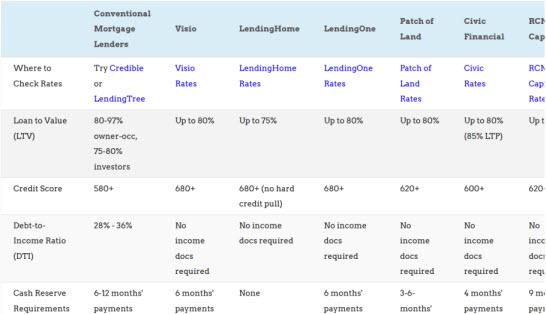 What short-term fix-and-flip loan options are available nowadays?
How about long-term rental property loans?
We compare several buy-and-rehab lenders and several long-term landlord loans on LTV, interest rates, closing costs, income requirements and more.
What I Look For Instead
When I evaluate an investment, I’m not looking for the fanciest technology or the slickest AI-powered dashboard. I’m looking for things that can’t be automated. Like:
- Operator track record. Has this person or team done this before? What happened when things went wrong? How did they handle it?
- Alignment of interest. Is the operator investing their own money? Do they get paid only when I get paid? Are our incentives lined up?
- Transparency. Can I get clear answers to direct questions? Is the deal structure simple enough to understand, or is it buried in complexity?
- Community. Are other experienced investors vetting this deal alongside me? What questions are they asking that I might have missed?
These are the things that actually predict outcomes. Human judgment applied to human decisions.
That’s what we focus on in the Co-Investing Club. We vet deals together, ask hard questions and make decisions based on experience and analysis. If that sounds intriguing, we’d love to have you join us. Membership is less than $2/day.
About the Author

G. Brian Davis is a real estate investor and cofounder of SparkRental who spends 10 months of the year in South America. His mission: to help 5,000 people reach financial independence with passive income from real estate. If you want to be one of them, join Brian and Deni for a free class on How to Earn 15-25% on Fractional Real Estate Investments.
Connect with us on social!