The Short Version:
-
- The FIRE movement has a math problem most people don’t talk about. The 4% rule assumes steady returns. Markets don’t work that way.
- Sequence of returns risk is the killer. A bad market in your first few years of retirement can permanently damage your portfolio… even if average returns look fine over time.
- Here’s what most FIRE plans miss: they optimize for accumulation, not income. Withdrawing from a portfolio is fundamentally different than building one.
- There’s a reason the ultra-wealthy don’t retire on the 4% rule. They build income-producing assets that pay them whether markets are up or down.

I’ve been following the FIRE movement for years (Financial Independence, Retire Early.) The idea that if you save aggressively, invest consistently, and keep your expenses low, you can retire decades before the traditional age of 65.
It’s an appealing vision and the core principles are sound… spend less than you earn, invest the difference and let compounding work its magic.
But there’s a blind spot in the standard FIRE playbook that most people don’t talk about (and it’s a big one.)
The typical FIRE portfolio is almost entirely stocks and bonds. Index funds, maybe some REITs for “diversification,” a bond allocation for stability. The whole strategy is built around the 4% rule… the idea that you can safely withdraw 4% of your portfolio each year and not run out of money over a 30-year retirement.
The problem with that is that the portfolio is 100% exposed to public markets. When stocks drop, your entire financial independence drops with them. When bonds fall alongside stocks… like they did in 2022… your “diversified” portfolio offers no protection at all.
Financial independence built on a single asset class isn’t independence. It’s only concentration risk with a retirement label.
The 4% Rule’s Hidden Assumptions
The 4% rule comes from a 1994 study by financial planner William Bengen. He analyzed historical market returns and concluded that a portfolio of 50% stocks and 50% bonds could sustain a 4% annual withdrawal rate over 30 years without running out of money.
It’s definitely a useful starting point. But it’s based on assumptions that may not hold.
First, it assumes a 30-year retirement. If you retire at 40 and live to 90, you’re looking at a 50-year retirement. The math changes dramatically. A portfolio that survives 30 years of withdrawals has a much lower chance of surviving 50.
Second, it assumes historical market returns continue. The study used data from 1926 to 1992. We’ve had different conditions since then… lower bond yields, higher valuations, and periods where stocks and bonds fell together. Extrapolating the past into the future is always risky.
Third, and most importantly, it assumes you can stomach watching your portfolio drop 30-40% and not panic. The 4% rule only works if you stay invested through the crashes. But behavioral finance research shows that most people can’t. They sell at the worst possible time, locking in losses and destroying the math.
The 4% rule isn’t wrong, it’s just incomplete. And for early retirees with long time horizons, it may not be enough.
Sequence of Returns Risk
What most FIRE adherents don’t think about until it’s too late is the sequence of returns risk.
It’s about when those returns happen and not just average returns.
If you retire right before a major market crash, you’re withdrawing money from a declining portfolio. Those early losses compound against you for the rest of your retirement. Even if the market eventually recovers, you’ve already sold shares at low prices to fund your living expenses. The math never catches up.
A portfolio that averages 7% annual returns over 30 years can still fail if the first five years are negative. The sequence matters as much as the average.
This is the nightmare scenario for FIRE retirees: you hit your number, quit your job, and then watch a 40% market crash wipe out years of progress. You’re suddenly faced with a choice… go back to work, cut your expenses dramatically, or watch your runway shrink.
The standard FIRE portfolio has no protection against this at all.
Net Worth vs Income
The FIRE community talks a lot about net worth and not enough about income.
But income is what actually pays your bills in retirement. Withdrawing 4% from a portfolio is one way to generate income. It’s not the only way and it may not be the best way.
Real estate… particularly passive, income-producing real estate… offers something the stock market doesn’t, which is cash flow that shows up regardless of what the market is doing.
When you own a piece of an apartment building or a portfolio of rental properties, tenants pay rent every month. That rent becomes distributions to investors. The income doesn’t depend on selling shares at favorable prices so it doesn’t disappear when the S&P drops 20%.
This is fundamentally different from the 4% withdrawal strategy. You’re not liquidating assets to fund your lifestyle. You’re collecting income from assets that continue to appreciate and generate returns over time.
The FIRE movement’s focus on net worth misses this distinction. A $1 million portfolio that generates $40,000 in annual income is more stable than a $1 million portfolio that requires selling $40,000 in shares each year. The math might look the same on a spreadsheet. The lived experience is completely different.
(article continues below)
Real estate investments? Awesome.
Being a landlord? Less fun.
Learn how to earn 15%+ on passive real estate investments in our free video course.

Tax Efficiency the FIRE Community Ignores
The standard FIRE portfolio is built around tax-advantaged accounts… 401(k)s, IRAs, Roth conversions. These are powerful tools but they come with restrictions. Early retirees have to navigate complex rules around accessing funds before age 59½, including Roth conversion ladders and 72(t) distributions.
Real estate offers a different kind of tax efficiency.
Depreciation allows you to offset rental income, often reducing your tax bill to zero on cash flow you’re actually receiving. When you sell, you can use a 1031 exchange to defer capital gains indefinitely. And if you hold until death, your heirs get a stepped-up basis and the tax bill disappears entirely.
These aren’t loopholes. They’re features of the tax code designed to encourage investment in real estate. The FIRE community obsesses over Roth conversion strategies while ignoring an entire asset class with built-in tax advantages.
I’m not saying you should abandon tax-advantaged accounts. But if you’re building toward early retirement, understanding how real estate fits into your tax picture could save you hundreds of thousands of dollars over a multi-decade retirement.
Diversification Means Different Asset Classes
Another pillar of the FIRE community is diversification. But most FIRE portfolios aren’t actually diversified. They’re concentrated in public markets with different flavors of the same exposure.
Owning a total stock market index fund, an international fund, and a bond fund isn’t diversification. It’s variation within a single asset class. When markets crash, correlations spike and everything falls together. We saw this in 2008 and again in 2022.
True diversification means owning assets that behave differently. Real estate… especially private real estate that isn’t traded on public exchanges… has historically shown low correlation with stocks. When the S&P drops, apartment buildings don’t suddenly lose tenants. The rent keeps coming in.
This is the diversification that actually protects you. Not different flavors of the same thing but different things entirely.
For FIRE adherents planning retirements that could last 40 or 50 years, this kind of structural diversification isn’t optional. It’s essential.
(article continues below)
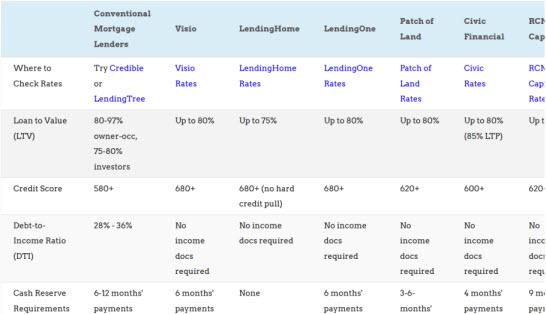 What short-term fix-and-flip loan options are available nowadays?
How about long-term rental property loans?
We compare several buy-and-rehab lenders and several long-term landlord loans on LTV, interest rates, closing costs, income requirements and more.
Building a More Resilient FIRE Portfolio
I’m not saying the FIRE principles are wrong. Aggressive saving, intentional spending and long-term investing are all sound strategies. The movement has helped millions of people think differently about money and work.
But the standard playbook is incomplete. A portfolio that’s 100% exposed to public markets carries risks that become more pronounced over a 40 or 50-year retirement. Sequence of returns risk. Correlation spikes during crashes. Tax inefficiency and volatility that tests your psychology exactly when you can least afford to sell.
Adding income-producing real estate to a FIRE portfolio addresses these gaps. It provides cash flow that doesn’t depend on market conditions. It offers tax advantages that compound over time. It diversifies your exposure in ways that actually matter.
Financial independence is a worthy goal. But real independence comes from multiple income streams, multiple asset classes, and a foundation that doesn’t crumble when the stock market has a bad year.
That’s the blind spot the FIRE movement needs to fix.
About the Author

G. Brian Davis is a real estate investor and cofounder of SparkRental who spends 10 months of the year in South America. His mission: to help 5,000 people reach financial independence with passive income from real estate. If you want to be one of them, join Brian and Deni for a free class on How to Earn 15-25% on Fractional Real Estate Investments.
Connect with us on social!