The Short Version:
-
- Selling a rental property triggers capital gains tax and depreciation recapture. Combined, you could easily lose 25-35% of your gains to taxes.
- A 1031 exchange lets you defer those taxes by rolling proceeds into a replacement property. But most people assume that means buying another property you have to manage.
- Here’s what most investors don’t know: syndications and Delaware Statutory Trusts (DSTs) can qualify as replacement properties. You can exchange into passive investments and never manage a property again.
- The “lazy 1031” solves the problem that keeps a lot of landlords trapped… they want out, but the tax hit is too painful. Now there’s an exit ramp.

If you’ve ever sold a rental property, you know the pain. You finally cash out after years of dealing with tenants, repairs, and property managers… and then the IRS shows up wanting a third of your gains.
Capital gains tax, depreciation recapture, state taxes on top. By the time the dust settles, that $200,000 profit might be $130,000 in your pocket.
Now, most investors know about 1031 exchanges as a way to defer those taxes. Sell one property, buy another of equal or greater value within strict timelines, and you can kick the tax bill down the road.
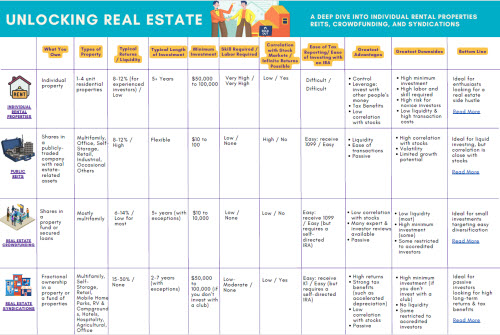
But what most people don’t realize is you don’t have to buy another property directly. You can use a 1031 exchange to roll into passive real estate investments… syndications, DSTs, or other fractional ownership structures… and never manage a property again.
I call it the “lazy 1031.” And for investors who are tired of being landlords but don’t want to trigger a massive tax event, it might be the most valuable exit strategy you’ve never heard of.
The Problem With Selling
Let’s say you bought a rental property 15 years ago for $150,000. You’ve been depreciating it the whole time. Now it’s worth $400,000 and you’re ready to move on.
On paper, that’s a $250,000 gain. Nice, right? But it’s not that simple. The IRS wants their cut in two different ways.
First, there’s capital gains tax on the appreciation. If you’re in a high tax bracket, that could be 20% federal plus state taxes depending on where you live.
Second, there’s depreciation recapture. All those years you deducted depreciation from your income? The IRS wants that back when you sell. And depreciation recapture is taxed at ordinary income rates… up to 25% federally, sometimes higher with state taxes.
Add it all up and you could easily lose $60,000 to $80,000 on that sale (maybe more.)
That’s money that could have been compounding in your next investment. Instead, it’s gone.
The Traditional 1031 Solution
A 1031 exchange lets you defer those taxes by rolling the proceeds into a “like-kind” replacement property. You have 45 days to identify potential replacement properties and 180 days to close.
The rules are strict. You need a qualified intermediary to hold the funds and the replacement property has to be of equal or greater value. You can’t touch the money in between.
But if you follow the rules, you defer the entire tax bill. Both the capital gains and the depreciation recapture get rolled into the new property’s basis. You don’t pay until you eventually sell without exchanging… or you die, and your heirs get a stepped-up basis.
For active real estate investors, 1031 exchanges are one of the most powerful wealth-building tools available. You can keep trading up, deferring taxes indefinitely, and letting your capital compound without interruption.
The problem is that it assumes you want to buy another property. And a lot of investors don’t.
What If You’re Done Being a Landlord?
This is the situation I hear about constantly. Someone has owned rentals for 20 years. They’ve built equity, they’re tired and now they want out.
But they don’t want to buy another property and start the cycle over again. They’re done dealing with tenants, contractors, and property managers. They want passive income without the headaches.
The traditional advice is – sell, pay the taxes, and invest what’s left in something else. REITs. Dividend stocks, bonds… whatever.
But that’s an expensive decision. You’re giving up 25-35% of your gains just to get out which is a massive hit to your wealth-building trajectory.
But what most people don’t know is syndication investments and Delaware Statutory Trusts (DSTs) can qualify as replacement properties in a 1031 exchange.
That means you can sell your rental, exchange into a passive investment, defer all the taxes and never manage a property again.
How the Lazy 1031 Works
The mechanics are the same as a traditional 1031 exchange. You sell your property, a qualified intermediary holds the proceeds, and you identify replacement properties within 45 days.
The difference is what you’re buying.
Instead of another rental property you have to manage, you’re buying a fractional interest in a larger real estate deal. That could be a syndication… a professionally managed apartment complex, industrial property, or other commercial real estate. Or it could be a DST, which is a specific legal structure designed for 1031 exchanges.
Either way, you own real estate. It’s just passive. Someone else handles the operations, the tenants, the maintenance. You collect distributions and wait for the eventual sale.
The tax deferral works the same way. Your basis rolls into the new investment. You don’t pay capital gains or depreciation recapture until you sell that investment… and if you exchange again at that point, you can keep deferring.
Some investors chain these exchanges for decades. They never pay the taxes. Eventually, they pass the investments to their heirs, who get a stepped-up basis and the entire tax bill disappears.
(article continues below)
Real estate investments? Awesome.
Being a landlord? Less fun.
Learn how to earn 15%+ on passive real estate investments in our free video course.

The Catch (There’s Always a Catch)
This strategy isn’t without tradeoffs.
First, you’re giving up control. When you own a rental property directly, you decide when to sell, how much to charge for rent, who to hire as a property manager. In a syndication or DST, those decisions are made by the operator. You’re a passive investor, not an owner-operator.
For most people exiting active real estate, that’s actually the point. But it’s still a tradeoff worth understanding.
Second, the timelines are tight. You have 45 days to identify replacement properties and 180 days to close. That’s not a lot of time to find and vet quality passive investments. You need to have options lined up before you sell, or you risk making a rushed decision.
Third, not all passive investments qualify. The replacement property has to be “like-kind,” which generally means real property held for investment or business purposes. Most syndications and DSTs qualify, but some structures don’t. You need to verify with a tax professional before committing.
Fourth, liquidity is limited. Syndications typically have hold periods of 3-7 years. DSTs can be even longer. You’re trading the illiquidity of owning a rental for a different kind of illiquidity. The difference is you’re not getting midnight phone calls about broken toilets.
Why This Matters More Than Most People Realize
The lazy 1031 solves a problem that keeps a lot of investors trapped.
They’ve built wealth in real estate. They’re tired of the work. But the tax consequences of selling are so severe that they just… keep holding. Year after year. Getting more burned out. Deferring the decision.
Knowing that you can exit into passive investments without triggering taxes changes the calculation completely. Suddenly, getting out doesn’t mean losing a third of your equity. It means repositioning into something that works better for your life stage.
I’ve talked to investors in their 60s who’ve held properties for decades because they couldn’t stomach the tax hit of selling. When they learned about this option, the relief was visible. They could finally exit on their terms.
(article continues below)
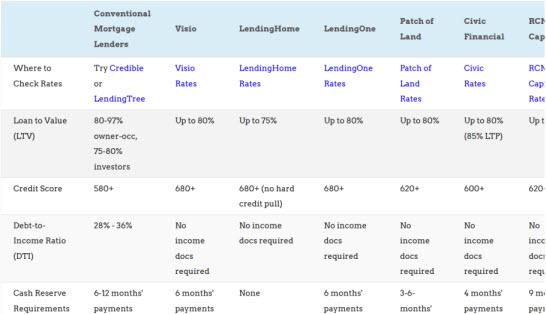 What short-term fix-and-flip loan options are available nowadays?
How about long-term rental property loans?
We compare several buy-and-rehab lenders and several long-term landlord loans on LTV, interest rates, closing costs, income requirements and more.
What I’d Do With This Information
If you’re an active real estate investor thinking about exiting, start planning early. Don’t wait until you’ve already listed the property to figure out your 1031 options.
Identify passive investments that could serve as replacement properties. Understand the timelines. Talk to a qualified intermediary and a CPA who understands real estate.
The worst outcome is selling your property, failing to find a qualifying replacement in time, and paying the full tax bill anyway. That happens more often than it should, usually because people didn’t plan ahead.
In the Co-Investing Club, we see investors use this strategy regularly. They sell their rentals, exchange into deals we’re vetting together, and shift from active to passive without the tax hit. It’s one of the cleanest exit ramps from landlording I know of.
About the Author

G. Brian Davis is a real estate investor and cofounder of SparkRental who spends 10 months of the year in South America. His mission: to help 5,000 people reach financial independence with passive income from real estate. If you want to be one of them, join Brian and Deni for a free class on How to Earn 15-25% on Fractional Real Estate Investments.
Connect with us on social!