The Short Version:
-
- Mortgage rates hit 6.37% (highest in 6 months) but waiting for rates to drop has cost investors 3+ years of cash flow, appreciation, and tax benefits since 2022
- Rate timing is the wrong variable. Entry pricing matters more; properties repriced 20-25% from 2021 peak offset higher rates with better basis
- When rates do drop, competition surges and pricing adjusts upward. You’re racing the return of confidence
- Institutional investors buy based on deal quality + margin of safety, not rate predictions. They locked in 6-7% fixed debt on quality assets while retail waited

Mortgage rates hit 6.37% last week. The highest in six months. And I already know what a lot of people are thinking.
I’ll just wait for rates to come down.
I get it. I really do. Nobody wants to lock in financing at a higher rate than necessary. The math seems obvious: wait for rates to drop, get a better deal, save money over the life of the loan.
But here’s the thing… people have been saying this since early 2022. For almost four years now, I’ve heard the same refrain. “I’m waiting for rates to normalize.” “I’ll invest when things calm down.” “Once rates drop back to 4%, I’ll be ready to move.”
And while they’ve waited, they’ve missed three years of cash flow. Three years of appreciation. Three years of tax benefits. Three years of compounding returns that they’ll never get back.
The cost of waiting is invisible. But it’s very real.
The Rate Drop That Never Comes
Let me share what the forecasters are actually saying right now.
Bankrate projects rates will average around 6.1% for 2026. They might dip as low as 5.7%, but they could also climb to 6.5%. Morgan Stanley sees rates potentially reaching 5.50-5.75% by mid-2026… then rising again in the second half of the year and into 2027.
So the best case scenario, according to major financial institutions, is rates dropping maybe 75 basis points from current levels. And that’s temporary.
I remember having conversations in 2023 with investors who were certain rates would be back in the 4s by 2024. Then they were sure 2025 would be the year. Now it’s 2026, and the goalposts have moved again.
The Federal Reserve held rates steady at their March meeting. With the situation in the Middle East pushing oil prices higher and inflation ticking back up, several FOMC members are now saying they expect zero rate cuts this year. Not one. That’s a meaningful shift from just a few weeks ago.
Here’s what I’ve learned after two decades in this business: the “perfect conditions” that people wait for almost never arrive. And even when they do, those same people find new reasons to hesitate.
The Math on Waiting
Let’s actually run the numbers on what waiting costs.
Say you have $50,000 to invest in passive real estate. You’re looking at a deal that projects 15% annualized returns, combining cash flow and appreciation. But you decide to wait two years for rates to drop.
During those two years, your $50,000 sits in a money market account earning maybe 4.5%. After two years, you have roughly $54,550. Not bad. Safe. Conservative.
Meanwhile, the person who invested immediately? At 15% annualized returns, that same $50,000 becomes approximately $66,125 after two years.
The difference? $11,575. In just two years.
But it gets worse. Because that $11,575 gap keeps compounding. Over ten years, the investor who started immediately is significantly ahead… not because they got better rates, but because they had two extra years of compounding working for them.
Time in the market beats timing the market. You’ve heard it before. But most people don’t actually believe it until they see the numbers.
The Hidden Costs Nobody Talks About
Interest rates get all the attention. But they’re actually one of the smaller factors in whether a real estate investment works.
Here’s what matters more:
The quality of the deal. A strong investment at 6.5% interest will outperform a weak investment at 5% interest every single time. I’ve seen investors wait years for “better conditions” only to rush into mediocre deals once rates finally dip because they felt pressure to finally act.
The operator’s track record. In passive real estate, the sponsor matters more than the rate environment. A skilled operator can navigate high-rate environments through smart debt structuring, operational improvements, and value-add strategies that have nothing to do with where the Fed sets its benchmark.
And then there’s the tax angle. Every year you don’t invest is a year you don’t get depreciation deductions, cost segregation benefits, or the ability to shelter other income. Those tax benefits compound too, and they’re not available retroactively.
(article continues below)
Real estate investments? Awesome.
Being a landlord? Less fun.
Learn how to earn 15%+ on passive real estate investments in our free video course.

What I Actually Do
I’m not telling you to rush into bad deals just because rates might not drop. That’s terrible advice.
What I am saying is this: stop letting interest rates be your primary decision-making filter.
When I evaluate deals in the Co-Investing Club, I barely look at current rates. What I look at is debt structure. How long is the loan term? Is the rate fixed or floating? If it’s floating, is there a cap? What’s the break-even occupancy? Can this deal survive higher rates, not just benefit from lower ones?
A deal that only works if rates drop is a bad deal. A deal that works at current rates but gets better if rates drop is a good deal. The difference between those two things is everything.
We vetted a deal recently that had assumed a fixed-rate loan at 5.1% with nine years remaining. I didn’t care that current market rates were higher. The deal was locked in. The cash flow worked. The downside was protected. Whether rates went up or down from that point was irrelevant to our returns.
That’s the kind of analysis that matters. Not “I hope rates come down.”
(article continues below)
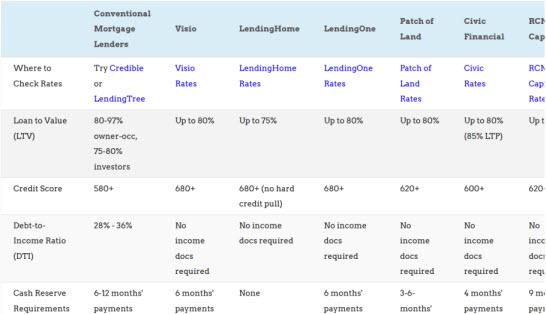 What short-term fix-and-flip loan options are available nowadays?
How about long-term rental property loans?
We compare several buy-and-rehab lenders and several long-term landlord loans on LTV, interest rates, closing costs, income requirements and more.
The Real Risk
Here’s what keeps me up at night, and it’s not interest rates.
It’s watching people I know spend their prime investing years on the sidelines. They’re in their 30s and 40s, peak earning years, and they’re optimizing for a rate environment that may never arrive while their window for compounding slowly closes.
Every year you wait is a year of returns you don’t get back. Not in a theoretical sense. In an actual, concrete, dollar sense.
The investors I know who’ve built real wealth weren’t the ones who timed the market perfectly. They were the ones who kept investing consistently, in good environments and bad, through high rates and low. They understood that waiting has costs too. Those costs are just harder to see because they show up as absence rather than loss.
If you’ve been waiting for rates to drop, I’d encourage you to reframe the question. Don’t ask “When will rates come down?” Ask “Does this specific deal work at current rates?” If the answer is yes… if the cash flow is solid, the debt is structured intelligently, the operator is experienced, and the fundamentals support the investment… then the rate environment is largely irrelevant.
By the way, this is exactly why we started the Co-Investing Club. I got tired of watching people sit on the sidelines because they didn’t know how to evaluate deals, didn’t have access to quality operators, or couldn’t clear the $50-100K minimums that most passive investments require. We meet every month, vet deals together, and anyone who wants to participate can do so with $5,000. The rate environment doesn’t change our process. Good deals are good deals.
The rates will do what the rates will do. You can’t control that. What you can control is whether you spend another year waiting… or whether you start building.
About the Author

G. Brian Davis is a real estate investor and cofounder of SparkRental who spends 10 months of the year in South America. His mission: to help 5,000 people reach financial independence with passive income from real estate. If you want to be one of them, join Brian and Deni for a free class on How to Earn 15-25% on Fractional Real Estate Investments.
Connect with us on social!