The Short Version:
-
- Something big is happening in institutional finance right now. Capital is rotating out of private credit and into real estate. JLL’s CEO described it firsthand.
- Why the exodus? Private credit yields have compressed. Default concerns are rising. The risk-reward has shifted.
- When uncertainty spikes, money flows toward tangible assets. Real estate generates income from tenants who need places to live… regardless of what headlines say.
- Institutional money moves slowly at first, then all at once. By the time the rotation becomes obvious, the best opportunities will be priced in.

Something interesting is happening in the investment world right now, and most retail investors aren’t paying attention.
Institutional money is rotating out of private credit and into real estate. It’s happening now, in real time, in meetings between some of the largest investors in the world.
JLL’s CEO Christian Ulbrich said it directly in a recent interview: “I was, yesterday, in a meeting with a couple of very large investors here in New York, and we were debating exactly that topic.” The topic being whether real assets… particularly real estate… are becoming more attractive as private credit faces headwinds.
His conclusion: “Real assets are coming across as incredibly attractive in an environment of uncertainty we are currently in, and that private credit situation is literally driving people more into the real assets.”
This isn’t speculation. This is the CEO of one of the largest commercial real estate services firms in the world describing conversations happening at the highest levels of institutional finance.
When capital starts moving at that scale, it creates ripple effects. And those ripple effects eventually reach everyone else.
Why Private Credit Is Losing Its Shine
To understand the rotation, you have to understand why private credit became so popular in the first place.
When interest rates were near zero, investors were starving for yield. Private credit… direct loans to companies outside the traditional banking system… offered higher returns than bonds and seemed safer than stocks. Money poured in. The asset class exploded.
But the environment has shifted.
Rates are higher now. The spread between private credit yields and safer alternatives has compressed. At the same time, concerns are growing about credit quality. Some of the companies that borrowed heavily during the easy money era are struggling to service their debt. Default rates are ticking up.
CNBC reports that headlines about redemptions from private credit are spreading. Investors who chased yield are now reassessing risk. And when they reassess, they start looking for alternatives.
Real estate is one of the places that capital is flowing.
The Flight to Tangible Assets
There’s a pattern that repeats throughout financial history… when uncertainty spikes, capital flows toward things you can see and touch.
Stocks are claims on future earnings. Bonds are promises to pay and private credit is a loan to a company you’ve probably never visited. These are all abstractions… valuable abstractions but abstractions nonetheless.
Real estate is different. It’s physical and it’s tangible. It generates income from tenants who need a place to live or work. That income doesn’t disappear when sentiment shifts or headlines change.
Right now, uncertainty is elevated across multiple fronts.
The Middle East is destabilizing. The U.S. is sending billions in military aid to Israel while tensions with Iran escalate. Nobody knows how far the conflict will spread or what the economic consequences will be.
Trade tensions remain high. Tariffs have added costs across supply chains. The average tariff rate on imports is now around 12%, up significantly from recent years. Construction costs are 34% higher than 2020. The economic picture is murky.
The Fed is holding rates steady while inflation remains stubborn. The path forward is unclear. Markets are pricing in maybe one rate cut by year end but forecasts keep shifting.
In this environment, real assets offer something that paper assets don’t: stability backed by physical buildings with tenants paying rent. That’s attractive to institutional investors. And it’s equally attractive to individual investors who want income they can count on.
The Numbers Are Starting to Show It
This isn’t just talk. The numbers are starting to reflect the rotation.
Non-traded REITs raised $593 million from investors in January, an increase from December. That’s a meaningful uptick after years of outflows following the rate spike in 2022.
Apollo’s research team recently published their outlook for 2026 and the message was clear:
“After a rate-driven repricing that began in 2022, real estate valuations have adjusted meaningfully while underlying fundamentals have remained intact. With capital values reset, supply constrained and income growth resilient, 2026 may represent a favorable point in the cycle to reengage with private real estate.”
Morgan Stanley is saying similar things. Their real estate outlook highlights motivated sellers, increasingly engaged buyers, and greater availability of debt creating “favorable conditions for a rebound in transaction activity and asset values.”
These aren’t fringe opinions. These are major institutional research teams signaling that the setup for real estate is improving.
What Happens When Institutional Money Moves
When institutional capital starts flowing into an asset class, a few things typically happen.
First, it validates the opportunity. Pension funds and endowments don’t make decisions based on hot tips. They have teams of analysts, decades of data, and fiduciary obligations. When they start buying, it’s because the risk-reward has shifted in their favor.
Second, it compresses returns over time. As more capital chases the same deals, competition increases, prices rise, and yields fall. The best returns go to investors who got there before the crowd.
Third, it creates a signaling effect. Other investors see the institutional flows and follow. What starts as a trickle becomes a wave.
We’re in the early stages of this cycle right now. The smart money is moving, but it hasn’t fully arrived. Retail investors who position themselves ahead of the institutional wave can benefit. Those who wait for the rotation to become obvious will be late.
(article continues below)
Real estate investments? Awesome.
Being a landlord? Less fun.
Learn how to earn 15%+ on passive real estate investments in our free video course.

Why Real Estate Over Other Alternatives
If investors are rotating out of private credit, why real estate specifically? Why not gold, or commodities, or other hard assets?
A few reasons stand out.
Income. Real estate generates cash flow. Gold sits in a vault. Commodities require speculation on price movements. For investors who need income… whether institutions funding pension obligations or individuals funding early retirement… real estate offers something the other alternatives don’t.
Tax efficiency. Real estate comes with depreciation, which can offset income and reduce tax bills. It offers 1031 exchanges for deferring capital gains. It provides a stepped-up basis at death. These features compound over time in ways that other asset classes can’t match.
Tangibility. You can visit a building. You can see the tenants. You can assess the physical condition. This tangibility provides a psychological anchor that abstract investments lack. When markets get volatile, knowing you own something real provides a different kind of comfort.
Supply constraints. Unlike stocks or bonds, which can be created infinitely, real estate is limited by land and construction capacity. Right now, with construction starts at decade lows and costs elevated by tariffs and labor shortages, new supply isn’t coming. That creates favorable conditions for owners of existing properties.
What This Means for Individual Investors
The institutional rotation into real estate creates both opportunity and urgency for individual investors.
The opportunity is clear: the same conditions that are attracting billions of institutional dollars are available to you. Valuations have reset. Supply is constrained. Income growth is resilient. The setup is favorable.
The urgency is also clear: institutional money moves slowly at first, then all at once. Once the rotation becomes obvious, competition will increase, prices will rise, and returns will compress. The window that exists today won’t exist indefinitely.
I’m not saying you should panic-buy real estate. Due diligence still matters. Quality still matters. You need to understand what you’re investing in and who’s operating it.
But if you’ve been waiting for the “right time” to add real estate to your portfolio, the institutional flows are sending a signal. The smart money is moving. The question is whether you’ll move with it or watch from the sidelines.
(article continues below)
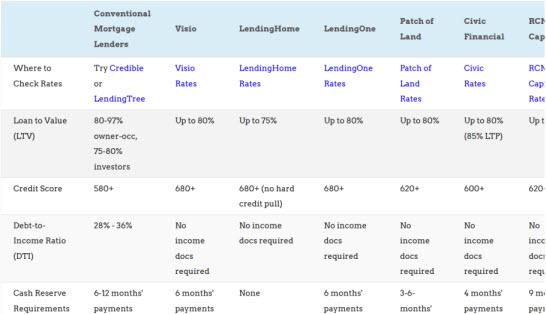 What short-term fix-and-flip loan options are available nowadays?
How about long-term rental property loans?
We compare several buy-and-rehab lenders and several long-term landlord loans on LTV, interest rates, closing costs, income requirements and more.
Where I’m Putting My Money
I’ve been investing in passive real estate for years, through good markets and bad. But I’m particularly active right now.
The deals we’re seeing in the Co-Investing Club are better than they’ve been in a long time. Operators who overleveraged during the low-rate era are selling at discounts. Supply constraints are setting up favorable rent growth. The fundamentals support the thesis.
When institutional money starts flowing back into an asset class, I want to be there first. That’s exactly where I’m positioning.
About the Author

G. Brian Davis is a real estate investor and cofounder of SparkRental who spends 10 months of the year in South America. His mission: to help 5,000 people reach financial independence with passive income from real estate. If you want to be one of them, join Brian and Deni for a free class on How to Earn 15-25% on Fractional Real Estate Investments.
Connect with us on social!