The Short Version:
-
- Morningstar, Schwab, and Morgan Stanley are all forecasting higher volatility in 2026. Three straight years of double-digit S&P gains have stretched valuations, and a 12-15% correction is widely expected.
- Most people think they’re diversified. But when markets drop, correlations spike and everything falls together. That “diversified” portfolio might not protect you as much as you think.
- Volatility only hurts if all your wealth is tied to the stock market. Assets that don’t move with the S&P… like private real estate… turn a correction into noise rather than a crisis.
- I’m not predicting a crash. But I’d rather watch from a diversified position than ride the whole wave down.

I was scrolling through market forecasts the other day (Morningstar, Schwab, Morgan Stanley) and I noticed something interesting. They’re all saying the same thing.
Higher volatility. A correction of 12-15% is “widely expected” at some point this year.
Three straight years of double-digit S&P gains have left the market priced for perfection. And when everything is priced for perfection, it doesn’t take much to shake things loose. A disappointing earnings report, an unexpected Fed decision, geopolitical turbulence… any of these could be the catalyst that finally tips things over.
I’m not here to predict a crash. Nobody knows when the next correction will hit. But I did find myself thinking about how many people I know who have everything in stocks. Their 401(k), their brokerage account, their entire financial future… all riding on the same wave.
That’s fine when the wave keeps rising. It’s less fine when it doesn’t.
The Problem With Being Fully Exposed
Most people don’t think of themselves as “fully exposed to the stock market.” They think of themselves as diversified. They own index funds, a mix of large-cap and small-cap stocks across different sectors.
But when the market drops, almost everything drops together. Correlations spike during sell-offs and the diversification that looks good on paper tends to disappear right when you need it most.
In 2008, the S&P 500 dropped nearly 40%. International stocks dropped too. And so did REITs and corporate bonds. The only things that held up were Treasuries and cash and most people didn’t have much of either.
In 2022, stocks and bonds fell together for the first time in decades. The classic 60/40 portfolio had one of its worst years ever. Diversification really didn’t save anyone.
If all your money moves with the market, then a correction isn’t just a number on a screen. It’s your retirement timeline extending. It’s your kids’ college fund shrinking. It’s the financial security you thought you had feeling a lot less secure.
The psychological toll is real too. Watching your portfolio drop 20% or 30% is brutal, even if you intellectually know you should hold. A lot of people panic sell at the worst possible time, locking in losses they never recover from. It’s because they were too exposed to begin with, and the pain became unbearable.
Volatility Only Hurts If You’re Fully Riding It
The thing is, volatility in the stock market only matters if ALL your wealth is tied to it.
If you have income streams and assets that don’t move with the S&P, a market correction becomes noise. Unpleasant noise, sure. But not the kind of thing that derails your financial plan.
This is the real argument for diversification… not just diversifying within the stock market, but diversifying away from it entirely. Owning assets that behave differently so your income doesn’t disappear when the Dow has a bad week.
I’ve found the solution in building a financial life that doesn’t depend on the market cooperating every single year. Because sooner or later, it won’t cooperate. That’s simply just how markets work.
The investors who sleep well at night aren’t the ones who timed everything perfectly but instead built portfolios that can absorb a hit without falling apart.
What Actually Provides Uncorrelated Returns
So what doesn’t move with the stock market?
Cash and Treasuries are the obvious ones which hold their value when everything else is falling. But they also don’t grow much. Parking everything in cash means losing to inflation slowly instead of losing to a crash quickly. It’s a hiding spot, not a strategy.
Bonds used to be the answer, but 2022 showed the limits of that thinking. When interest rates rise sharply, bonds can fall right alongside stocks. The negative correlation that made 60/40 portfolios work was a historical pattern, not a law of physics.
Real assets… things like real estate, commodities, infrastructure… tend to behave differently. They’re tied to physical things with intrinsic value rather than market sentiment. They don’t swing based on what the Fed might say next week or which tech company missed earnings estimates.
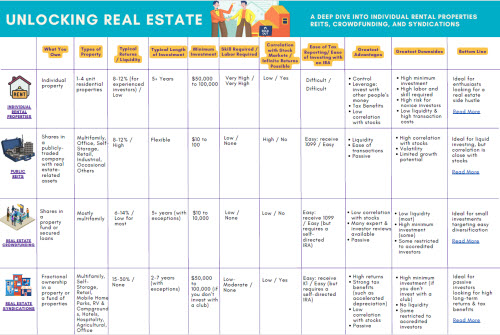
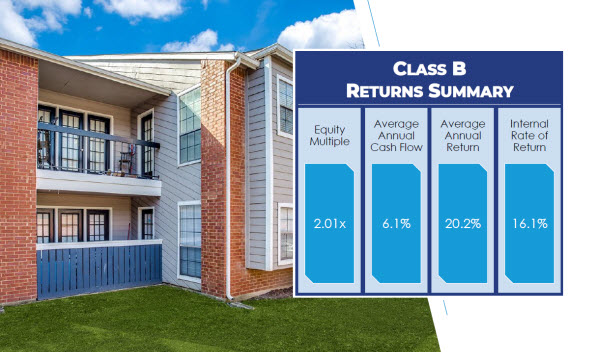
Private real estate in particular has historically shown low correlation with public markets. When stocks drop, apartment buildings don’t suddenly lose tenants. Mobile home parks don’t empty out and industrial warehouses don’t stop collecting rent. The income keeps coming in regardless of what’s happening on Wall Street.
An academic study comparing asset class returns over 145 years across 16 countries found that residential real estate delivered returns comparable to stocks… but with roughly half the volatility. That’s a meaningful difference when you’re trying to build wealth without white-knuckling through every market cycle.
That’s not to say real estate is risk-free because it’s not. Properties can underperform and operators can make mistakes. Economic downturns affect real estate too, just differently. But the risks are different from stock market risks and “different” is exactly what you want when you’re trying to build a portfolio that doesn’t all move in the same direction at the same time.
How I Think About This Personally
I own stocks. I’m not anti-stock market. Index funds are a reasonable way to build wealth over the long term, and I don’t pretend to know when corrections will happen.
But I also don’t have everything in stocks. Not even close.
A significant portion of my portfolio is in passive real estate investments… syndications, private notes, debt funds, land deals. These generate income that shows up regardless of what the market is doing. They’re backed by physical assets that don’t vanish in a sell-off and they provide cash flow along the way, not just the hope of appreciation.
When I read these forecasts about higher volatility and stretched valuations, I don’t panic because my financial life isn’t 100% dependent on the S&P having another good year.
That peace of mind is worth something. Maybe worth more than a few extra points of return in a good year. Because the goal isn’t just to maximize returns in the best-case scenario and instead to build wealth I can actually keep, regardless of whatever the market throws at me.
(article continues below)
Real estate investments? Awesome.
Being a landlord? Less fun.
Learn how to earn 15%+ on passive real estate investments in our free video course.

The Question Worth Asking
I’m not telling you to sell your stocks or predict a crash. Nobody knows what the market will do this year. Anyone who claims otherwise is probably selling you something.
But I do think it’s worth asking yourself if the market dropped 20% tomorrow and stayed down for two years, how would that affect your life?
If the answer is “it would be annoying but not catastrophic” …you’re probably in good shape. You’ve got enough diversification, enough income, enough cushion to ride it out.
If the answer is “it would seriously derail my plans” …if a prolonged downturn would force you to delay retirement, change your lifestyle, or panic about your kids’ education… it might be worth thinking about what else you could own that doesn’t move with everything else.
The point isn’t to avoid risk. There’s no such thing as a risk-free path to wealth. The point is to avoid having all your risk concentrated in one place. To build a portfolio where one bad year in one asset class doesn’t take everything else down with it.
(article continues below)
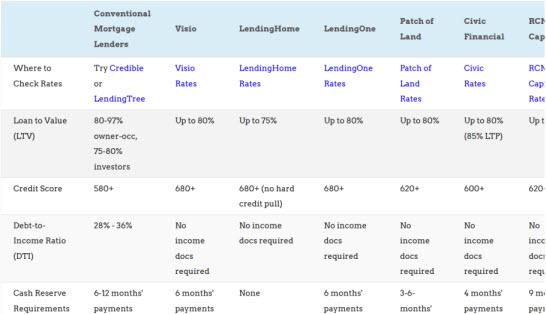 What short-term fix-and-flip loan options are available nowadays?
How about long-term rental property loans?
We compare several buy-and-rehab lenders and several long-term landlord loans on LTV, interest rates, closing costs, income requirements and more.
What I’m Doing About It
I keep building positions in private real estate through deals we vet together in the Co-Investing Club. It’s not the only answer but it’s the one that makes the most sense for me… income-producing assets that don’t swing with the stock market.
If 2026 does get volatile, I’d rather be watching from a diversified position than riding the whole wave down.
About the Author

G. Brian Davis is a real estate investor and cofounder of SparkRental who spends 10 months of the year in South America. His mission: to help 5,000 people reach financial independence with passive income from real estate. If you want to be one of them, join Brian and Deni for a free class on How to Earn 15-25% on Fractional Real Estate Investments.
Connect with us on social!