The Short Version:
-
- “Your network = your net worth” sounds like a cliché. But there’s real research backing it up.
- The people around you shape your financial beliefs, behaviors, and access to opportunities, whether you realize it or not.
- The best investment deals aren’t advertised publicly. They’re shared through trusted networks.
- Building the right community isn’t about collecting contacts. It’s about finding people who are a few steps ahead of where you want to be.

You’ve probably heard this phrase a thousand times. It’s plastered across LinkedIn posts, quoted by motivational speakers, printed on coffee mugs. At this point, it sounds like something people say to justify awkward networking events and forced small talk.
But the thing is, it’s actually true. Not in a vague, feel-good way. In a measurable, documented, backed-by-research way.
The people you surround yourself with directly influence your financial outcomes. Not just through job referrals or business introductions (though those matter), but through something more fundamental. Proximity shapes your beliefs about what’s possible and your behaviors around money.
Let me break down why this matters, especially if you’re trying to build wealth.
The Research Behind the Cliché
Jim Rohn famously said, “You are the average of the 5 people you spend the most time with.” It’s become a cliché, but there’s real science backing it up.
A study published in the ‘Journal of Consumer Research’ found that people’s financial behaviors are heavily influenced by their social circles. When your peers save and invest, you’re more likely to save and invest. When your peers spend freely and carry debt, you’re more likely to do the same. We unconsciously calibrate our “normal” based on the people around us.
Harvard economist Raj Chetty’s research on economic mobility found that one of the strongest predictors of whether someone moves up the income ladder is the economic diversity of their social network. Growing up around (or later connecting with) people who have built wealth exposes you to different mindsets, strategies, and opportunities. You learn what’s possible by watching others do it.
Nicholas Christakis and James Fowler, in their book ‘Connected,’ demonstrated that behaviors spread through social networks like contagions. Obesity, smoking, happiness… and yes, financial habits too. If your close contacts gain wealth, you’re statistically more likely to gain wealth. If they struggle financially, you’re more likely to struggle.
This isn’t about blame or judgment. It’s about recognizing that we’re social creatures, and our environment shapes us more than we’d like to admit.
Why This Matters for Building Wealth
Most people’s financial education comes from their immediate circle (parents, friends, coworkers.) If nobody in that circle invests in real estate, private equity, or alternative assets, those options don’t even appear on your radar. You default to what’s familiar. Savings accounts. Maybe index funds if you’re a bit more adventurous.
But when you’re surrounded by people who actively invest, who discuss deals and compare strategies, who share both wins and losses openly, your entire frame of reference shifts. You start asking different questions. What’s a syndication? How do I evaluate an operator? What returns should I expect? What mistakes should I avoid?
Knowledge transfer happens through proximity. Not just formal knowledge you could read in a book, but practical knowledge. The stuff that only comes from doing, failing, and iterating. When you’re in a room (or a group, or a community) with people who’ve already made the mistakes, you get to skip the expensive lessons.
There’s also the accountability factor. Investing consistently is hard. It’s easy to procrastinate, to wait for the “right” time, to let another year slip by without putting your money to work. When you’re surrounded by people who are actively investing, who share what they’re doing and why, you’re more likely to take action yourself. Social proof is a powerful motivator.
The Deal Flow Problem
The best investment opportunities aren’t advertised on billboards. They’re not sitting on crowdfunding platforms waiting for retail investors to find them. They’re shared through networks. An operator raises capital from people they know and trust, or from people referred by people they trust.
If you’re not in those networks, you don’t see those deals. You’re left with whatever’s publicly marketed, which is often whatever couldn’t get funded through warmer channels.
This is how wealth compounds through networks. The people with access to quality deals invest in them, build relationships with operators, and get access to even better deals next time. Meanwhile, everyone else is choosing between savings accounts and whatever’s left on Fundrise.
It’s not fair, but it’s how it works. The good news is that networks can be built. They’re not fixed at birth. You can intentionally put yourself in rooms (physical or virtual) where people are doing what you want to do. Over time, you absorb their knowledge, gain access to their deal flow, and start operating at a different level.
Quality Over Quantity
To be clear, this isn’t about collecting contacts or growing your LinkedIn connections. Shallow networks don’t move the needle.
What matters is depth. A small group of people who are actively investing, who share openly, who challenge each other’s thinking. That’s worth more than a thousand business cards.
(article continues below)
Real estate investments? Awesome.
Being a landlord? Less fun.
Learn how to earn 15%+ on passive real estate investments in our free video course.

The ideal investing network has a few characteristics. First, shared goals. Everyone’s trying to build wealth, achieve financial independence, or generate passive income. Second, diverse experience levels. You want people who are a few steps ahead of you (so you can learn) and a few steps behind (so you can teach, which reinforces your own knowledge). Third, trust. People need to be willing to share real numbers, real mistakes, real concerns. Posturing and bragging don’t help anyone.
These kinds of groups are rare. Most investing “communities” are really just marketing funnels or collections of strangers who happen to follow the same influencer. Finding or building a genuine network takes effort.
The Compound Effect of Community
When you’re part of a real investing community, the benefits compound over time.
Year one, you’re learning the basics. Terminology, frameworks, how to evaluate deals. Year two, you’re making your first investments, learning from small mistakes, getting comfortable with the process. Year three, you’ve got a portfolio, a track record, relationships with operators. By year five, you’re operating at a completely different level than if you’d tried to figure it all out alone.
The people in your network are doing the same. They’re growing, learning, finding new opportunities. And because you’re connected, their growth benefits you. Someone finds a great operator and shares the contact. Someone makes a mistake and warns the group. Someone asks a question that sparks a conversation you wouldn’t have had otherwise.
This is how wealth builds in networks. Not through one lucky break, but through thousands of small advantages that accumulate over time.
(article continues below)
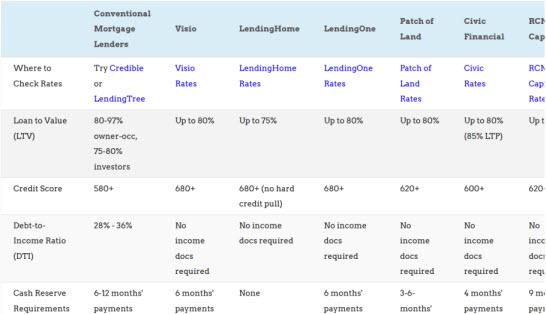 What short-term fix-and-flip loan options are available nowadays?
How about long-term rental property loans?
We compare several buy-and-rehab lenders and several long-term landlord loans on LTV, interest rates, closing costs, income requirements and more.
Quality Over Quantity
To be clear, this isn’t about collecting contacts or growing your LinkedIn connections. Shallow networks don’t move the needle.
What matters is depth. A small group of people who are actively investing, who share openly, who challenge each other’s thinking. That’s worth more than a thousand business cards.
The ideal investing network has a few characteristics. First, shared goals. Everyone’s trying to build wealth, achieve financial independence, or generate passive income. Second, diverse experience levels. You want people who are a few steps ahead of you (so you can learn) and a few steps behind (so you can teach, which reinforces your own knowledge). Third, trust. People need to be willing to share real numbers, real mistakes, real concerns. Posturing and bragging don’t help anyone.
These kinds of groups are rare. Most investing “communities” are really just marketing funnels or collections of strangers who happen to follow the same influencer. Finding or building a genuine network takes effort.
The Compound Effect of Community
When you’re part of a real investing community, the benefits compound over time.
Year one, you’re learning the basics. Terminology, frameworks, how to evaluate deals. Year two, you’re making your first investments, learning from small mistakes, getting comfortable with the process. Year three, you’ve got a portfolio, a track record, relationships with operators. By year five, you’re operating at a completely different level than if you’d tried to figure it all out alone.
The people in your network are doing the same. They’re growing, learning, finding new opportunities. And because you’re connected, their growth benefits you. Someone finds a great operator and shares the contact. Someone makes a mistake and warns the group. Someone asks a question that sparks a conversation you wouldn’t have had otherwise.
This is how wealth builds in networks. Not through one lucky break, but through thousands of small advantages that accumulate over time.
What This Looks Like in Practice
This is exactly why my partner Deni and I started the Co-Investing Club. Not as a course or a marketing list, but as an actual community of investors who vet deals together, invest together, and learn from each other. Every month we meet to review a new opportunity. Members ask hard questions, share perspectives, and decide individually whether to invest. I put my own money into most of these deals alongside everyone else. It’s the kind of network I wish I’d had when I started investing, so we built it.
If you’re serious about building wealth through real estate, the fastest way to level up isn’t another book or podcast. It’s finding the right people to learn alongside. Your network really does shape your net worth. Choose it intentionally.
About the Author

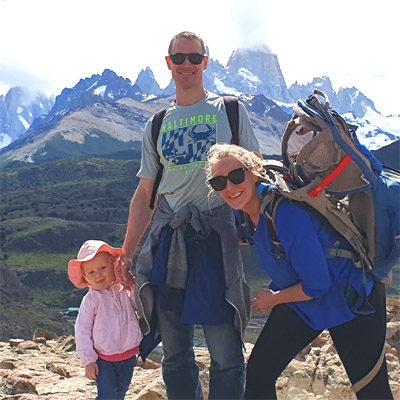
G. Brian Davis is a real estate investor and cofounder of SparkRental who spends 10 months of the year in South America. His mission: to help 5,000 people reach financial independence with passive income from real estate. If you want to be one of them, join Brian and Deni for a free class on How to Earn 15-25% on Fractional Real Estate Investments.
Connect with us on social!