The Short Version:
-
- The Shiller CAPE ratio just hit 40… the same level it reached right before the dot-com crash wiped out trillions in market value
- A 145-year academic study found stocks and real estate return almost identical gains, but real estate does it with half the volatility most investors experience
- Warren Buffett’s favorite market indicator is at 221% (he said anything above 200% means “you are playing with fire”)
- The wealthy aren’t trying to time the crash… they’re building portfolios that perform well whether it happens next month or three years from now

There’s a number that serious investors watch when they want to know if the stock market is overheated.
It’s called the Shiller CAPE ratio. And right now, it’s sitting at around 40.
That might not mean much to you. But here’s the context: the last time it hit that level was 1999, right before the dot-com bubble burst and wiped out trillions in market value. Before that, you’d have to go back to 1929.
Warren Buffett has another favorite metric called the Buffett Indicator. It’s at 221% right now. The last time it approached 200%, the market entered a bear market that lasted most of 2022.
So here’s the question: if you’re a busy professional with most of your wealth tied up in stocks, what are you supposed to do with this information?
You can’t time the market perfectly. Trying to sell at the top and buy at the bottom is how most people lose money. But ignoring these signals entirely feels reckless.
There’s a third option most people don’t know about. And it doesn’t require you to become a market timer or abandon stocks completely.
Let me explain what these indicators actually measure, because understanding them changes how you think about risk.
The Shiller CAPE ratio (Cyclically Adjusted Price-to-Earnings ratio) looks at the stock market’s average inflation-adjusted earnings over the past 10 years. When that ratio gets extremely high, it means stock prices have gotten far ahead of actual earnings. Historically, that’s when corrections happen.
The long-term average for this ratio is around 17. We’re currently at 40.
The Buffett Indicator measures the total market cap of all U.S. stocks relative to the size of the entire economy (GDP). When stock values balloon way beyond what the economy is actually producing, that’s a warning sign. Buffett himself said that when this ratio approaches 200%, “you are playing with fire.”
We’re past that now.
These aren’t fringe metrics. They’re the tools that billionaire investors use to gauge whether markets are overvalued. And both are flashing the same signal: stocks are expensive relative to historical norms.
But here’s what most people don’t know. There’s a way to capture similar returns to stocks with half the volatility. And it’s been hiding in plain sight for over a century.
What the Academic Research Actually Shows
Stocks and Real Estate Return Almost Exactly the Same
A few years ago, a joint study between U.S. and German universities along with the German Central Bank analyzed 145 years of investment returns across 16 advanced economies.
They wanted to answer a simple question: over the very long term, which asset class actually performs best?
The results surprised a lot of people.
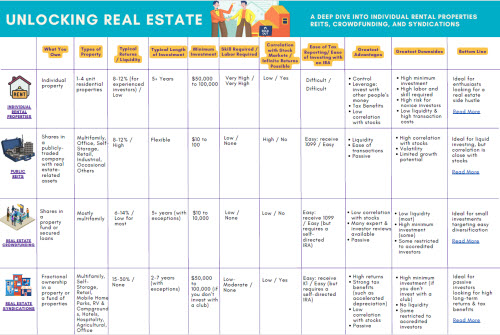
Stocks returned around 7% annually when you combine price appreciation and dividends. Residential real estate… the kind of income-producing rental properties most passive investors focus on… also returned around 7% annually when you combine rental income and appreciation.
Basically identical returns over nearly a century and a half.
But here’s where it gets interesting. The volatility was completely different.
Real Estate Achieves Those Returns with Half the Risk
Volatility is one of the main measures of investment risk. It tells you how much an asset’s value swings up and down over time.
The study found that real estate volatility was roughly half what stocks experienced.
Think about what that means in practical terms. You’re getting the same long-term returns, but the ride is significantly smoother. You’re not watching your net worth drop 30% in a single week because of headlines about inflation or geopolitical tensions or whatever spooked the market that day.
For someone in their 20s with 40 years until retirement, high volatility might be tolerable. You have time to recover from crashes.
But if you’re in your 40s or 50s, a major crash can set you back a decade. Losing half your portfolio when you’re 52 means you might never fully recover before you need that money.
Real estate offers a different risk profile. Same destination. Smoother path.
Why Real Estate Volatility Stays Lower
There’s a structural reason real estate is less volatile than stocks, and it has nothing to do with which asset is “better.”
Stocks trade on public exchanges where prices update every second based on real-time sentiment. When fear spreads, millions of investors can sell simultaneously. That creates cascading drops that have nothing to do with the underlying value of the companies.
Real estate doesn’t work that way. You can’t panic-sell a rental property at 2 p.m. on a Tuesday because CNBC scared you. The transaction takes weeks or months. And because prices aren’t updated in real time on your phone, you’re not psychologically triggered to react to every market swing.
That friction actually protects you from yourself.
I saw this firsthand in 2008. I owned a dozen rental properties that went underwater when the market crashed. I couldn’t sell even if I wanted to. The illiquidity forced me to hold through the downturn.
At the time, it felt like being trapped. Fifteen years later, those properties became the foundation of my financial independence. The “disadvantage” of illiquidity turned out to be the discipline I needed to build real wealth.
The Tax Advantage That Changes the Math Entirely
Here’s something the academic study didn’t account for: taxes.
When you earn 7% annually in stocks through dividends and capital gains, you’re paying taxes on those gains. Dividend income gets taxed. When you sell for a profit, capital gains get taxed.
When you earn 7% annually in real estate through rental income and appreciation, the tax treatment is completely different.
Depreciation allows you to deduct the theoretical “wear and tear” on your properties against your rental income. In many cases, that means paying zero taxes on positive cash flow.
The 2025 tax changes brought bonus depreciation back to 100% permanently. That means you can now deduct the full cost of certain property improvements in year one, which can wipe out even more taxable income.
And when you eventually sell? You can defer capital gains indefinitely through 1031 exchanges by rolling proceeds into another property.
Real estate investors aren’t just getting the same returns as stock investors with lower volatility. They’re keeping more of those returns because the tax code is written to favor real estate ownership.
(article continues below)
Real estate investments? Awesome.
Being a landlord? Less fun.
Learn how to earn 15%+ on passive real estate investments in our free video course.

What Happens When the CAPE Ratio Drops
History shows that when the Shiller CAPE ratio gets this high, it eventually corrects. Not always immediately. Sometimes overvalued markets stay overvalued for years. But eventually, prices come back down to historical norms.
When that happens, stock investors experience the volatility in real time. They watch their portfolios drop 20%, 30%, sometimes 50%. And the psychological pressure to sell at the bottom is overwhelming.
Real estate investors experience corrections differently. Property values might decline, but because you’re not watching daily price updates and because the asset is producing rental income regardless of market conditions, you’re not forced into emotional decisions.
The income keeps flowing. The tenants keep paying rent. And when the market recovers, appreciation resumes.
That’s the structural advantage of owning real assets that produce cash flow. You can afford to wait.
The Underlying Principle
Here’s what most people misunderstand about risk: volatility and risk are not the same thing.
Volatility is the price swinging up and down. Risk is the possibility of permanent loss.
Stocks are highly volatile but not necessarily high-risk if you hold them long enough. The problem is that volatility creates emotional reactions that turn temporary losses into permanent ones. You sell at the bottom out of fear, and the loss becomes real.
Real estate has lower volatility, which means you’re less likely to make fear-based decisions during downturns. And because the asset produces income while you hold it, you don’t need to sell during a crash to access liquidity. You can refinance instead, which doesn’t trigger capital gains taxes.
The wealthy understand this distinction. That’s why billionaire investors like Ray Dalio and Robert Kiyosaki are talking about real assets right now. They’re not trying to time the market. They’re positioning themselves in assets that perform well regardless of what stocks do.
When the CAPE ratio is at 40 and the Buffett Indicator is above 200%, the smart move isn’t predicting when the correction will happen. It’s building a portfolio that doesn’t collapse when it does.
(article continues below)
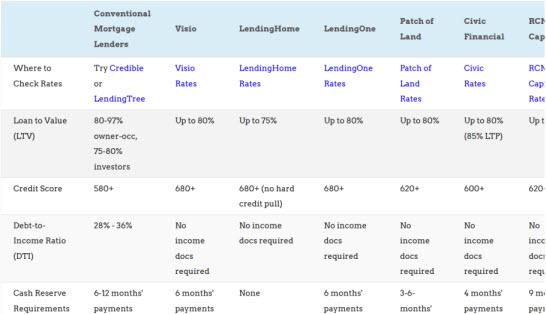 What short-term fix-and-flip loan options are available nowadays?
How about long-term rental property loans?
We compare several buy-and-rehab lenders and several long-term landlord loans on LTV, interest rates, closing costs, income requirements and more.
Where do we go from here?
You don’t need to abandon stocks to reduce your risk.
But if 100% of your wealth is tied to paper assets that can drop 30% overnight based on headlines, you’re taking on more volatility than you need to.
Real estate offers similar long-term returns with half the volatility. It produces income while you wait. It benefits from tax treatment that stocks can’t match. And it forces you to hold through downturns instead of panic-selling at the bottom.
The Shiller CAPE ratio will eventually come down. The Buffett Indicator will normalize. But no one knows when, and trying to time it perfectly is a losing game.
The better strategy is building a portfolio that works whether the correction happens next month or three years from now.
That’s what we focus on in the Co-Investing Club. Every month, we vet passive real estate investments that produce income, offer tax advantages, and give members exposure to real assets that don’t swing with stock market sentiment. Because the best hedge against volatility isn’t predicting the crash. It’s owning assets that perform regardless of whether it happens.
About the Author

G. Brian Davis is a real estate investor and cofounder of SparkRental who spends 10 months of the year in South America. His mission: to help 5,000 people reach financial independence with passive income from real estate. If you want to be one of them, join Brian and Deni for a free class on How to Earn 15-25% on Fractional Real Estate Investments.
Connect with us on social!