The Short Version:
-
- Robert Kiyosaki isn’t warning about a 2026 crash to scare you… he’s explaining exactly what he’s buying instead (and it’s not gold or cash)
- The S&P 500 Shiller CAPE ratio just hit levels last seen during the dot-com bubble, but there’s one asset class that delivers similar returns with half the volatility
- When wealthy investors predict crashes, they don’t run to safety… they reposition into assets that benefit when distressed sellers start appearing
- The real question isn’t “will the market crash in 2026?”… it’s “what investment strategy works whether it crashes or not?”

Robert Kiyosaki just told millions of his followers that a major stock market crash is coming in 2026.
Not “maybe.” Not “possibly.” He’s saying it like it’s already written.
Now, you could dismiss this as another doom-and-gloom prediction from someone selling books. But here’s what caught my attention: Kiyosaki isn’t just warning about the crash. He’s explaining exactly what he’s doing about it. And it’s not cash. It’s not gold bars buried in the backyard. It’s real assets… with real estate at the top of the list.
Whether or not you believe his timing, the strategy is worth understanding. Because if you’ve been watching your 401(k) balance lately and feeling a little uneasy, you’re not alone.
What Kiyosaki Is Actually Doing
He’s Not Running From Risk. He’s Repositioning Into Different Risk
Kiyosaki isn’t sitting in cash waiting for the crash. Cash loses value to inflation. He’s not buying more stocks and hoping to ride it out. And he’s not trying to time a perfect exit.
Instead, he’s doing what wealthy investors have done for decades during periods of uncertainty: he’s moving capital into what he calls “real assets.”
Real assets are things that hold intrinsic value independent of market sentiment or government policy. Real estate. Oil. Food production. Commodities like gold and silver. Even Bitcoin, which he includes in this category because its supply can’t be inflated by central banks.
The logic is simple. When financial markets crash, the value of paper assets evaporates overnight. But real assets… the ones tied to actual demand and scarcity… tend to stabilize faster. They don’t rely on investor confidence to maintain value. They rely on fundamental human needs.
Real estate, in particular, benefits from this dynamic. People need somewhere to live regardless of what the S&P 500 does. And unlike stocks, real estate produces income while you hold it.
The Tax Advantage Most Stock Investors Ignore
Here’s something Kiyosaki has been hammering on for years that most people still don’t get: the tax code is written to favor real estate investors over stock investors.
Depreciation alone can wipe out most of your taxable income from rental properties. The 2025 tax changes brought bonus depreciation back to 100% permanently, which means real estate investors can now deduct the full cost of certain improvements in year one.
If you’re a W-2 employee earning six figures, your effective tax rate on that income could be 30% or higher. But if you’re earning that same income from real estate investments, you might pay close to nothing in taxes on it.
Stocks don’t offer that. Even dividend-paying stocks still get taxed. Capital gains get taxed. And when the market crashes, those paper losses don’t help you at all unless you sell… which locks in the loss.
Real estate lets you defer taxes through depreciation, defer capital gains through 1031 exchanges, and access your equity through tax-free refinancing. It’s a completely different playing field.
Illiquidity Becomes an Advantage During a Crash
One of the biggest objections people have to real estate is that it’s illiquid. You can’t sell it instantly like you can with stocks.
But during a market crash, that illiquidity is actually a feature.
When stock prices drop 30% in a week, the temptation to panic-sell is overwhelming. You watch your portfolio bleed value in real time, and every instinct tells you to get out before it gets worse. Most retail investors lose money in crashes because they sell at the bottom out of fear.
Real estate doesn’t let you do that. You can’t check the value every day on your phone. You can’t panic-sell on a Tuesday afternoon because CNBC scared you. The friction of the transaction forces you to hold through volatility.
And historically, that forced patience is exactly what builds wealth. The people who made fortunes in real estate during the 2008 crash weren’t the ones who timed it perfectly. They were the ones who couldn’t sell even if they wanted to, so they held through the downturn and let the recovery do its work.
I know that firsthand. In 2008, I owned a dozen rental properties that went underwater. I couldn’t sell. I was stuck. At the time, it felt like a disaster. Fifteen years later, those properties became the foundation of my financial independence.
(article continues below)
Real estate investments? Awesome.
Being a landlord? Less fun.
Learn how to earn 15%+ on passive real estate investments in our free video course.

Lower Volatility, Similar Returns
There’s a famous academic study that looked at stock and real estate returns across 16 advanced economies over 145 years. The findings? Stocks and residential real estate delivered almost identical average annual returns… around 7%.
But here’s the part most people miss: real estate achieved those returns with half the volatility of stocks.
Same return. Half the risk.
That’s the trade-off Kiyosaki is making. He’s willing to give up the possibility of a 40% year in exchange for not experiencing a 40% loss. And when you’re managing serious wealth, that trade-off makes perfect sense.
For someone in their 20s with decades to recover, stock market volatility might be tolerable. But for someone in their 40s or 50s trying to build wealth before retirement, losing half your portfolio in a crash can set you back a decade.
Real estate smooths out that ride.
The Underlying Principle
Here’s what Kiyosaki understands that most investors don’t: crashes don’t destroy wealth. They transfer it.
When the stock market crashes, the money doesn’t disappear. It moves. It moves from the hands of people who panic-sold at the bottom to the people who had cash or credit to buy assets at a discount.
The wealthy don’t fear crashes. They prepare for them. And the way you prepare isn’t by trying to predict the exact timing. It’s by positioning yourself in assets that (a) produce income regardless of market conditions, and (b) benefit when distressed sellers start appearing.
Real estate does both.
Right now, over $500 billion in commercial real estate loans are refinancing from 3% interest rates to 6-7% rates. Property owners who borrowed cheap money are suddenly facing much higher debt service costs. Some of them won’t survive. They’ll have to sell.
That’s not a tragedy if you’re positioned to buy. That’s an opportunity.
Kiyosaki isn’t betting on a crash because he’s pessimistic. He’s betting on real assets because he knows that regardless of what happens in the stock market, the fundamentals of real estate… people need housing, rents trend upward over time, leverage amplifies returns, taxes favor owners… don’t change.
(article continues below)
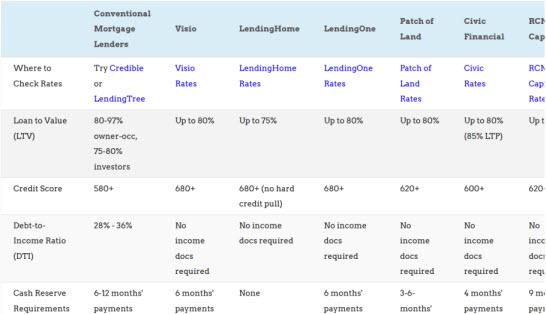 What short-term fix-and-flip loan options are available nowadays?
How about long-term rental property loans?
We compare several buy-and-rehab lenders and several long-term landlord loans on LTV, interest rates, closing costs, income requirements and more.
Where do we go from here?
You don’t have to believe Robert Kiyosaki’s crash prediction to learn from his strategy.
The smart move isn’t trying to time the market. It’s building a portfolio that works whether the crash happens in 2026, 2027, or not at all.
Real estate offers that. It produces income while you wait. It benefits from tax advantages that stocks don’t offer. It forces you to hold through volatility instead of panic-selling at the bottom. And when distressed opportunities do show up, you’re positioned to act.
I’m not telling you to abandon stocks entirely. Diversification still makes sense. But if your entire net worth is tied to paper assets that can drop 30% overnight based on headlines, you might want to ask yourself: what would Kiyosaki do?
The answer is already clear. He’s moving into real assets. And he’s doing it before the crowd realizes they should have done the same.
That’s what we focus on every month in the Co-Investing Club… finding passive real estate investments that produce income, offer tax advantages, and position members to benefit regardless of what the broader market does. Because the best time to prepare for uncertainty is before everyone else figures out they should be worried.
About the Author

G. Brian Davis is a real estate investor and cofounder of SparkRental who spends 10 months of the year in South America. His mission: to help 5,000 people reach financial independence with passive income from real estate. If you want to be one of them, join Brian and Deni for a free class on How to Earn 15-25% on Fractional Real Estate Investments.
Connect with us on social!