In this episode: There’s no single best way to invest in real estate. Brian and Deni walk through three paths: REITs for investors who want simple exposure, direct ownership for people who want a real estate business, and passive private investments for people who want real estate’s benefits without the work. The right choice depends on your capital, time, experience and how much control you want.
Key Takeaways
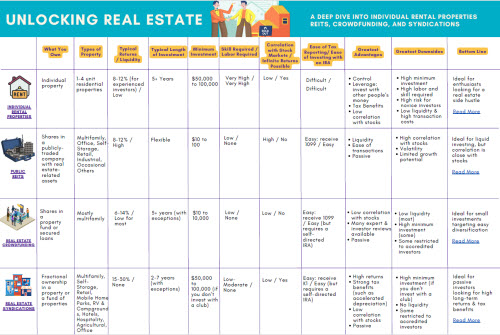
- REITs suit people starting out with modest amounts: low minimums, instant liquidity, no special knowledge. The downside is limited diversification because they track the stock market closely.
- Direct ownership (rentals, flips, short-term rentals) suits people who want a side business. It takes $50,000 to $100,000 per deal and a large time commitment.
- Passive private investments (syndications, funds, JVs, private notes) deliver most of real estate’s benefits without the work, but you give up control and liquidity.
- High minimums and limited access for non-accredited investors are the biggest barriers to private deals.
- Investing smaller amounts steadily across many deals works like dollar-cost averaging for real estate.
Episode Chapters
- 0:00 – Not every real estate investment fits every person
- 0:34 – REITs for entry-level investors
- 1:47 – The REIT downside: stock market correlation
- 2:45 – Hands-on investing as a side business
- 5:56 – The time and money direct ownership takes
- 6:51 – What is a syndication?
- 8:27 – Funds, JV partnerships and private notes
- 9:38 – Pros and cons of passive investments
- 12:19 – Minimums, deal flow and accreditation barriers
- 14:29 – Dollar-cost averaging and the bell curve of returns
Real Estate Strategies Compared
| Strategy | Best for | Minimum | Time required | Liquidity | Control |
|---|---|---|---|---|---|
| REITs | Beginners, small monthly amounts | One share | None | High | None |
| Rentals and flips | People who want a real estate business | $50K–$100K | High | Low | Full |
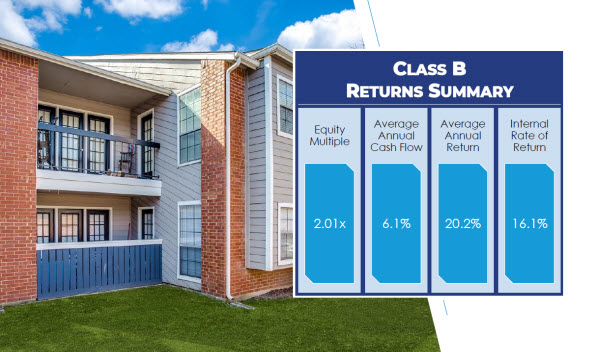
| Syndications | Hands-off investors wanting large deals | $50K–$100K, or $2,500+ via a club | Vetting only | Low | None |
| Funds | Built-in diversification | Often $25K–$100K+ | Vetting only | Low to medium | None |
| JV partnerships | Custom terms with one operator | Negotiated | Low | Low | Some |
| Private notes | Fixed income, bond-like role | Varies | Low | Low to medium | None |
What Is a Syndication, in Plain English?
An operator wants to buy a large property, such as a 100-unit apartment complex. They get a commercial loan for most of the price and put in some of their own cash, but they’re still short on the down payment. They raise the rest from passive investors, called limited partners, who each get an ownership share proportional to what they invest. The operator does the work; investors invest purely financially.
How to Choose
Ask yourself three questions: How much capital can I commit and leave untouched for years? How much time do I want to spend? How much control do I need? If you want a business, direct ownership fits. If you want simple exposure, REITs fit. If you want hands-off real estate with real diversification from stocks, passive private deals fit.
Go deeper with Passive vs. Active Investing in Real Estate and the complete guide to passive real estate investing.
Frequently Asked Questions
What is the best real estate investing strategy for beginners?
For beginners with small amounts, REITs are the simplest entry point because they have low minimums and high liquidity. Beginners with more capital who want hands-off exposure may consider passive private investments after learning how they work.
Are REITs good for diversification?
Less than many people expect. REITs tend to be closely correlated with the stock market, so they don’t provide as much diversification as private real estate.
Is owning rental property passive?
No. Owning rentals is a business that requires finding deals, financing, managing contractors and tenants, or managing a property manager.
What is the difference between a syndication and a fund?
A syndication typically buys one specific property with money from multiple investors. A fund pools investor money across multiple properties or loans.
Invest Passively Alongside Other Investors
In the SparkRental Co-Investing Club, members vet passive real estate deals together on live calls and can go in on deals with as little as $2,500 to $5,000. Membership is free to start.
This content is for educational purposes only and is not investment, tax or legal advice. All investments carry risk, including loss of principal. Past performance does not guarantee future results.