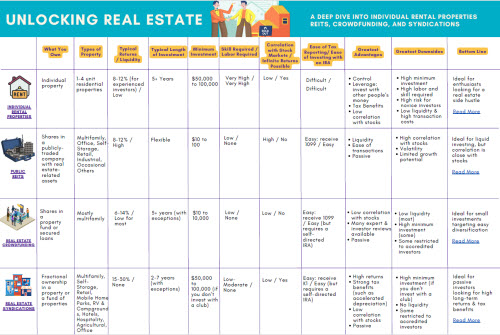
In this episode: Most private real estate deals require $50,000 to $100,000. Brian and Deni explain how investing alongside other people through an investment club brings that down to $2,500 to $5,000, and why smaller amounts make it easier to diversify, dollar-cost average and avoid landlord liability.
Episode Summary
People talk about rentals, flips, Airbnbs and syndications. What almost no one talks about is how to get into those investments with a few thousand dollars. Brian and Deni cover both the concept and the practical side of how it works.
Key Takeaways
- Active investing usually takes $50,000 to $100,000 per property between the down payment, closing costs and repairs. Private passive deals often require the same.
- The simple fix is going in on deals with other investors so each person invests less.
- Smaller amounts across many deals produce a bell curve of returns: a few underperform, a few overperform, most land in the middle.
- Vetting deals as a group adds expertise from members with very different backgrounds.
- Investing small amounts steadily is a form of dollar-cost averaging, which avoids putting a large sum in right before a downturn.
- Passive investors avoid the lawsuit risk and personal loan guarantees that landlords carry.
- You can form your own investment club, but it means organizing investors, entities, tax filings and deal flow yourself.
Episode Chapters
- 0:00 – Why no one talks about investing with $5,000
- 1:04 – What real estate normally costs to invest in
- 2:21 – Going in on deals with other investors
- 3:42 – Spreading risk across many deals
- 5:37 – Dollar-cost averaging in real estate
- 6:43 – The “lazy 1031 exchange”
- 7:54 – Avoiding legal and debt liability
- 10:48 – Joining vs. forming your own investment club
How Pooled Investing Works
An investment club pools members’ money into a joint entity that invests in a deal as one investor. The sponsor’s $50,000+ minimum is met by the group, while each member puts in a smaller amount. The kinds of deals covered include joint venture partnerships, syndications, private notes and private equity or debt funds.
The “Lazy 1031 Exchange”
A traditional 1031 exchange requires a qualified intermediary and strict deadlines to defer taxes when you sell. Brian describes a simpler approach: keep investing steadily in new deals that come with large first-year depreciation deductions. Those deductions can help offset income and gains from older investments in the same tax year. It’s not a formal 1031, and the tax impact depends on your situation, so talk with a tax professional.
Two Types of Liability You Avoid
Legal liability: Landlords can be named personally in tenant lawsuits, even when the property is owned in an LLC. Debt liability: Investment property loans usually require a personal guarantee. As a passive investor, you’re not signing either.
Read more in How to Invest in Real Estate with $5,000 and 6 OPM strategies, including the passive one.
Frequently Asked Questions
Can you invest in a syndication with $5,000?
Not usually on your own, since most syndications require $50,000 to $100,000. Through an investment club that pools members’ money, individuals can often participate with $2,500 to $5,000.
What is a lazy 1031 exchange?
It’s an informal approach where an investor keeps investing in new real estate deals with large depreciation deductions so those deductions offset gains from older deals in the same tax year. It is not a formal 1031 exchange.
Do passive real estate investors have personal liability?
Passive investors in syndications and funds generally don’t personally guarantee loans or face tenant lawsuits. Their risk is generally limited to the amount invested.
Can I start my own real estate investment club?
Yes, but it involves organizing investors, forming an entity for each deal, handling tax filings and K-1s, and finding and vetting deals yourself.
Invest Passively Alongside Other Investors
In the SparkRental Co-Investing Club, members vet passive real estate deals together on live calls and can go in on deals with as little as $2,500 to $5,000. Membership is free to start.
This content is for educational purposes only and is not investment, tax or legal advice. All investments carry risk, including loss of principal. Past performance does not guarantee future results.