In this episode: Brian Davis talks with Jordan Moorhead, a licensed real estate broker, mobile home park owner and host of the Austin Real Estate Investing Podcast, about why so many investors chasing passive income get it wrong: they buy deals that look good on paper without an investment thesis tied to their long-term goals.
Key Takeaways
- Start with your “why.” An investment thesis defines what you’re trying to achieve and filters which deals make sense.
- Good on paper isn’t the same as good for you. A deal with a strong cash-on-cash return can still do little for a monthly cash flow goal.
- BRRRR can work against income goals. Pulling most of your cash out through a refinance can leave a property with minimal monthly cash flow.
- Overleveraging before you have the skills can lead to negative cash flow or being underwater on a property.
- There’s no universally right move. The right action depends on where you are in your investing journey.
- Many people are better off investing passively with an experienced operator than building a real estate business themselves.
Episode Chapters
- 0:00 – Intro
- 1:14 – What is an investment thesis?
- 3:42 – BRRRR strategy pitfalls
- 4:30 – Passive vs. active real estate
- 6:55 – Building toward $10K/month in cash flow
What Is a Real Estate Investment Thesis?
An investment thesis is a short statement of what you want your real estate investments to do for you and how you’ll get there. For example: “Build $10,000 a month in cash flow within 10 years by building equity in early deals, then moving that equity into properties that cash flow more.” With a thesis, you can quickly rule out deals that don’t move you toward the goal, even if they look attractive.
Questions to Build Your Own Thesis
- What’s my primary goal: monthly income, long-term growth, tax benefits or diversification?
- What’s my timeline?
- How much time do I want to spend on real estate each week?
- Do I want to build skills as an operator, or invest with operators who already have them?
- How much capital can I commit, and how long can it stay tied up?
Active or Passive?
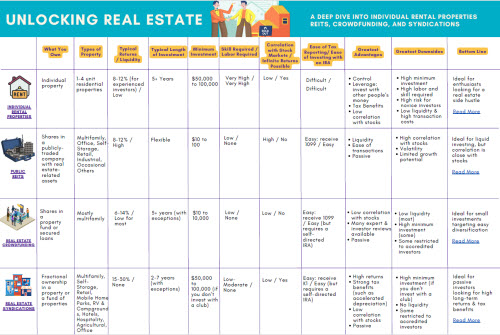
If your thesis calls for steady income without a second job, passive investments like syndications, funds and private notes may fit better than buying rentals. If you want to build an operating business, active investing may fit. Many investors do both. Compare them in Passive vs. Active Investing in Real Estate, and see whether rental income is really passive.
Ready to explore the passive side? Start with the complete guide to passive real estate investing.
Frequently Asked Questions
Can real estate really produce passive income?
Yes, but owning and managing rentals is closer to a business than passive income. Truly passive real estate income usually comes from investing with operators through syndications, funds, joint ventures or private notes.
What is an investment thesis in real estate?
It’s a clear statement of your goals and strategy, such as a target monthly cash flow and timeline, used to decide which deals fit and which to pass on.
Is the BRRRR method good for passive income?
It can build a portfolio quickly, but refinancing out most of your cash can leave little monthly cash flow, and overleveraging is risky without experience.
Should I invest actively or passively in real estate?
It depends on your goals, available time and interest in running a business. Passive investing suits people who want real estate exposure without managing properties.
Invest Passively Alongside Other Investors
In the SparkRental Co-Investing Club, members vet passive real estate deals together on live calls and can go in on deals with as little as $2,500 to $5,000. Membership is free to start.
This content is for educational purposes only and is not investment, tax or legal advice. All investments carry risk, including loss of principal. Past performance does not guarantee future results.