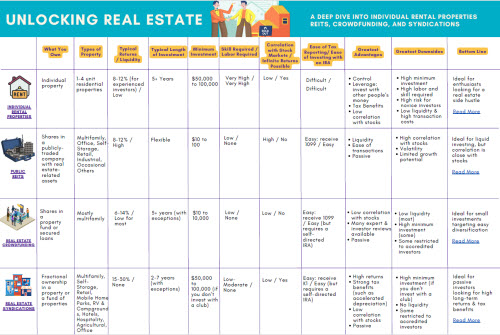
In this episode: Brian Davis and Deni Supplee of the SparkRental Co-Investing Club explain how higher interest rates affect real estate buyers and sellers differently, and walk through seven types of real estate investments that can hold up when rates stay high.
Episode Summary
When the Federal Reserve raises rates, borrowing gets more expensive and cap rates tend to rise, which pushes commercial property prices down. That’s bad news for owners who need to sell or refinance soon. For buyers, and for passive investors putting money into other people’s deals, it can mean better entry prices.
Brian and Deni point out that rates usually rise to fight inflation, and real estate tends to hold up reasonably well in inflationary periods because rents adjust over time. The bigger risk is recession, so the investments they focus on are ones built to keep producing income when the economy slows or when debt stays expensive for longer than expected.
Key Takeaways
- Higher rates usually mean higher cap rates and lower commercial property prices: bad for sellers, often good for buyers.
- Owners who bought at peak prices with short-term or floating debt face the most pressure.
- Recession resilience matters as much as rate resilience. Mobile home parks with tenant-owned homes are one example.
- Long loan terms give a property time to wait out high rates without a forced sale or refinance.
- Creative value-add, such as better management, tax abatements or conversions, can raise income without relying on falling rates.
- Fixed-rate long-term debt on rentals lets inflation work in the owner’s favor.
- Short-hold strategies like land flips can adjust pricing quickly as the market changes.
Episode Chapters
- 0:00 – The Fed raises rates: what it means
- 1:06 – Higher rates for buyers vs. sellers
- 3:45 – Why real estate holds up in inflation
- 6:00 – Recession-resilient investments: mobile home parks
- 9:20 – High-yield deals with long runway on the loan
- 12:16 – Creative value-add: operations, tax abatements, conversions
- 16:18 – Long-term and short-term rentals with fixed-rate debt
- 18:08 – Land flips and manufactured homes
- 20:39 – Hybrid real estate and business investments
- 24:44 – Final thoughts: vetting deals as a group
7 Real Estate Investments That Can Hold Up When Rates Stay High
1. Recession-resilient investments
Brian and Deni single out mobile home parks where residents own their homes and rent the lot. Moving a mobile home costs thousands of dollars, far more than a month of lot rent, so residents tend to keep paying even when money is tight. Parks that own and rent out the homes themselves are a different, riskier model.
2. High-yield deals with plenty of time left on the loan
Nobody knows how long rates will stay high. Properties that cash flow well and have years left before the loan comes due can keep paying investors while they wait for better conditions, instead of being forced to sell or refinance at a bad time.
3. Creative value-add plays
Not all value-add means renovations. Examples from the episode include professionalizing management on a scattered portfolio bought from a retiring owner, securing a property tax abatement by setting aside units as affordable housing, and converting an old motel into studio apartments.
4. Long-term rentals with fixed-rate debt
A 30-year fixed mortgage locks in the debt payment while rents tend to rise with inflation. Taxes and insurance can still climb, but the principal and interest stay the same.
5. Short-term rentals
The same principle applies to vacation rentals: lock in the debt payment and let nightly rates adjust over time.
6. Land flips
Undeveloped land is often bought and sold within a few months, frequently with cash. That short hold lets operators adjust their offer prices quickly as the market moves. Brian also describes a variation where an operator places manufactured homes on land parcels and sells them to first-time buyers below the local median price.
7. Hybrid real estate and business investments
Some deals combine real estate with an operating business, such as an industrial company that owns its facility. Businesses with little or fixed-rate debt and flexible costs can handle higher rates better than heavily leveraged properties.
What to Check Before Investing When Rates Are High
- Is the debt fixed or floating, and is there a rate cap?
- When does the loan come due compared with the business plan?
- Does the property cash flow today, or does it depend on rates falling?
- How would it perform in a recession?
For a full checklist, see how to vet a real estate syndication. For more on how debt shapes returns, read OPM investing explained.
Frequently Asked Questions
Do higher interest rates hurt real estate?
Higher rates usually push cap rates up and commercial property prices down, which hurts owners who need to sell or refinance. Buyers may benefit from lower prices, though borrowing costs more.
What real estate investments do well when interest rates rise?
Investments with fixed-rate or long-term debt, strong current cash flow, recession-resistant demand, or short hold periods tend to hold up better. Examples include mobile home parks with tenant-owned homes and rentals with 30-year fixed mortgages.
Is real estate a good hedge against inflation?
Real estate has historically held up reasonably well during inflation because rents and property values tend to adjust over time, while fixed-rate debt payments stay the same.
Invest Passively Alongside Other Investors
In the SparkRental Co-Investing Club, members vet passive real estate deals together on live calls and can go in on deals with as little as $2,500 to $5,000. Membership is free to start.
This content is for educational purposes only and is not investment, tax or legal advice. All investments carry risk, including loss of principal. Past performance does not guarantee future results.