In this episode: Brian Davis and Deni Supplee imagine starting over in real estate today, with no properties, no experience and no network but everything they’ve learned, and lay out the four things they’d do differently.
Episode Summary
2026 is an unusual year for real estate. Rates have stayed higher for longer, commercial property values have fallen from their peak, and many would-be investors are waiting on the sidelines. Brian and Deni argue that lower prices are hard on sellers but can be an opening for new buyers.
If they were starting today, they would skip landlording and go passive, plug into an existing community of investors, invest with taxes in mind, and practice dollar-cost averaging with small amounts rather than a few large bets. Brian shares how buying rentals without a mentor early in his career cost him hundreds of thousands of dollars.
Key Takeaways
- Buying rentals directly is a business, not a passive investment.
- Direct ownership brings legal liability and usually personal guarantees on debt. Limited partners generally avoid both.
- Passive options include syndications, joint venture partnerships, funds and private notes.
- Vetting deals with a group of experienced investors spreads knowledge and lowers minimums.
- A “lazy 1031 exchange” can use new depreciation to offset gains from deals that sold the same year.
- Smaller checks make dollar-cost averaging into real estate possible.
- Analysis paralysis keeps many smart people from ever starting.
Episode Chapters
- 0:00 – Starting over from scratch
- 0:35 – Why 2026 is different
- 2:45 – 1. Start passive instead of active
- 4:40 – Legal and debt liability of owning rentals
- 5:23 – Types of passive real estate investments
- 7:03 – 2. Join an existing investor community
- 8:40 – Typical minimums: $50K to $100K
- 9:54 – Brian’s expensive early mistakes
- 10:27 – 3. Invest with taxes in mind
- 13:07 – 4. Dollar-cost average into real estate
- 14:50 – Beating analysis paralysis
The 4 Things We’d Do Differently
1. Start with passive investing, not landlording
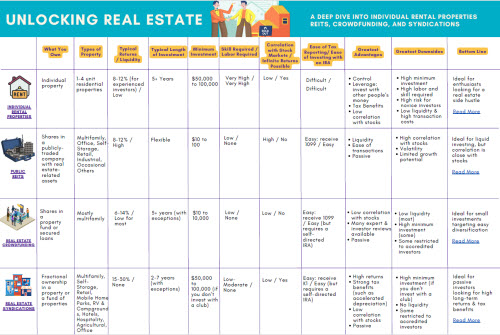
Finding, financing, renovating and managing rentals is a side hustle at a few properties a year and a full-time business beyond that. It also comes with legal liability and personal guarantees on loans. Passive investments such as syndications, joint ventures, funds and private notes take far less time to learn and run. Compare the two in passive vs. active real estate investing.
2. Plug into an existing community
Vetting deals alongside dozens of other investors means you benefit from everyone’s experience and questions. Pooling money also lowers the minimum per person well below the typical $50,000 to $100,000. See how to vet a real estate syndication.
3. Be intentional about taxes
Many syndications generate large depreciation deductions in the first year. Investing in a new deal in the same year another one sells can offset much of the tax bill, a strategy Brian calls the “lazy 1031 exchange.” Read passive real estate investing taxes for the details, and check with your accountant.
4. Dollar-cost average
Very few people can put $100,000 into a new deal every quarter. With smaller checks, you can invest steadily over time instead of trying to time the market, and your results start to average out across many deals.
Getting Past Analysis Paralysis
Brian and Deni see plenty of smart, high-earning people stuck reading and listening without ever investing. The answer isn’t to dive in recklessly. It’s to start small, learn alongside experienced investors and keep going. A good first step is our complete guide to passive real estate investing or how to invest in real estate with $5,000.
Frequently Asked Questions
How should a beginner start investing in real estate in 2026?
Brian Davis and Deni Supplee suggest starting with passive investments, learning alongside an experienced community of investors, planning for taxes and investing small amounts consistently over time.
Is buying rental property passive income?
Not really. Buying and managing rentals is closer to running a business, with ongoing work, legal liability and usually personal guarantees on debt.
How much money do you need to invest passively in real estate?
Syndications and similar investments often require $50,000 to $100,000 per deal. Group and co-investing structures can lower the amount per person considerably.
Invest Passively Alongside Other Investors
In the SparkRental Co-Investing Club, members vet passive real estate deals together on live calls and can go in on deals with as little as $2,500 to $5,000. Membership is free to start.
This content is for educational purposes only and is not investment, tax or legal advice. All investments carry risk, including loss of principal. Past performance does not guarantee future results.