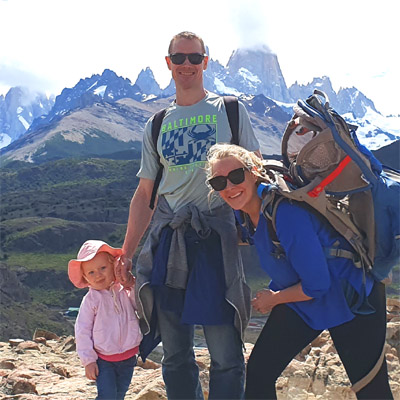
In this episode: Brian Davis tells Deni Supplee how he blocked off a full month to travel through Argentina with his family, worked about an hour a day, and came home with his net worth roughly $25,000 higher, and what made that possible.
Episode Summary
Most people trade time for money: if they stop working, they stop earning. Brian describes taking a “red month,” crossing an entire month off his calendar, from mid-December 2022 to mid-January 2023 while traveling from Buenos Aires to Patagonia and Mendoza with his wife and toddler.
Two things kept his finances growing while he was away. First, a business with a partner and employees that didn’t need him every day. Second, investments: roughly half his net worth is in stocks and half in passive real estate investments made through the Co-Investing Club, spread across dozens of deals. He also touches on geo-arbitrage, the foreign earned income exclusion and living without a car while abroad.
Key Takeaways
- A “red month” means blocking off an entire month with no calls or commitments.
- Income that doesn’t depend on your hours comes from two places: a business that runs without you and investments that pay you.
- Brian splits his net worth roughly between stocks and passive real estate.
- Spreading money across many smaller real estate investments smooths out results, the same way owning many stocks does.
- Group investing addresses three problems for passive investors: deal flow, vetting and high minimums.
- Financial independence is ultimately about controlling your time.
Episode Chapters
- 0:00 – Trading time for money
- 0:18 – What a “red month” is
- 1:38 – The Argentina itinerary
- 6:06 – Working about an hour a day
- 6:42 – How net worth grew while away: the business
- 7:40 – Passive real estate investments
- 9:08 – Diversification and the bell curve
- 10:20 – Deal flow, vetting and lower minimums
- 11:12 – Geo-arbitrage and currency
- 13:25 – Tax advantages of living abroad
- 15:41 – Wrap-up
How Passive Income Kept Working During a Month Off
A business that doesn’t depend on one person
Brian credits a business partner and employees for keeping the company running while he checked in for about an hour each morning. A business that needs its owner every day is really a job; one that runs without them becomes an asset.
Investments that pay whether you work or not
The other half of the answer is investments. Brian keeps about half his net worth in stocks and half in passive real estate investments such as syndications, private notes, funds and joint ventures. Those kept paying distributions and building equity while he hiked in Patagonia.
Spreading money across many deals
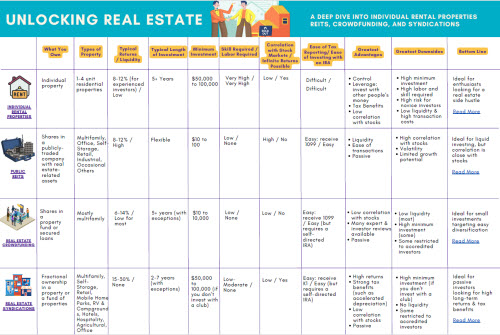
Deni notes that when you own many investments, one underperformer doesn’t derail you. Brian compares it to a bell curve: some deals do better than expected, some worse, and most land in the middle. That’s much easier to live with than putting $50,000 to $100,000 into a single deal. See how to invest in real estate with $5,000 for how smaller checks make that possible.
Is This Realistic for Everyone?
Not right away. The lesson of the episode isn’t that anyone can take a month off tomorrow. It’s that building systems, investments and multiple income streams gradually weakens the link between the hours you work and the wealth you build. For the tax side of passive real estate, read passive real estate investing taxes.
Frequently Asked Questions
What is a red month?
A red month is a full month blocked off on your calendar with no work commitments, named for crossing it out with a red marker. Brian Davis used one to travel through Argentina with his family.
How can your net worth grow while you are not working?
By owning assets that produce income or grow in value without your daily involvement, such as a business run by a team, stock investments and passive real estate investments.
Is real estate passive income really passive?
Owning and managing rentals yourself is closer to a business than a passive investment. Investing as a limited partner in syndications, funds or private notes is much more hands-off, although you still need to vet deals carefully.
Invest Passively Alongside Other Investors
In the SparkRental Co-Investing Club, members vet passive real estate deals together on live calls and can go in on deals with as little as $2,500 to $5,000. Membership is free to start.
This content is for educational purposes only and is not investment, tax or legal advice. All investments carry risk, including loss of principal. Past performance does not guarantee future results.