The Short Version:
-
- Over $500 billion in commercial real estate loans come due between 2025 and 2027. Operators who borrowed at 3% now face refinancing at 6-7%. The math doesn’t work anymore.
- When operators can’t refinance profitably, they sell. And when they need to sell before a loan matures, they don’t have the luxury of waiting for the perfect price. That creates motivated sellers.
- Distressed sellers don’t mean distressed properties. Often you’re buying a fundamentally sound asset from someone who got caught on the wrong side of a rate cycle. Their debt problem becomes your equity opportunity.
- This window won’t last forever. As the wall of maturities works through the system, the opportunity set will shrink. For patient investors, the next 12-24 months could be some of the best buying we’ve seen in years.

A few weeks ago, we were vetting a deal in the Co-Investing Club that caught my attention. Not because of the property itself… (it was a solid workforce housing asset in a decent market)… what caught my attention was the price.
It was priced well below what similar properties had traded for just two years ago. And the reason was the current operator needed to exit before their loan matured. They’d borrowed at 3.5% back in 2021. The loan was coming due and refinancing at today’s rates would have crushed their returns. So they were selling at a discount to get out clean.
This isn’t an isolated situation. It’s happening across the entire commercial real estate market right now. And if you understand what’s going on, it creates some of the best buying opportunities we’ve seen in years.
The Wall of Maturities
Between 2025 and 2027, over $500 billion in commercial real estate loans are coming due. That’s not a typo. Half a trillion dollars in debt that needs to be refinanced, paid off, or… something else.
Most of these loans originated between 2019 and 2022, when interest rates were at historic lows. Operators borrowed at 3%, sometimes lower, assuming they’d refinance into similar rates when the loans matured.
That assumption aged poorly.
Today, commercial real estate loans are pricing in the 6-7% range. For many operators, that’s a doubling of their interest expense. On a $10 million loan, that’s the difference between $300,000 in annual interest and $650,000. That extra $350,000 has to come from somewhere… and for a lot of properties, it doesn’t exist.
The math simply doesn’t work anymore. Cash flow that looked healthy at 3% rates turns negative at 7%. Operators who were doing fine are suddenly underwater.
What Happens When the Math Breaks
When an operator can’t refinance profitably, they have a few options. None of them are great.
They can try to negotiate an extension with their lender, kicking the can down the road and hoping rates drop. Some lenders are playing along because they don’t want to foreclose and deal with the asset themselves. But extensions aren’t free… lenders typically demand additional capital, higher rates, or both.
They can bring in new equity to pay down the loan and reduce the refinancing amount. But that means either diluting existing investors or finding new investors willing to put fresh money into a struggling deal. Not easy in this environment.
They can sell the property and this is where it gets interesting for buyers. Because when an operator needs to sell before a loan matures, they don’t have the luxury of waiting for the perfect price. They need to move the asset and they need to move it QUICKLY.
That creates motivated sellers. And motivated sellers create opportunities.
Distressed Doesn’t Always Mean Damaged
Something important to understand is that distressed sellers don’t necessarily mean distressed properties.
When we talk about distress in this context, we’re usually talking about capital structure problems, not property problems. The building is fine, the tenants are paying rent and the operations are running smoothly. But the debt on the property was structured for a different interest rate environment and now the numbers don’t pencil.
This is actually the best kind of distress to buy into. You’re not inheriting a property with physical issues, management problems, or collapsing occupancy. You’re buying a fundamentally sound asset from someone who got caught on the wrong side of a rate cycle.
The previous owner’s debt problem becomes your equity opportunity. You come in with fresh capital at a reset basis, finance at today’s rates (which are already baked into your projections) and operate a property that was already working. The hard part… finding good tenants, stabilizing operations, building market presence… has already been done.
Why This Matters for Passive Investors
If you’re investing passively in real estate, you’re ultimately dependent on the operators you invest with to find good deals. You’re not out there sourcing properties yourself. So the question becomes… “are the operators you’re backing positioned to take advantage of this environment?”
The best operators right now are the ones with capital ready to deploy, relationships with distressed sellers, lenders and the patience to be selective. They’re not overpaying for assets just to put money to work but instead waiting for the deals where someone else’s problem creates an attractive entry point.
In our Co-Investing Club, we’ve been seeing more of these deals come through the pipeline. Properties that would have traded at a 5% cap rate two years ago are now available at 7% or 8%. Operators who overpaid and overleveraged in 2021 are exiting to buyers with cleaner capital structures. The opportunity set is meaningfully better than it was 18 months ago.
This doesn’t mean every deal is good. There’s still plenty of garbage out there and distress can mask deeper problems if you’re not careful. But for passive investors who partner with disciplined operators, this is exactly the environment you want to be investing in.
(article continues below)
Real estate investments? Awesome.
Being a landlord? Less fun.
Learn how to earn 15%+ on passive real estate investments in our free video course.

The Fear of Overpaying
One of the biggest concerns I hear from people getting into real estate investing is: “How do I know I’m not overpaying?”
It’s a valid concern. Nobody wants to be the person who bought at the top, right before values dropped.
But the thing is, the risk of overpaying is highest when capital is cheap and plentiful. When everyone has access to 3% debt and prices are being bid up by a flood of buyers, that’s when you’re most likely to overpay. Deals get competitive and operators stretch on price to win.
Today’s environment is the opposite. Many buyers have pulled back since capital is more expensive. The operators who overleveraged are being forced to sell so competition for deals has decreased.
This is historically when the best risk-adjusted returns are made… not when everything is going up and everyone is bullish but when there’s enough pain in the market to create motivated sellers and disciplined buyers.
I’m not saying prices can’t go lower because they might. But if you’re buying from distressed sellers at today’s reset values, with conservative underwriting and realistic rate assumptions, your margin of safety is much better than it was two years ago.
What I’m Watching For
When we evaluate deals in the Co-Investing Club, we always ask about the acquisition story. Why is this property available? Why is the seller willing to sell at this price and what’s the motivation?
The best answers right now involve some version of: “The seller financed this at 3.5% in 2021, the loan is maturing, and they can’t make the numbers work at today’s rates. They need to exit.”
That’s an opportunity.
It means we’re buying at a reset basis rather than a peak basis. It means the previous owner already absorbed the pain of the rate environment shift. It means we’re not the ones caught holding expensive debt when the music stops… because the music already stopped for someone else.
(article continues below)
 What short-term fix-and-flip loan options are available nowadays?
How about long-term rental property loans?
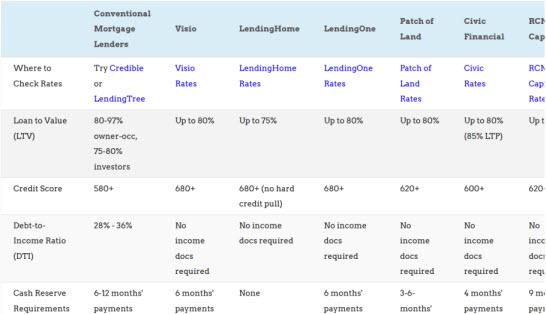
We compare several buy-and-rehab lenders and several long-term landlord loans on LTV, interest rates, closing costs, income requirements and more.
The Window Won’t Last Forever
At some point, this wall of maturities will work through the system. The distressed sellers will have sold. The properties will be in stronger hands while prices will stabilize or start climbing again.
When that happens, the opportunity set will shrink because buyers will have to compete more aggressively which will cause returns to compress.
I don’t know exactly when that inflection point comes. Maybe late 2026… maybe 2027. But the dynamics that are creating today’s opportunities are temporary. They exist because of a specific mismatch between when debt originated and what rates are today. As that debt gets refinanced, extended, or sold off, the pressure releases.
For patient investors with capital to deploy, the next 12-24 months could be some of the best buying we’ve seen in a long time.
We’re vetting deals every month in the Co-Investing Club with this exact lens, looking for properties where someone else’s debt problem creates our entry point. If you want access to those opportunities, that’s exactly what we do.
About the Author

G. Brian Davis is a real estate investor and cofounder of SparkRental who spends 10 months of the year in South America. His mission: to help 5,000 people reach financial independence with passive income from real estate. If you want to be one of them, join Brian and Deni for a free class on How to Earn 15-25% on Fractional Real Estate Investments.
Connect with us on social!