The Short Version:
-
- Data centers now capture 35% of all real estate fundraising. Five years ago? 15%.
- Microsoft can’t find enough power for AI. That scarcity is driving a $450B infrastructure build.
- Hyperscalers sign 10-20 year leases at 90%+ renewal rates. Try getting that with office space.
- You missed the Nvidia run. You didn’t miss the buildings that house every ChatGPT query.
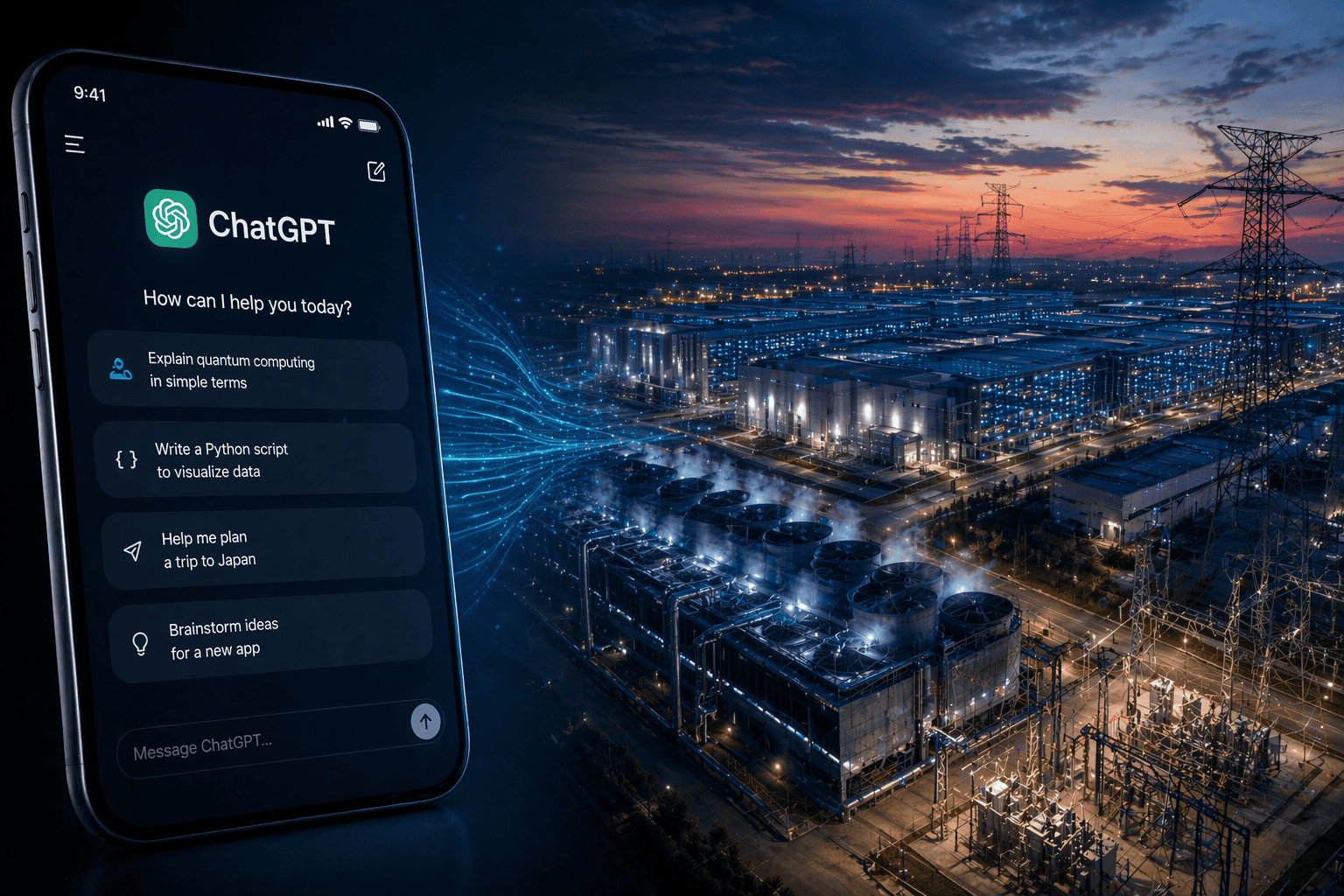
Data centers now account for 35% of global real estate fundraising.
That’s up from 15% in 2020.
Let that sink in. More than a third of all institutional capital flowing into commercial real estate is chasing data centers.
And it’s not slowing down any time soon. Microsoft, Meta, Google, Amazon and Oracle are projected to spend over $450 billion on AI infrastructure in 2026 alone. Blackstone just filed to launch a $2 billion data center REIT. Oracle is raising $45-50 billion to build more capacity.
This isn’t a trend. It’s a tidal wave.
And most passive real estate investors have no idea how to participate.
What’s Actually Driving This
Every time someone uses ChatGPT, the request hits a data center somewhere.
Every AI training run. Every cloud backup. Every streaming video. Every online transaction. All of it requires physical infrastructure. Servers. Networking equipment. Cooling systems. Massive amounts of power.
The AI boom isn’t just about software and chips. It’s about the buildings that house all that hardware.
And those buildings need to be built, powered and maintained. That’s where the real estate opportunity sits.
Right now, demand for data center capacity is outrunning supply. Microsoft recently acknowledged turning away customers because they don’t have enough power available. Hyperscale cloud providers are signing 10-20 year leases on facilities that haven’t even been built yet.
This is what undersupply looks like in real time.
Why This Is Different From Other Real Estate
I’ve been investing in real estate for over 20 years. I’ve seen apartment booms. Industrial warehouse explosions during e-commerce growth. Office building cycles.
Data centers are different.
The lease structures alone are remarkable. Most data centers sign tenants to 10-20 year contracts with annual rent escalators of 2-3%. Renewal rates exceed 90%.
Why? Because once a hyperscaler like Amazon or Microsoft invests in a data center, they’re locked in. They spend two to three times the original construction cost on specialized equipment and network architecture. Moving is expensive, complex and operationally risky.
That creates incredibly stable cash flow for whoever owns the building.
Compare that to office space where tenants can walk after 5 years. Or apartments where turnover happens constantly. Data centers offer the kind of long-term, predictable income that makes lenders and investors very comfortable.
The Power Problem
Here’s the constraint most people don’t understand.
Building data centers isn’t the hard part anymore. Finding power is.
AI data centers consume staggering amounts of electricity. A single facility can require 20-100 megawatts of power. For context, one megawatt can power roughly 700 homes for a year.
And you can’t just plug that into the grid. You need dedicated power infrastructure. Substations. Transmission lines. In some cases, on-site power generation.
Microsoft is building a 1.5 gigawatt data center in Wisconsin. That’s enough to power over a million homes. Meta’s Louisiana facility includes a $3.2 billion combined-cycle gas plant just to power the data center.
This is infrastructure investment at a scale most people can’t visualize.
The markets that can deliver power fast are capturing all the demand. The markets that can’t are getting passed over, regardless of how attractive they might be otherwise.
That power scarcity is what’s driving valuations. Investors aren’t just buying buildings anymore. They’re buying megawatts of available power capacity.
How Passive Investors Access This
Most people hear “data centers” and think they need to go buy Nvidia stock or invest in some tech company.
That’s not where the opportunity is for passive real estate investors.
There are two publicly traded data center REITs that dominate this space: Digital Realty and Equinix.
These companies own hundreds of facilities globally. They lease space to hyperscalers and enterprise customers under long-term contracts. They pay dividends. And they benefit from a structural tax advantage that most tech companies don’t get.
Because they’re structured as REITs, they don’t pay corporate taxes as long as they distribute most of their profits to shareholders. That means investors capture more value compared to owning a regular corporation doing the same thing.
Digital Realty owns over 300 facilities in more than 50 cities. Equinix operates globally with similar scale. Both are positioned directly in the path of AI infrastructure spending.
Beyond the public REITs, there are private funds and syndications forming specifically to build and operate data centers. Some target stabilized, income-producing assets. Others focus on development deals where they’re building new facilities from scratch.
Blackstone’s new REIT is targeting exactly this. They’re buying newly built data centers already leased to investment-grade hyperscalers. No construction risk. No lease-up risk. Just stable cash flow from long-term contracts.
That’s the model institutional capital is chasing right now.
What I’m Watching
In the co-investing club, we haven’t invested directly in data centers yet. The deals we’ve seen either required more capital than makes sense for our structure or came with development risk we weren’t comfortable taking on.
But I’m paying close attention.
The operators we work with are starting to explore this space. Not building massive hyperscale facilities competing with Equinix. But secondary markets where smaller data centers serve regional demand.
The thesis is simple. Not every company needs hyperscale infrastructure. Plenty of mid-market businesses need secure, reliable data center capacity but can’t justify leasing an entire pod at a major facility.
That creates opportunity for smaller operators in markets with available power and lower construction costs.
Whether we end up investing in one of those deals depends on the specifics. Sponsor track record. Power agreements. Pre-leasing commitments. Exit strategy.
But the macro trend is clear. Data center demand isn’t going away. If anything, it’s accelerating.
(article continues below)
Real estate investments? Awesome.
Being a landlord? Less fun.
Learn how to earn 15%+ on passive real estate investments in our free video course.

The Underlying Principle
Technology revolutions create wealth for those who invest in the infrastructure, not just the technology.
During the internet boom, the real money wasn’t in every random dot-com. It was in the fiber optic networks. The server farms. The physical infrastructure that made everything else possible.
The same pattern is playing out with AI.
Nvidia is making a fortune selling chips. But the companies providing the real estate, power and cooling to house those chips are building businesses with 10-20 year contracted revenue streams.
That’s the difference between speculation and infrastructure investing.
One bets on future demand. The other locks in current demand through long-term contracts.
For passive investors, data centers offer exposure to AI growth without the volatility of tech stocks. You’re not betting that a specific company wins. You’re betting that AI computing requires massive amounts of physical infrastructure.
And that infrastructure needs to be housed somewhere.
(article continues below)
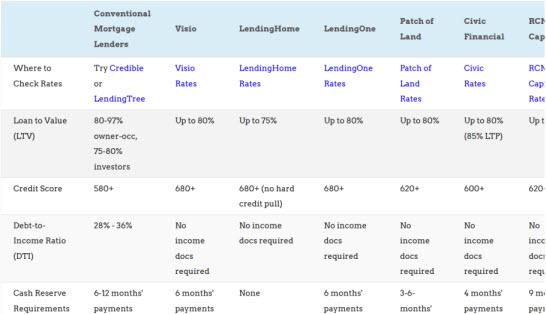 What short-term fix-and-flip loan options are available nowadays?
How about long-term rental property loans?
We compare several buy-and-rehab lenders and several long-term landlord loans on LTV, interest rates, closing costs, income requirements and more.
What This Means Going Forward
The $450 billion being spent on AI infrastructure in 2026 is going somewhere.
Some of it goes to chips. Some to software. But a massive chunk goes to real estate.
Buildings. Power. Cooling. All the unglamorous stuff that makes the technology actually work.
For investors who understand real estate but feel like they’ve missed the AI boom, data centers are the bridge. You don’t need to understand machine learning or neural networks. You just need to understand that AI requires physical space and reliable power.
And both of those are scarce resources with growing demand.
That’s real estate investing fundamentals. Supply and demand. Except this time, the demand is being driven by a technology shift that’s barely getting started.
I’m not suggesting everyone run out and buy data center REITs tomorrow.
But if you’re building a passive real estate portfolio and you’re not at least paying attention to this sector, you’re missing a major piece of where institutional capital is moving.
The next decade of AI infrastructure build-out is creating opportunities that didn’t exist five years ago. Some of those opportunities are accessible to passive investors through public REITs. Others will come through private funds and syndications as more operators enter the space.
Either way, data centers have gone from a niche subsector to one of the most attractive parts of commercial real estate. And that shift is just beginning.
About the Author

G. Brian Davis is a real estate investor and cofounder of SparkRental who spends 10 months of the year in South America. His mission: to help 5,000 people reach financial independence with passive income from real estate. If you want to be one of them, join Brian and Deni for a free class on How to Earn 15-25% on Fractional Real Estate Investments.
Connect with us on social!