The Short Version:
-
- Why Yale University now considers a $200,000 household income ‘low income’… and what that signals about wealth in America
- The Goldman Sachs finding that shocked financial planners: the income bracket most likely to live paycheck to paycheck
- The one metric that separates people who feel wealthy from people who merely earn well
- What Brian learned after years of watching high-earning professionals stay flat while their income grew

Yale University made an announcement last year that stopped a lot of people mid-scroll. Households earning $200,000 a year now qualify for 100% free tuition at the school.
That’s not a typo. Two hundred thousand dollars is now the threshold for financial need at one of the most prestigious universities in the country.
At the same time, Goldman Sachs published a report finding that roughly 40% of Americans earning over $500,000 a year describe themselves as living paycheck to paycheck. Not $50,000 a year. Five hundred thousand.
Something strange is happening to the relationship between income and financial security. And if you earn good money but still feel like you’re not quite getting ahead, you’re not imagining it.
The Number That Used to Mean Something
A six-figure salary was the benchmark for decades. It meant you’d arrived. It meant a comfortable home, a funded retirement, money to spare. It meant financial freedom was within reach.
In 2025, the average American household spends over $70,000 a year before a single dollar goes toward savings, investments or debt repayment. In major metros, that baseline is significantly higher. After taxes, housing, student loans, childcare, insurance and the cost of just keeping a household running, a $100,000 income in many parts of the country leaves almost nothing.
The benchmark moved. The salary didn’t.
This isn’t a complaint about expensive cities or bad luck. It’s a structural problem that catches people off guard precisely because they’re doing everything they were told to do. They got the degree, landed the job, earned the raises. And they’re still not building the wealth they expected.
Income and Wealth Are Not the Same Thing
This is the distinction most financial content glosses over, and it’s the most important one to understand.
Income is what you earn. Wealth is what earns for you.
A doctor who earns $400,000 a year and spends $395,000 of it is not wealthy. They’re dependent. One bad month, one health crisis, one job loss and the whole structure collapses. The income stops. The bills don’t.
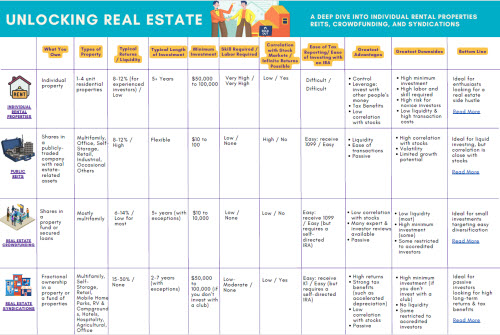
Wealth is the collection of assets that keep producing money regardless of whether you show up. Dividend stocks. Rental income. A business that doesn’t require you to run it every day. And yes, passive real estate investments.
The uncomfortable truth is that most high earners are very good at growing their income and very poor at converting it into wealth. Not because they’re irresponsible. Because income feels like security. It feels like the thing that solved the problem. So the urgency to build something beyond it never quite materializes.
And then the income stops.
Why High Earners Fall Into This Trap More Than Anyone
There’s a specific pattern that plays out among busy professionals, and it’s almost invisible from the inside.
When your income rises, your lifestyle rises with it. Bigger apartment. Better car. More travel. Nicer restaurants. None of these feel like reckless decisions in the moment. They feel like rewards. They feel appropriate to the income level. And they are, individually.
But collectively, they absorb the raise before it ever has a chance to become a savings rate. Financial planners have a term for this: lifestyle looping. You earn more, you spend more, you feel like you’re doing well, and the gap between what you earn and what you’re actually building stays stubbornly narrow.
There’s a second layer to this. High earners are often embarrassed to admit they don’t have a financial plan. The logic goes: if I’m smart enough to earn this much, I should instinctively know what to do with it. So they don’t ask. They defer. They assume they’ll figure it out when things settle down. And things never quite settle down.
The professionals who actually build wealth aren’t always the highest earners in the room. They’re usually the ones who started treating their income as an input to a system rather than a destination.
(article continues below)
Real estate investments? Awesome.
Being a landlord? Less fun.
Learn how to earn 15%+ on passive real estate investments in our free video course.

What Actually Separates the Two Groups
This isn’t complicated in theory. In practice, it requires a shift in how you think about money.
The first group earns, spends, and saves what’s left. The second group earns, saves first, and spends what remains.
The second group also does something the first group often skips entirely: they put their savings to work in assets that generate income independently. They stop being the only thing producing returns in their financial picture. They build a second layer.
That second layer looks different for different people. For some, it’s index funds they never touch. For others, it’s equity in businesses. For a growing number of busy professionals who want real estate exposure without the landlord headaches, it’s passive real estate investing, putting capital into income-generating properties managed by experienced operators.
The specific vehicle matters less than the underlying behavior: consistently converting income into assets that produce income of their own.
So What Does This Mean For You?
A salary tells you what you could build. What you’ve actually built depends entirely on what percentage of that income you converted into productive assets before lifestyle absorbed it.
The people who feel genuinely financially secure at 55 are the ones who used those years to build something that doesn’t require them to keep showing up.
6 figures isn’t the problem. Mistaking it for the finish line is.
(article continues below)
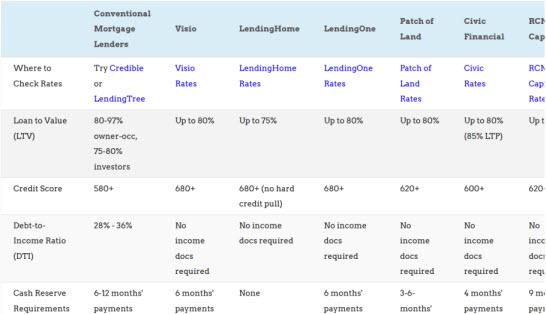 What short-term fix-and-flip loan options are available nowadays?
How about long-term rental property loans?
We compare several buy-and-rehab lenders and several long-term landlord loans on LTV, interest rates, closing costs, income requirements and more.
The Takeaway
If you earn well and still feel like you’re not quite getting ahead, it’s worth asking an honest question: how much of what you earn is actually building wealth versus funding a lifestyle?
That gap, whatever its size, is your leverage point. Not your next raise.
In the Co-Investing Club, we have 350+ members with exactly this exact mindset. All professionals who earn enough, but who want to start putting that income to work in real assets that generate real returns. If that sounds like where you are, it might be worth learning more about how we approach it.
About the Author

G. Brian Davis is a real estate investor and cofounder of SparkRental who spends 10 months of the year in South America. His mission: to help 5,000 people reach financial independence with passive income from real estate. If you want to be one of them, join Brian and Deni for a free class on How to Earn 15-25% on Fractional Real Estate Investments.
Connect with us on social!