The Short Version:
-
- What the peer network for investors with $100M+ in net worth is doing with their money in 2026… and why it’s surprisingly boring
- The behavioral trait that separates people who stay wealthy from people who earn a lot but never quite get there
- Why the gap between how wealthy people invest and how everyone else invests has almost nothing to do with access or sophistication
- The asset categories the ultra-wealthy are quietly moving back toward… and how regular investors can access the same types of deals
TIGER 21 is a peer network for people with serious money. Members average over $100 million in net worth. These are not people who need tips. They have advisors, family offices, access to anything.
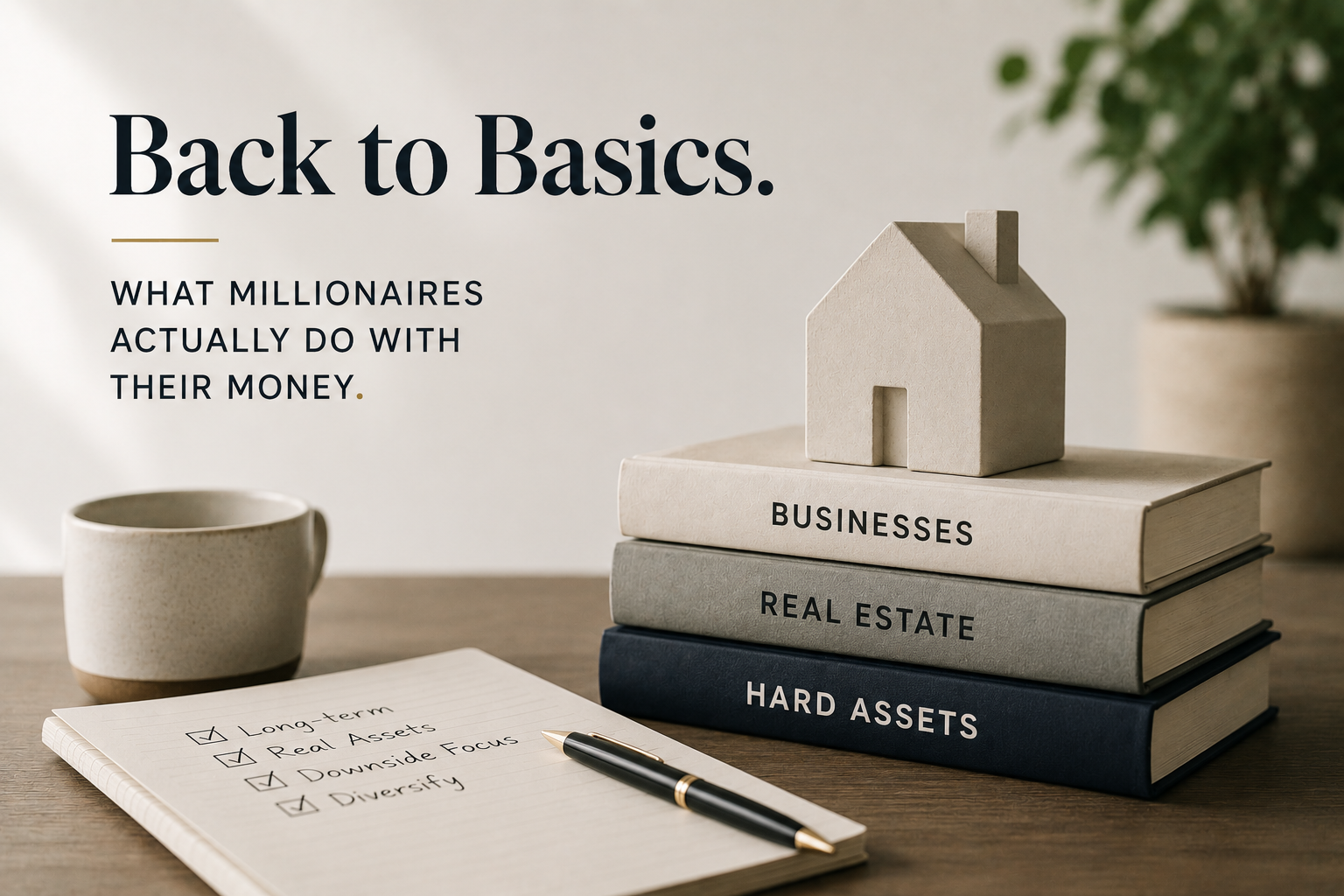
So when Michael Sonnenfeldt, the organization’s founder, told CNBC that his members are going ‘back to basics’ in 2026, it’s worth paying attention to what ‘basics’ means at that level.
Long-term investments in businesses, real estate and diversified hard assets. No market timing. No exotic strategies. Commitment over cleverness.
This is worth sitting with for a moment. The people with the most access to the most sophisticated financial products in the world are voluntarily choosing the least complicated version of investing available.
What They’re Not Doing
Before getting to the specifics, it’s worth clearing up what the ultra-wealthy are generally not doing with their money, despite what financial media might suggest.
They’re not day trading. They’re not rotating between sectors based on quarterly earnings. They’re not chasing whatever asset class got the most attention in the last twelve months. They’re not making concentrated bets on single positions based on a conviction that they can predict what markets do next.
The ones who stay wealthy treat market timing as a fool’s errand. Sonnenfeldt put it directly: if you don’t know whether a stock is a better buy at 15 than at 20, you shouldn’t be in that stock. This is a discipline that sounds simple and is remarkably hard to practice when markets are moving and financial media is generating daily urgency.
What They’re Actually Doing
The pattern that shows up consistently among genuinely wealthy long-term investors looks like this.
They hold real assets. Not primarily stocks or crypto, but businesses, real estate, land and private investments backed by something tangible. These assets produce cash flow that doesn’t depend on market sentiment to exist. When the stock market drops 30%, an apartment building with paying tenants still pays its investors.
They commit for the long term and mean it. This is harder than it sounds. A five-year investment hold sounds perfectly reasonable until the second year brings bad news, a paper loss, or a better-looking opportunity somewhere else. The wealthy investors who compound most reliably are the ones who made the decision once and didn’t keep re-making it.
They focus relentlessly on downside. The question they ask before every investment is not ‘how much can I make?’ but ‘how much can I lose, and can I handle it?’ This reframing produces completely different investment decisions. It eliminates the speculative bets. It keeps capital concentrated in things that can survive adverse conditions.
And they diversify across genuinely uncorrelated assets. Not 500 different stocks, which all move together during a crisis, but real estate alongside equities alongside private credit alongside something that produces income regardless of what public markets are doing that quarter.
The Behavior Gap Is Bigger Than the Knowledge Gap
Here’s the uncomfortable part of this story.
Most of what the ultra-wealthy do is knowable. The strategies aren’t secret. The frameworks aren’t proprietary. Long-term commitment, real assets, downside focus, genuine diversification. None of this requires a family office or a Bloomberg terminal.
What requires something harder is the behavior. Sitting in an investment for five years when the paper value is down. Not reacting when markets get volatile. Not chasing whatever just performed well. Being genuinely comfortable with the idea that your money is working in the background and you don’t need to check on it daily.
Retail investors underperform not because they have inferior information. They underperform because they buy high, sell low, move in and out of positions at the wrong times and let short-term noise override long-term judgment. A 20-year Dalbar study found that the average retail investor earned 2.6% annually while the S&P 500 returned 7.2% over the same period. Same market, radically different outcomes, driven almost entirely by behavior.
The wealthy stay in things. That’s a significant portion of the explanation.
(article continues below)
Real estate investments? Awesome.
Being a landlord? Less fun.
Learn how to earn 15%+ on passive real estate investments in our free video course.

How to Apply This Without Having $100 Million
The good news is that the actual principle here doesn’t require a nine-figure net worth to implement.
The core behaviors are accessible: choose assets you understand and believe in, commit to them across a time horizon that actually allows compounding to work, resist the urge to react to short-term noise, and build a portfolio where not everything moves in the same direction at the same time.
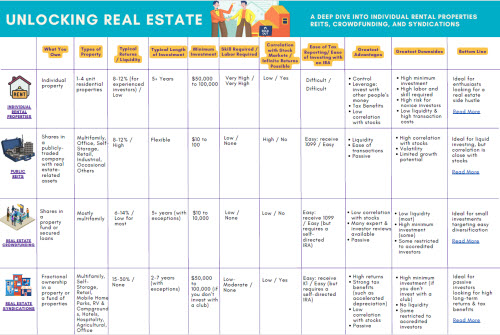
For busy professionals who want real estate in the mix without the operational burden of direct property ownership, passive real estate investing through syndications, funds and private notes is how you access the same asset categories the wealthy favor. The minimum investments are higher when you go in alone, which is exactly why group investing structures like our Co-Investing Club exist: to bring those minimums down while preserving access to quality, vetted deals.
The vehicles are different. The underlying principle is identical: real assets, long commitment, downside focus, genuine diversification.
(article continues below)
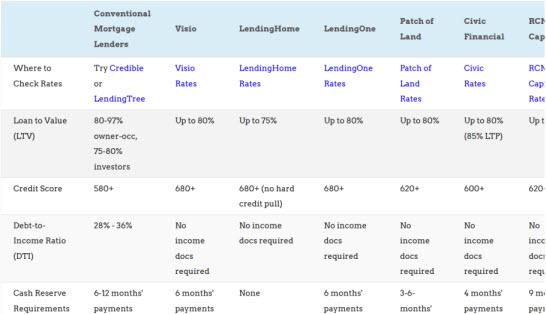 What short-term fix-and-flip loan options are available nowadays?
How about long-term rental property loans?
We compare several buy-and-rehab lenders and several long-term landlord loans on LTV, interest rates, closing costs, income requirements and more.
The Underlying Principle
The wealthiest investors in the world aren’t using strategies you can’t access. They’re using behaviors most people can’t sustain.
Patience. Commitment. Downside thinking. The willingness to be boring while everything interesting happens around them.
That’s the real moat. Not the assets themselves, but the discipline to hold them through conditions that make most investors want to do something.
The next time you feel pressure to react to a market headline, to chase something that’s been performing well, or to exit an investment because the paper value is uncomfortable, remember: the people who stay wealthy tend to be the ones who notice that urge and deliberately do nothing.
About the Author

G. Brian Davis is a real estate investor and cofounder of SparkRental who spends 10 months of the year in South America. His mission: to help 5,000 people reach financial independence with passive income from real estate. If you want to be one of them, join Brian and Deni for a free class on How to Earn 15-25% on Fractional Real Estate Investments.
Connect with us on social!