The Short Version:
-
- Why couples who agree on almost everything else still fight constantly about money and the specific dynamic driving it
- The mistake most financially-minded partners make that quietly builds resentment instead of alignment
- What Brian and his wife learned about money disagreements after years of navigating very different financial personalities
- The one question that tends to unlock a productive money conversation when every other approach has stalled

Money causes more arguments in relationships than almost anything else. More than parenting. More than household responsibilities. More than how someone loads the dishwasher.
That’s not a surprising statistic anymore. Most couples have heard it. What’s less discussed is why the conversations go wrong so consistently, even between two people who love each other, share their lives completely and genuinely want the same things in the long run.
I’ve thought about this a lot. Not just from my own marriage, but from watching it play out among the people in our investing community over the years. Smart, capable couples who can’t seem to get on the same page financially. One partner ready to invest. The other full of hesitation. Conversations that start as discussions and end as arguments, without either person quite understanding how they got there.
The good news is that most of these conversations fail for predictable reasons. Which means they can get better.
Why These Conversations Go Wrong
The most common pattern looks something like this. One partner has been reading, researching, listening to podcasts. They’ve built up real conviction about a financial decision. They bring it to their partner excited, maybe a little impatient, ready to move.
The other partner hasn’t been on that same journey. They’re hearing this for the first time. Their instinct is caution, skepticism, maybe a little defensiveness at the implied urgency. They ask questions the first partner already answered for themselves weeks ago. The first partner gets frustrated. The second partner feels steamrolled.
Nobody is wrong here. Both people are responding rationally to their situation. But the conversation breaks down because they’re operating at completely different points in the same decision-making process.
The financially-engaged partner mistakes their partner’s hesitation for stubbornness or fear. The hesitant partner mistakes their partner’s conviction for recklessness or pressure. Neither reads the situation accurately. And the conversation either stalls into silence or escalates into an argument neither of them wanted.
The Part Nobody Talks About
Here’s what I’ve come to believe, having watched this dynamic up close: most money arguments between couples aren’t really about money.
They’re about security. Control. Trust. The feeling of being heard versus overruled. The fear of being wrong about something that can’t easily be undone.
When one partner resists an investment idea, they’re often not saying ‘this is a bad investment.’ They’re saying something closer to: ‘I don’t feel like I understand this well enough to feel safe. And I don’t feel like my discomfort is being taken seriously.’
When the other partner pushes harder in response, they inadvertently confirm exactly that fear. The message received, even if not the one intended, is: your hesitation is an obstacle, not a perspective worth understanding.
At that point, the conversation has stopped being about the investment entirely. It’s become about the relationship dynamic. And that’s a much harder thing to resolve in an evening.
What Actually Helps
The single most useful shift I’ve seen in couples who navigate this well is simple to describe and genuinely hard to practice.
Lead with curiosity instead of conclusions.
Instead of presenting a fully-formed plan and asking for sign-off, start by asking what your partner actually thinks and feels about your current financial situation. Not to build a case. Not as a setup for the proposal you already have in mind. Genuinely, to understand where they are.
What worries you most about where we are financially right now? What would make you feel more secure? What would you want our money doing for us five years from now?
These questions change the dynamic completely. The partner who felt like they were being asked to approve a decision suddenly becomes a co-author of the direction. The conversation stops being one person convincing the other and starts being two people figuring something out together.
This sounds obvious. It also gets skipped constantly, because the partner who’s done the research genuinely believes they’ve already figured out the right answer and just needs agreement. That belief, even when accurate, tends to poison the conversation before it starts.
On Very Different Risk Tolerances
Some couples don’t just have communication problems around money. They have genuinely different relationships with risk. One person sleeps fine with capital committed to a five-year investment. The other loses sleep the moment anything feels uncertain.
This is a real tension and it doesn’t resolve through better conversation technique alone. What helps here is separating the shared financial picture from the individual ones.
My wife and I have talked about this directly. We have money we consider genuinely shared, decisions we make together with full alignment. And we each have a measure of financial autonomy, amounts we can allocate independently without requiring the other’s buy-in on every detail. That structure removes a lot of the pressure from individual conversations because not every financial decision needs to be a joint negotiation.
For couples where one partner is more financially engaged, it also helps to reduce the information gap over time rather than trying to close it in a single conversation. Sharing one article. Listening to one podcast episode together. Attending one webinar. Not as a campaign to convert the other person, but as a genuine invitation into something you find interesting. The goal is a shared vocabulary, not agreement on every conclusion.
The Specific Conversation About Investing
When the actual topic is a specific investment, whether that’s passive real estate or anything else, a few things tend to make the conversation more productive.
Start with the ‘why’ before the ‘what.’ Before explaining the investment itself, talk about what you’re trying to accomplish with your money overall. Financial independence. A second income stream. Something that keeps growing without requiring your constant attention. When your partner understands the goal, the specific vehicle becomes easier to evaluate on its own merits rather than in a vacuum.
Be honest about the risks. The partners who build trust in these conversations are the ones who lead with downsides, not just upside. What could go wrong? What happens in the worst case? How much of our capital are we putting at risk? A partner who hears the honest version of an investment idea, including its limitations, feels respected. A partner who only hears the pitch starts looking for the catch themselves.
Give it time. This is probably the most practical piece of advice. The partner who’s been researching for months shouldn’t expect their partner to reach the same level of comfort in one evening. Introducing an idea, letting it sit, revisiting it a few weeks later after your partner has had time to think and ask their own questions — that timeline feels slower but gets to genuine agreement faster than a single high-pressure conversation ever does.
(article continues below)
Real estate investments? Awesome.
Being a landlord? Less fun.
Learn how to earn 15%+ on passive real estate investments in our free video course.

The Underlying Principle
Financial alignment in a relationship rarely comes from one partner convincing the other. It comes from both partners feeling genuinely included in the direction, even when they land in different places on specific decisions.
The couples I’ve watched handle this well share a few things. They talk about money before a specific decision forces the conversation. They’re honest about what scares them, not just what excites them. They’ve agreed on a process for making financial decisions together rather than treating every individual choice as a fresh negotiation.
And they’ve accepted that their partner’s hesitation is useful information, not an obstacle. A skeptical partner who asks hard questions about an investment before you commit is doing you a favor. The question isn’t how to get them on board faster. It’s how to make the process one they actually want to be part of.
(article continues below)
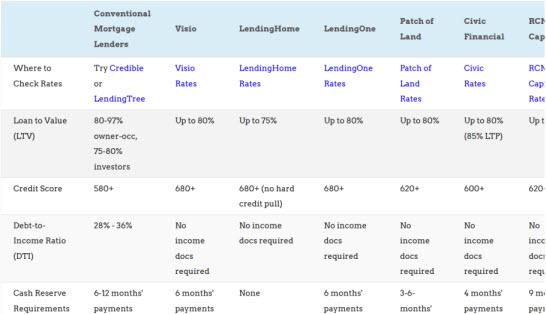 What short-term fix-and-flip loan options are available nowadays?
How about long-term rental property loans?
We compare several buy-and-rehab lenders and several long-term landlord loans on LTV, interest rates, closing costs, income requirements and more.
One Last Thing
If you’ve been wanting to explore passive real estate investing and haven’t been able to get your partner interested, the Co-Investing Club offers something that tends to help: low minimums and a structured vetting process that removes a lot of the pressure from individual decisions.
Starting with $5,000 instead of $50,000 changes the emotional stakes of the conversation considerably. And going through the vetting process together as a club, with 50 other investors asking the same questions your partner is asking, tends to replace anxiety with understanding at a pace that actually sticks.
Worth considering, if the conversation has stalled.
About the Author

G. Brian Davis is a real estate investor and cofounder of SparkRental who spends 10 months of the year in South America. His mission: to help 5,000 people reach financial independence with passive income from real estate. If you want to be one of them, join Brian and Deni for a free class on How to Earn 15-25% on Fractional Real Estate Investments.
Connect with us on social!