The Short Version:
-
- The Social Security trust fund hits insolvency in 2032 per the trustees’ own report, meaning a 21% benefit cut for anyone counting on it as a primary income source
- The average monthly benefit is $1,976 while average rent alone runs over $1,700, leaving retirees $276 for every other expense they have
- Congress has three reform options on the table and all three hurt someone, so the safest assumption is that your check will be smaller, later, or means-tested away entirely
- Building three passive income streams across real estate equity, real estate debt, and dividend stocks gives you retirement income that requires no congressional vote to keep flowing

The Social Security Old-Age and Survivors Insurance trust fund hits insolvency in 2032.
That’s not a political talking point. That’s the date published by the Social Security Board of Trustees in their annual report. When the trust fund runs dry, the program can only pay out what it collects in payroll taxes. Current projections put that at roughly 79% of scheduled benefits.
A 21% haircut, starting seven years from now.
If you’re banking on Social Security as a primary income source in retirement, you’re building a financial plan on a half-broken promise. The program was never designed to cover 100% of retirement expenses. It was designed to cover about 40%. And that 40% is about to get smaller.
The question isn’t whether Social Security will exist. It will. The question is whether the check you receive will be enough to live on, and for most people planning to retire in the next twenty years, the answer is no.
The Maximum Check vs. The Average Check
Social Security has a maximum monthly benefit. In 2025, that number is $5,108 per month for someone retiring at age 70.
Almost nobody gets that amount.
The maximum requires earning at or above the Social Security wage base for 35 consecutive years. In 2025, that wage base is $176,100. If you didn’t earn at least that much, inflation-adjusted, every single year for three and a half decades, you’re not getting the maximum. You’re getting something lower.
The average Social Security benefit for a retiree in 2025 is roughly $1,976 per month. That’s $23,712 per year. Before Medicare premiums get deducted.
A household that spent their working years earning $80,000 to $120,000 annually is not going to maintain anything close to their lifestyle on $24,000 per year. The math doesn’t work. It was never supposed to work. Social Security was built as a supplement, not a replacement.
The gap between what people expect Social Security to cover and what it actually covers is where the retirement crisis lives. Most pre-retirees assume the program will provide enough to cover basic living expenses. Food, housing, healthcare, utilities. They assume wrong.
The average rent in the United States is over $1,700 per month. The average Social Security check is $1,976. That leaves $276 for food, utilities, healthcare, transportation, and everything else. The numbers don’t close.
If you’re counting on Social Security as anything more than a partial income stream, you’re planning to retire into poverty. And if the 2032 insolvency triggers benefit cuts, the partial income stream becomes even smaller.
Why the OASI Trust Fund Hits Insolvency in 2032
Social Security isn’t going bankrupt. It’s going insolvent. The distinction matters.
Bankruptcy means the program shuts down. Insolvency means the trust fund that supplements payroll tax revenue runs out, and benefits get cut to match incoming revenue. The program keeps running. It just pays less.
The trust fund exists because for decades, Social Security collected more in payroll taxes than it paid out in benefits. The surplus got invested in Treasury bonds. That surplus is now being drawn down as the ratio of workers to retirees tilts the wrong direction.
In 1950, there were 16 workers paying into Social Security for every retiree collecting benefits. In 2025, that ratio is roughly 2.8 to 1. By 2035, it drops closer to 2.3 to 1. Fewer workers supporting more retirees means the system can’t sustain full benefit payments without dipping into the trust fund. Once the trust fund is gone, benefits get cut to match revenue.
The 2032 insolvency date assumes no policy changes between now and then. Congress could raise the payroll tax cap. They could increase the payroll tax rate. They could means-test benefits so high earners get less. They could raise the full retirement age again. All of those options hurt someone.
Raising the cap or the rate hurts current workers. Means-testing hurts high earners who paid in for decades expecting full benefits. Raising the retirement age hurts people in physically demanding jobs who can’t work into their late 60s.
None of the fixes are popular. That’s why Congress has been kicking the can since the 1980s. But kicking the can doesn’t make the problem go away. It just moves the pain to a different group.
If you’re under 50 and planning your retirement, assume the Social Security you collect will be smaller than what current retirees are getting. Don’t assume Congress fixes it. Assume they don’t, and build a plan that works anyway.
Three Reform Paths and How Each One Hurts You
There are three realistic reform options Congress could pursue before 2032. Each one cuts benefits, raises taxes, or both.
Option one: raise the payroll tax cap. Currently, only the first $176,100 of earnings is subject to Social Security tax. Income above that is exempt. Raising or eliminating the cap would force high earners to pay in on their full income. That generates more revenue and delays insolvency.
If you earn over $176,100, this reform raises your taxes. If you earn under that threshold, you’re unaffected on the revenue side. But because benefits are capped regardless of how much you pay in, this reform effectively turns Social Security into a progressive wealth transfer rather than a contributory system. High earners pay more and get nothing extra in return.
Option two: raise the payroll tax rate. The current rate is 6.2% for employees and 6.2% for employers, for a combined 12.4%. Raising it to 7% or 7.5% would generate more revenue and delay the trust fund depletion.
If you’re working, this reform raises your taxes immediately. A 1% increase on a $100,000 salary costs you an extra $1,000 per year. That’s $1,000 less in take-home pay, every year, to fund a program that may not exist in its current form by the time you retire.
Option three: means-test benefits. Reduce or eliminate Social Security payments for retirees with other income above a certain threshold. Someone with $200,000 in annual retirement income from pensions, IRAs, and investment accounts would see their Social Security check reduced or zeroed out.
If you saved and invested successfully, this reform punishes you. You paid into the system for 35 years and get nothing back because you were responsible enough to build other income streams. The message is clear: savers subsidize non-savers, and the program becomes pure redistribution rather than insurance.
All three options are on the table. All three hurt someone. The question is who Congress decides to hurt, and when. If you’re counting on Social Security to stay exactly as it is, you’re making a bad assumption.
Plan for it to be smaller. Plan for it to arrive later. Plan for it to get means-tested away if you do everything right. Then anything you actually receive becomes a bonus rather than a necessity.
How the Wealthy Structure Income to Skip FICA Entirely
Social Security is a payroll tax. It applies to wages and self-employment income. It does not apply to investment income, rental income, capital gains, or distributions from partnerships.
The wealthy structure their income to minimize wage income and maximize everything else. A business owner pays themselves a small salary and takes the rest as distributions. A real estate investor collects rental income and depreciation offsets taxable gains. A passive investor in syndications receives K-1 income that bypasses payroll taxes entirely.
The result is that high earners who structure correctly pay far less into Social Security than their total income would suggest. Someone earning $500,000 per year from K-1 distributions pays zero FICA tax. Someone earning $500,000 in W-2 wages pays the maximum.
This isn’t tax evasion. It’s tax structure. The code rewards capital and penalizes labor. Social Security is funded by labor. If your income comes from capital, you’re not paying in.
The broader lesson is that relying on Social Security means relying on a system funded by W-2 workers in an economy that increasingly rewards asset owners. The workers funding the program can’t afford to keep funding it at current benefit levels while the people who don’t pay in are building wealth outside the system.
If you’re still earning W-2 income and paying the maximum FICA tax every year, you’re subsidizing retirees today and hoping future workers subsidize you tomorrow. That’s a bad bet.
The better move is to shift income away from wages and toward assets. Real estate. Businesses. Passive investments. Income streams that grow, compound, and don’t get capped by the Social Security wage base.
You can’t opt out of Social Security while you’re working. But you can opt out of depending on it by building income that doesn’t require a congressional vote to keep flowing.
(article continues below)
Real estate investments? Awesome.
Being a landlord? Less fun.
Learn how to earn 15%+ on passive real estate investments in our free video course.

Building Three Passive Income Streams That Don’t Need Washington’s Permission
Retirement security used to come from three sources: Social Security, a pension, and personal savings. Pensions are mostly gone. Social Security is shrinking. That leaves personal savings carrying the entire load.
The traditional advice is to max out your 401(k), invest in index funds, and hope the market cooperates for 30 years. That works if you retire into a bull market. It doesn’t work if you retire in 2008, 2022, or the next time stocks drop 40% in eighteen months.
A better plan diversifies across asset classes that don’t move together. Stocks. Real estate. Debt funds. Each generates income. Each behaves differently in different economic conditions. When one underperforms, the others keep paying.
Passive real estate income is the first stream. Syndications, funds, or fractional ownership in cash-flowing properties. The distributions come monthly or quarterly. They’re not dependent on stock market valuations. Rent gets paid regardless of what the S&P 500 does. A portfolio generating $2,000 per month in distributions replaces half of what Social Security was supposed to provide, and it doesn’t shrink when Congress panics in 2032.
Debt-based real estate income is the second stream. Private notes, debt funds, or preferred equity positions. These pay a fixed rate of return secured by real property. The upside is capped, but so is the downside. A debt fund paying 8% annually on a $100,000 position generates $8,000 per year. That’s $667 per month, recession or not.
Dividend-paying stocks or funds are the third stream. Not for growth. For income. Boring, blue-chip companies that have paid dividends for decades and will keep paying them because their business models don’t depend on hype. A portfolio of dividend stocks generating 4% annually on $200,000 is $8,000 per year, or $667 per month.
Three streams. Real estate equity. Real estate debt. Dividend stocks. Each generating $600-$2,000 per month. Combined, they replace what Social Security was supposed to do. And none of them require Congress to do anything.
The timeline to build this isn’t five years. It’s twenty. You start at 40. You invest $500 per month into passive vehicles. By 60, you’ve deployed $120,000 and you’re collecting $3,000-$4,000 per month in distributions, dividends, and interest. That’s $36,000-$48,000 per year. Add whatever Social Security actually pays, and you’ve covered basic expenses without touching principal.
If Social Security delivers, it’s gravy. If it doesn’t, you’re fine anyway.
(article continues below)
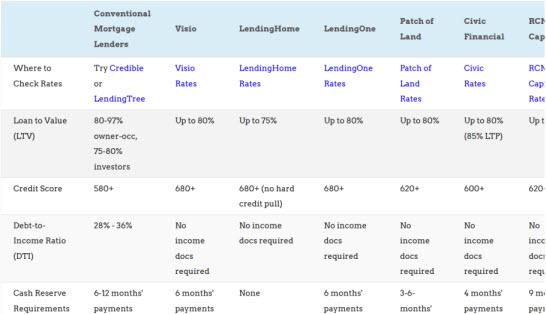 What short-term fix-and-flip loan options are available nowadays?
How about long-term rental property loans?
We compare several buy-and-rehab lenders and several long-term landlord loans on LTV, interest rates, closing costs, income requirements and more.
So What Does This Mean For You?
Social Security was designed as a safety net, not a hammock. It was supposed to keep retirees out of poverty, not fund their lifestyle.
Somewhere along the way, people started treating it as a guaranteed income source that would cover most of their expenses in retirement. That was never the deal. The deal was always: save on your own, work as long as you can, and Social Security will top you off so you don’t starve.
The problem is that wages stagnated, savings rates dropped, and financial literacy stayed low. Most Americans reach their 50s with less than $100,000 saved for retirement. They’re counting on Social Security because they have nothing else.
That’s not a Social Security problem. That’s a savings problem. And no amount of congressional reform fixes the fact that most people spent 30 years earning good money and didn’t invest any of it.
If you’re reading this and you’re under 50, you have time. Not a lot of time. But enough.
Stop assuming Social Security will be there at full strength. Stop assuming the stock market will bail you out. Stop assuming your employer will offer a pension or that your home equity will cover the gap.
Start building income streams that don’t require a vote, a bull market, or a policy change. Real estate. Debt. Dividends. Small positions that compound over decades into cash flow you control.
The math on Social Security is public. The insolvency date is public. The benefit cut projections are public. Ignoring them doesn’t make them go away. It just makes you one of the millions of people who retired into poverty because they assumed the government would handle it.
The government won’t handle it. You will. The only question is whether you start now or wake up at 62 wondering why the check is smaller than you expected.
About the Author

G. Brian Davis is a real estate investor and cofounder of SparkRental who spends 10 months of the year in South America. His mission: to help 5,000 people reach financial independence with passive income from real estate. If you want to be one of them, join Brian and Deni for a free class on How to Earn 15-25% on Fractional Real Estate Investments.
Connect with us on social!