The Short Version:
-
- Mortgage rates above 6% for three years have structurally locked out millennials, who are tracking homeownership rates 17 points below boomers at the same age
- Households priced out of buying want yards, garages, and three bedrooms and will pay stable rent for decades rather than settle for a studio apartment
- Institutional money quietly fled Austin in 2022 and has been building portfolios in Cleveland, Indianapolis, and Memphis where the real yield actually lives
- You don’t need $500K or landlord headaches to play this trend since passive structures let you collect workforce housing cash flow starting at $5K
Median home prices in the United States are hovering near all-time highs.
Mortgage rates haven’t come down meaningfully. They’ve been above 6% for over three years. Wages aren’t catching up. A household earning the national median income of roughly $75,000 can’t afford the median-priced home in most major markets without stretching to dangerous debt-to-income ratios.
This isn’t a temporary dislocation. This is structural.
A generation of Americans is becoming permanent renters. That’s a crisis for homeownership. It’s also a thirty-year investment thesis for anyone willing to think past the next election cycle.
The question isn’t whether housing will become affordable again. The question is what happens when millions of people who expected to own homes spend the next three decades renting instead.
Why This Isn’t Cyclical
Housing affordability crises have happened before. The 1980s had double-digit mortgage rates. The mid-2000s had price bubbles in markets like Phoenix and Las Vegas. Both corrected. Prices fell. Rates dropped. Affordability returned.
This time is different, and the difference is demographic math.
Millennials and Gen Z represent the largest cohorts in U.S. history. They need housing. They’re forming households. They’re having kids. But they missed the window to buy when prices were reasonable and rates were low. That window closed somewhere between 2012 and 2019, depending on the market.
Now they’re stuck. Median home prices have risen faster than wages for over a decade. A household that could have bought in 2015 with a 4% mortgage and a $250,000 price point is now looking at 6.5% rates and a $425,000 price tag for the same house. The monthly payment more than doubled. The income didn’t.
Even if mortgage rates drop to 5%, affordability doesn’t recover unless prices collapse by 30% or wages surge by 40%. Neither is happening. Prices are sticky on the way down because sellers refuse to take losses, and wage growth is capped by productivity and inflation dynamics that have nothing to do with housing.
The math doesn’t work. It hasn’t worked for years. And the longer it doesn’t work, the more renters become permanent.
Boomers owned homes at rates above 65% by the time they hit their 40s. Millennials are tracking closer to 48% in the same age bracket. That gap is only widening.
What Persistent Renters Want (And What They’ll Pay For)
Permanent renters don’t behave like transitional renters.
A 25-year-old renting an apartment while saving for a down payment will tolerate thin walls, limited parking, and no washer-dryer hookup. That same person at 38, married with two kids, locked out of homeownership, will not. They want space. They want a yard. They want a garage. They want the lifestyle homeownership used to provide, even if they can’t get the deed.
That demand is reshaping what rental housing looks like.
Single-family rentals, duplexes, townhomes with small yards, and build-to-rent communities are the product categories that fit. These aren’t luxury new construction towers in downtown cores. They’re workforce housing in secondary markets where the rent is $1,800 instead of $3,200, and the tenant works as a nurse, an electrician, or a logistics manager.
The rent-to-income ratio still has to pencil. A household earning $75,000 can’t afford $3,000 in rent. They can afford $1,800. That’s the constraint. Investors chasing yield in high-rent markets are ignoring it.
Workforce housing in middle America is where the demand actually lives. Not because the rents are exciting. Because the rents are sustainable and the tenant base is durable.
A registered nurse in Cleveland isn’t moving to San Francisco for a 15% raise when it comes with triple the rent. They’re staying put, renting a three-bedroom house for $1,600, and raising kids in a neighborhood where the schools work and crime is manageable. That tenant renews year after year because they have no better option.
That’s the thesis. Sticky tenants. Stable cash flow. Boring returns that compound for decades.
Why Luxury New Construction Is the Wrong Play
The temptation for most investors is to chase the new shiny product.
Luxury apartments in growing sunbelt cities. Class A new construction with granite countertops, stainless appliances, and rents 20% above the market median. These projects get funded because the pitch deck looks good and the renders look better.
The problem is oversupply.
Developers in markets like Austin, Nashville, Phoenix, and Charlotte have been building luxury units at a pace that outstrips demand. Occupancy rates are softening. Concessions are rising. Landlords are offering one or two months of free rent just to fill units. That’s not a sign of healthy fundamentals. That’s a sign the market got overbuilt.
The households being priced out of homeownership aren’t the households signing leases at $2,800 for a one-bedroom in a Class A tower. They’re the ones looking for $1,400 two-bedrooms in older buildings ten miles from downtown.
Institutional capital figured this out two years ago. They stopped chasing luxury and started buying workforce housing in tertiary markets. Single-family rentals. Smaller multifamily in cities like Cleveland, Indianapolis, and Memphis. Markets where the median household income is $60K-$80K and the rent burden stays below 30% of gross income.
Retail investors see the Austin pitch deck and assume that’s where the smart money is going. The smart money left Austin in 2022 and went to Ohio.
Luxury new construction is a trading strategy. You’re betting on appreciation and a quick exit. Workforce housing is an income strategy. You’re betting on cash flow and tenant retention. One works when everything goes right. The other works even when things go sideways.
In a market where affordability is broken and unlikely to recover, betting on the product category that serves the locked-out middle class is the safer play.
(article continues below)
Real estate investments? Awesome.
Being a landlord? Less fun.
Learn how to earn 15%+ on passive real estate investments in our free video course.

Why Is Real Estate Considered a Strong Hedge Against Inflation?
Real estate is a solid inflation hedge for a lot of reasons. With limited housing supply plus ongoing demand, property values often climb with inflation. As living costs rise, rental income potential also grows – a rising tide lifting cash flow.
In addition, the inherent value of tangible land and buildings holds strong amid shifting prices. Furthermore, real estate moves with the economy’s growth. It provides steady rental income even when other assets falter. You can raise rents to match inflation.
Moreover, the limited availability of land drives prices up. Not only that, mortgages allow controlling assets with little money down. Also, different property types react uniquely to inflation; it sticks around for the long term, unlike stocks (some stocks are no longer trading), and real estate retains value even when currencies crash.
If you’re new to the idea of land investing, check out this case study of a land investor who reached financial independence in just 18 months.
What to Look for When Getting Into Real Estate Investments
Aside from the property’s location and your budget, there are some more factors to consider.
Investment Purpose
Clearly defining the purpose of a real estate investment upfront is critical to avoid unintended consequences later, especially if using debt financing. The main options are: buy to self-use to save on rent; buy to lease for income and appreciation but be prepared for landlord duties; buy to sell in the short-term for quick profits on property flips, or buy for long-term holds banking on substantial appreciation over time to meet goals like retirement.
Location of the property
No one can argue that “location” is one of the most important factors when investing in real estate. Properties closer to hubs like markets, bus stations, amenities, and such are more desirable, which means they can fetch higher prices.
Aside from the nearby hubs, it’s best to consider the future developments of the area. It may have a relaxed and peaceful environment now, but it might get very noisy and annoying when big manufacturing facilities start developing.
One way to figure this out is to contact the public agencies in charge of the area’s urban planning; this will give you a good view of future development.
Property Value
Many important factors depend on property valuation, such as listing price, investment analysis, insurance, taxes, etc. This means pinpointing the property’s value can save you a lot of headaches in the future. But how are you going to do it?
There are few appraisal techniques available. One technique that provides accurate valuation is the “Sales Comparison.” This involves looking at recent sales similar to the property, though you’ll need to adjust for factors like square footage, age, and renovations. If you want a faster option, appraisers can help you estimate what a buyer should pay.
Your Credit Score
Improving your credit score can pay off when it comes time to get a mortgage. The higher your score, the better the terms you’ll likely get from lenders. This also means you can save a lot of cash over the years.
So, if your score isn’t above 800 (considered excellent), it may be worth improving. Pay all bills on time, lower credit card balances to below 30% of the limit, avoid closing old accounts and applying for new credit cards, and check your credit report for errors will all help increase your credit score.
Your Expected Real Estate Income
You want to keep an eye on that cash flow for your investment property– that’s how much money you have left after covering expenses.
Some of the ways are:
1. Project your rental income by factoring in inflation, which tends to push rents up over time.
2. Estimate how much the property value itself will appreciate long-term.
3. Factor in tax savings from depreciation and other benefits.
4. Consider if renovations could boost your sale price down the road.
5. Compare taking out a mortgage vs just waiting for appreciation.
Be Careful with Loans
Loans make things easy now but can cost you later. Long-term interest racks up. Make sure you avoid getting over-leveraged. Even real estate pros struggle when markets drop. Shop around for the best rates and terms that fit your situation. Adjustable rates can help when interest rates fall, but will hurt when rates rise. Stay aware of hidden fees, too.
An Old or A New Building
New builds let you customize but may face delays and hidden neighborhood risks. Existing properties offer quick access and potentially lower costs. Check the builder’s reputation with new investments. Review deeds and surveys when buying existing. Monthly fees like taxes and dues can be a hit to your cash flow, so compare carefully. You may also want to review the types of real estate investments.
Real Estate Market
Like investing, buying low, and selling high in fluctuating real estate markets is essential to any exit plan. Watch for mortgage rate deals to lower financing costs. Follow key indicators like prices, sales, new construction, inventory, flipping, and foreclosures. Know the trends in your specific market niche, too. Timing matters to maximize real returns.
(article continues below)
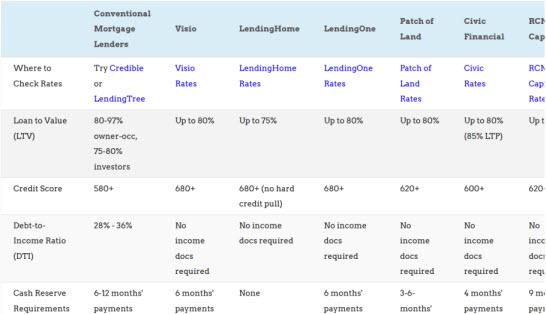 What short-term fix-and-flip loan options are available nowadays?
How about long-term rental property loans?
We compare several buy-and-rehab lenders and several long-term landlord loans on LTV, interest rates, closing costs, income requirements and more.
The Underlying Principle
Housing affordability isn’t a problem to solve. It’s a condition to position around.
Investors who wait for affordability to return are waiting for wage growth to outpace home prices for a decade, or for prices to collapse by a third. Neither is likely. The demographic demand is too strong. The housing supply constraints are too entrenched. The political will to crash home prices and wipe out the largest store of middle-class wealth doesn’t exist.
What exists instead is a generation of Americans who need housing and can’t buy it. They’ll rent. They’ll rent for decades. And they’ll pay market rent in markets where the rent-to-income ratio stays reasonable.
The opportunity isn’t in the crisis. The opportunity is in providing the housing those renters need, in the markets they can afford, at yields that produce cash flow for investors willing to think past the next twelve months.
Institutional capital figured this out early. They’ve been buying workforce housing in middle America since 2021. The headline-chasing retail investors are still looking at luxury towers in Austin and Nashville, wondering why the cap rates compressed and the distributions stopped.
The play is simple. Follow the demographic trend. Invest in the product category the locked-out middle class actually needs. Pick markets with job growth and housing scarcity. Use passive structures that diversify risk and eliminate operational drag. Collect cash flow. Reinvest. Repeat.
The housing affordability crisis is permanent. The investment thesis it creates is even longer.
About the Author

G. Brian Davis is a real estate investor and cofounder of SparkRental who spends 10 months of the year in South America. His mission: to help 5,000 people reach financial independence with passive income from real estate. If you want to be one of them, join Brian and Deni for a free class on How to Earn 15-25% on Fractional Real Estate Investments.
Connect with us on social!